TALK TO AN EXPERT +256 716 068 279 WHATSAPP OPEN NOW.
Health, Wellness & Mindfulness

The journey home: re-entry after a gorilla trekking trip

Home / Travel News, Stories & Tips / Tales from the Mist / The journey home: re-entry after a gorilla trekking trip

Most travel writing focuses on the journey out — how to get there, what to see, how to prepare. The journey home receives less attention, but for visitors returning from an intense wildlife experience like gorilla trekking in Uganda, re-entry into everyday life can itself be an interesting and sometimes challenging process. Understanding what to expect in the days and weeks after the trip can help you process the experience more fully, share it more effectively, and convert the feelings it produced into lasting changes in perspective or behaviour.

The airport transition

The contrast between the environments you have been in and the airport environment is considerable. Entebbe International Airport is a functioning international travel hub — busy, air-conditioned, full of commercial goods and brand signage and the specific flat neutrality of transit spaces designed to belong to no particular place. After days or weeks in Bwindi’s forest or Queen Elizabeth’s savannah, the sensory contrast is marked. The absence of bird calls, the artificial light, the crowd of people in no particular relationship with each other — these register differently than they would have before you left.

This contrast is not a problem to be solved; it is information. The dissonance you feel in the airport after the forest is one early indicator of what the experience produced in you — a heightened awareness of environment, a sensitivity to its absence. Noting this consciously rather than suppressing it is the beginning of integrating the experience.

The post-trip processing period

Many visitors describe a period of 2–4 weeks after returning from Uganda during which the experience continues to surface — in conversation, in dreams, in the habitual checking of news about Uganda or mountain gorilla conservation. This extended processing is not unusual after intense experiences in unfamiliar environments; it reflects the brain’s ongoing work of integrating new information and experiences into existing frameworks of understanding.

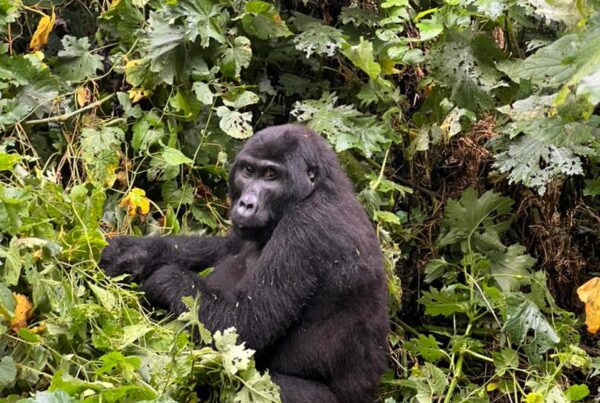
The gorilla encounter, in particular, tends to produce durable impressions. Visitors who saw gorillas months or years ago can describe specific moments — the infant’s face, the silverback’s evaluation gaze, the sound of the chest beat — with unusual vividness. This durability of gorilla memories is not accidental; it reflects the emotional salience of the encounter, which engages brain systems associated with social connection and threat response in ways that create strong memory consolidation.

Give yourself permission to talk about the experience, look at the photographs, share the specific moments that affected you most. Articulation helps consolidation — putting the experience into words, even imperfect ones, builds the neural pathways that maintain it as a lasting memory rather than a fading impression.

Sharing the experience with others

One of the challenges of returning from a gorilla trekking trip is finding appropriate ways to share an experience that resists conventional communication. Photographs help but do not fully convey the spatial reality of standing metres from a silverback in dense forest. The emotional content — the quality of attention, the specific feeling of the encounter — is notoriously difficult to communicate to someone who has not been there. Most returning trekkers find that people who have done the trek respond most fully, while those who have not can engage intellectually but not experientially with the description.

This is not a reason to stop trying to share the experience — the attempt to communicate it is part of processing it, and some people will find the description sufficient to inspire them to go themselves. But it does help to calibrate expectations: the most vivid and complete version of the experience lives in you, not in any photograph or description. That is the nature of a genuinely immersive encounter.

Social media sharing is one channel, and gorilla photographs attract considerable engagement — they are spectacular images and they communicate the visual reality of the encounter effectively. Conservation-focused captions — explaining the permit system, the community benefit-sharing programme, the conservation status of the species — can convert engagement into education, and some former trekkers find that they become informal ambassadors for gorilla conservation through this mechanism.

Converting experience into action

The most meaningful dimension of the post-trip period is the question of what the experience changes in terms of behaviour or commitment. Many gorilla trekking veterans describe increased engagement with conservation causes, changed consumer behaviour (more conscious of supply chains and environmental impact), and a shifted sense of what is worth spending money on. These changes are not always dramatic or immediate; they accumulate gradually as the experience continues to inform perspective.

Practical post-trip actions that many visitors find meaningful include: donating to the Dian Fossey Gorilla Fund, WWF’s gorilla programme, or the Wildlife Conservation Society’s Central Africa programme; adopting a gorilla through one of the conservation organisations that offer this programme; speaking at schools or community groups about the gorilla trekking experience and its conservation context; and engaging with political representatives on issues of international wildlife protection and climate policy that directly affect gorilla habitat.

None of these actions is required, and the gorilla encounter is complete without them. But for visitors who find themselves changed by what they saw — who return from Uganda with a different relationship to wild animals and wild places — finding ways to act on that change converts feeling into impact. The gorillas need both the encounter revenue and the political support of people who have stood in their presence and understood what is at stake. You are one of those people now.

Planning the return

Many gorilla trekking visitors begin planning their return trip before they have left Uganda. This is not unusual and should not be dismissed as excessive — Uganda is a country with more to offer than any single trip can encompass, and the gorilla encounter, in particular, is the kind of experience that leaves you wanting to give it to others: partners, friends, adult children, trusted colleagues. The permit system, the lodge quality, and the conservation programme will all still be there when you return. And the gorilla families you visited will be there too — older, with different composition, the juveniles you watched playing now approaching adulthood, the silverback perhaps replaced by a son. The forest changes slowly, and slowly is enough.

Ready to experience Uganda’s mountain gorillas in 2026? Secure your gorilla permits early and let us craft a seamless safari tailored to your travel style, preferred trekking sector, and accommodation level. From luxury lodges to well-designed midrange journeys, every detail is handled for you. Every itinerary is carefully planned to maximize your time in the forest while ensuring comfort, safety, and unforgettable encounters.

Have questions about gorilla permits, travel dates, or the best itinerary for you? Speak with a safari expert and get clear, honest guidance to plan your trip with confidence.

When is the last time you had an adventure? African Gorillas!!! Up Close With Uganda’s Wild Gorillas Touched by a Wild Gorilla: An Unforgettable Encounter Inside Gorilla Families: Bonds, Hierarchies & Jungle Life Face to Face With a Silverback: The Wild Encounter You’ll Never Forget