Updated
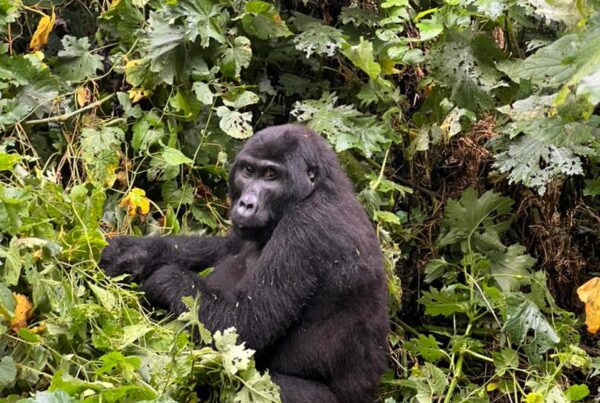
stress management gorilla trek Uganda anxiety is one of Africa’s most extraordinary wildlife experiences, connecting travellers with mountain gorillas in their natural forest habitat. A Uganda gorilla trek concentrates a remarkable number of anxiety triggers into a single experience: a non-refundable permit costing $700 (the highest-priced single-activity wildlife permit in Africa), a multi-day journey to reach one of the world’s most remote forests, a physical challenge that may exceed anything you have done before, and then exactly 60 minutes with the gorillas — time that many people later describe as passing in about 10 minutes, so overwhelming is the experience when it finally happens. Managing the anticipation and the practical logistics of a Bwindi gorilla trek so that you arrive at the briefing point calm, prepared, and genuinely present for the encounter is a skill worth developing before you leave home. See Bwindi gorilla trekking guide and Uganda safari packages that include full trip logistics support.
- Sighting guarantee: there is no formal guarantee, but gorilla families are tracked daily by rangers and not-found days are extremely rare for habituated groups
- If gorillas not found same day: Uganda Wildlife Authority will generally offer a rescheduled trek — confirm this policy when booking
- Physical difficulty: honest self-assessment is essential; treks range from 1-8+ hours depending on where the gorilla family is that morning
- Common emotional response during encounter: silence, tears, involuntary smiling — the encounter frequently overwhelms visitors even when expected
- The 60-minute rule: strictly enforced; park staff will signal when time is up
A Uganda gorilla trek is one of the most logistically complex wildlife experiences most travellers will ever undertake: transcontinental flights, long overland journeys, altitude adjustment, unfamiliar food and environment, and a time-limited wildlife encounter whose outcome depends on nature rather than certainty. For many visitors, the anticipation and preparation process generates as much anxiety as excitement, and the trek day itself can intensify this with physical exertion, altitude effects, and the emotional weight of an encounter whose significance they have spent months or years imagining. Managing this stress productively — converting anticipatory anxiety into presence, and physical discomfort into acceptance — is both a practical and a psychological challenge that preparation can significantly address.
Managing stress before and during your Uganda gorilla trek
Understanding the sources of gorilla trek anxiety
The anxiety that visitors to Bwindi commonly experience comes from several identifiable sources. The first is performance anxiety: concern about physical capability to complete the trek without difficulty, embarrassment, or the need to turn back before reaching the gorillas. This is most acute in visitors who are not regular hikers, who have health conditions affecting their stamina, or who have completed the expensive journey to Uganda under conditions of fitness uncertainty. Preparation is the most effective response to this form of anxiety, as genuine physical readiness — built through progressive training in the weeks before departure — replaces the uncertainty of unknown capacity with the confidence of tested capability.
The second source is outcome anxiety: concern about whether the gorillas will be seen, whether the encounter will be as extraordinary as expected, and whether the experience will justify the investment of time, money, and physical effort. This anxiety reflects the fundamental uncertainty of wildlife encounters and cannot be eliminated by preparation, but it can be reframed. The question is not whether the gorillas will appear — habituated groups have very high contact success rates — but whether the visitor will be present enough during the encounter to receive what it offers. Reframing success as presence rather than as guarantee reduces outcome anxiety to manageable levels while encouraging exactly the attentive engagement that makes the encounter memorable.
The third source is logistical anxiety: concern about travel disruptions, permit booking errors, health issues, and the dozens of things that can go wrong when complex international travel is involved. This form of anxiety responds to systematic preparation — confirmed bookings documented in multiple formats, health preparation completed well in advance, contingency plans for common failure modes — rather than to reassurance. Travellers who have done their logistical homework feel the difference between prepared confidence and hopeful uncertainty when the first minor complication arises, as it almost always does on complex international travel.
Pre-trek physical preparation as anxiety management
The most powerful single intervention for managing gorilla trek anxiety is physical preparation that genuinely improves fitness for the specific demands of the experience. Visitors who arrive at Bwindi knowing they can walk uphill for several hours because they have done so repeatedly in training approach the trek day with a fundamentally different psychological profile than visitors who arrive hoping they will be able to manage it. Confidence built from evidence rather than optimism is more durable and more effective as a stress management tool than any mental technique.
The specific physical preparation most relevant to gorilla trekking involves cardiovascular conditioning at moderate intensity over extended durations, strength training for the legs and core that support sustained uphill walking, and balance and proprioception training that prepares the body for the uneven, unpredictable terrain of forest trails. The most direct preparation is hiking on similar terrain — steep, off-trail, with a loaded daypack — in the weeks before departure. This preparation is not available to everyone but is remarkably effective when it is accessible, and the psychological benefit of having done exactly what the trek will require is significant beyond the physical benefit alone.
The night before: preparation and rest
The night before the gorilla trek is one of the most psychologically challenging moments of the entire trip for anxious visitors. Anticipation, altitude effects on sleep quality, unfamiliar accommodation, and early morning departure logistics combine to produce a night in which genuine rest can be elusive. The most productive approach treats the night before as a preparation and recovery opportunity rather than as a sleeping test to be passed or failed.
Practical preparations that reduce morning anxiety include laying out all trek clothing and equipment the evening before, confirming the pick-up or departure time with the guide or lodge, charging all camera batteries and checking memory cards, filling water bottles, and preparing snacks. These practical acts reduce the number of decisions and uncertainties that the early morning imposes, freeing mental bandwidth for the more important task of managing physical and emotional readiness. A known kit and a confirmed schedule are powerful anxiety reducers at a moment when sleep deprivation and altitude can amplify uncertainty into something that feels much larger than it is.
Sleep disruption the night before a gorilla trek is common and is not predictive of a poor trekking performance. Many experienced mountain hikers report that their best days on difficult terrain have followed nights of poor sleep, because the physiological arousal associated with anticipated challenge can temporarily offset the performance deficit that sleep deprivation would otherwise produce. Accepting disrupted sleep as normal rather than catastrophising it as a predictor of failure helps maintain the equanimity that the following day requires.
On the trail: managing exertion and discomfort mindfully
The approach walk to the gorilla group, which can take anywhere from twenty minutes to four hours depending on where the animals have moved overnight, offers a sustained opportunity to practise the attention management that will make the encounter itself more meaningful. The temptation on a strenuous uphill walk is to focus on the destination — when will we reach the gorillas, how much further is it, how tired am I going to be — rather than on the present experience of walking through one of Africa’s most biodiverse forests. This destination focus increases perceived effort and reduces the quality of the experience itself.
Deliberately shifting attention to immediate sensory experience — the specific sounds of the forest, the quality of light through the canopy, the texture of vegetation, the smell of forest earth — reduces perceived exertion and increases present-moment engagement simultaneously. This is not a technique requiring formal mindfulness training but a simple attentional choice that is available to any trekker willing to make it. Guides who know the forest well and who narrate the walk with ecological observations facilitate this shift naturally; asking them questions about what they notice is both an engagement strategy and an anxiety management technique.
After the encounter: emotional processing
The period immediately after the gorilla encounter is often emotionally complex in ways that visitors do not expect. Some people feel elated and energised; others feel quieter and more reflective than the preceding excitement suggested; some experience a form of post-climax deflation, a sense of anticlimax that the extraordinary encounter is over and can never be exactly repeated. All of these responses are normal and deserve acknowledgement rather than suppression.
The return walk from the gorilla group to the trek starting point is an ideal period for conversation, reflection, and gradual return to ordinary awareness. Guides are often particularly forthcoming on the return journey, when the intensity of the encounter management has passed and there is time for the kind of personal conversation about their relationship to the gorillas and the forest that the approach walk does not allow. These conversations frequently produce insights and connections that visitors remember as the most meaningful parts of the day, though they tend to happen only when visitors create the openness for them rather than retreating into phones or internal processing.
Writing about the encounter as soon as possible after the return — in a journal, in notes on a phone, in a message to a person who matters — captures details that fade with surprising speed. The emotional quality of the encounter, the specific behaviour of individual gorillas, the physical sensations of the forest, the interactions with guides and fellow trekkers: all of these are vivid immediately after and significantly less accessible within hours. The act of writing is not just documentation but processing, helping to consolidate the experience into the durable memory that the investment of reaching this extraordinary place deserves.
What if the gorillas are not found on the day of my trek?
The Uganda Wildlife Authority deploys trackers every morning before the trekking groups depart — rangers who locate the gorilla family’s overnight nest and establish the direction of movement, so that trekking groups are guided toward a known gorilla position rather than searching blind. For fully habituated families, not-found days are genuinely rare — well under 1% of trekking days result in no encounter. In the very uncommon case where a family cannot be located before groups must return, Uganda Wildlife Authority policy has been to offer the affected visitor a rescheduled trek. Confirm the specific rescheduling policy with your operator at the time of booking, as policies can change. The anxiety about this is often much larger than the actual risk warrants.
How do I prepare physically for a gorilla trek?
Gorilla treks vary enormously in physical demand depending on where the gorilla family is that morning — a family resting 800m from the briefing point means a 1-2 hour easy walk; a family that has moved 4km uphill since dawn means a 6-8 hour strenuous trek with significant elevation gain on steep trails. There is no way to know in advance which you will get. Physical preparation should assume the harder scenario. Three months before the trek, begin regular hiking with a loaded pack on hilly terrain. Stair climbing is a useful Bwindi-specific preparation — the park has genuine elevation gains on every significant route. Cardiovascular base fitness matters more than strength. Most adults in normal health complete the trek successfully; the key is honest self-assessment of your starting fitness level and adequate preparation time.
What does the gorilla encounter actually feel like emotionally?
The most common descriptions from visitors who have completed the encounter are: silence (the group often stops speaking), involuntary tears, and a sense of cognitive disorientation — the intellectual knowledge that you are looking at a non-human primate and the visual experience of looking into eyes that carry unmistakable presence create a strange cognitive gap. The 60 minutes frequently feel like 10. Many visitors say they were not prepared for the emotional impact even though they expected to be moved. The silverback’s presence in particular is described repeatedly as physically affecting — a sense of weight and authority that is not fully accounted for by knowing his size in advance. Managing expectations going in means allowing for an experience that may exceed what you have imagined.
How should I manage the altitude at Bwindi if I am unaccustomed to it?
Bwindi’s elevation ranges from 1,160m to 2,607m, with most lodge areas and briefing points sitting at 1,500-2,000m. This is significantly lower than destinations like Kilimanjaro or the Ethiopian highlands where altitude sickness is a common concern, and most visitors acclimatise naturally without intervention. However, if you are arriving directly from sea level and immediately embarking on a strenuous trek, the first day at altitude may feel harder than expected. Symptoms of mild altitude adjustment include slight headache and faster breathing on exertion. Drinking extra water, avoiding alcohol on the day before the trek, and sleeping at altitude for at least one night before trekking are standard precautions. Full altitude sickness requiring medication is not expected at Bwindi’s elevations for otherwise healthy adults.
What logistics cause the most stress and how can I avoid them?
The most common logistics stress points are: (1) permit confirmation anxiety — confirm your permit in writing from Uganda Wildlife Authority or your operator well before travel and carry a printed copy; (2) transport timing — the briefing begins at 7:30am and late arrivals miss their group; stay at a lodge within walking distance of the briefing point or confirm your exact pickup time with your lodge the evening before; (3) the road from Kabale to Bwindi in wet conditions — allow extra time and confirm road conditions with your driver the evening before; (4) camera battery anxiety — charge all batteries the night before and carry spares. Most of these are eliminated by staying in a lodge that is within the park boundary or adjacent to it, giving you a 5-minute walk to the briefing point with no road risk.
- Stressed by World News? The Jungle Has No WiFi and That’s Exactly the Point
- Altitude and gorilla trekking: managing the effects of Bwindi’s elevation
- Gorilla trekking and jet lag: managing long-haul fatigue on your trek day
- Managing medications on a gorilla trek: altitude, humidity, and storage
- Gorilla trekking with diabetes: managing blood sugar on a demanding hike
- Gorilla trekking with knee problems: managing joint pain on steep terrain
- Gorilla trekking with asthma: managing respiratory conditions on a forest walk
- Gorilla trekking with back pain: managing lumbar conditions on uneven forest terrain
- Gorilla trekking and diabetes: managing blood sugar on a demanding mountain trek