TALK TO AN EXPERT +256 716 068 279 WHATSAPP OPEN NOW.
Economics & Impact Tourism

The role of the Uganda Wildlife Authority: rangers, management, and the people behind conservation

Home / Travel News, Stories & Tips / Tales from the Mist / The role of the Uganda Wildlife Authority: rangers, management, and the people behind conservation

Every gorilla trek in Uganda begins with a briefing conducted by a Uganda Wildlife Authority ranger. This ranger will lead you into the forest, locate the gorilla family, manage your group’s behaviour during the encounter, and ensure you leave the park safely. For most visitors, the UWA ranger is the most direct human face of the conservation system that protects mountain gorillas — and understanding the organisation behind that individual sheds light on how gorilla conservation actually functions at the institutional level.

What is the Uganda Wildlife Authority?

The Uganda Wildlife Authority is a government agency established by the Uganda Wildlife Act of 1996 to manage and protect the country’s wildlife resources. It operates under the Ministry of Tourism, Wildlife, and Antiquities and is responsible for all of Uganda’s national parks and wildlife reserves — a combined area of over 2.4 million hectares representing approximately 10 percent of the country’s land area.

UWA’s mandate includes: conservation and management of wildlife and protected areas; enforcement of wildlife laws; community conservation and benefit-sharing; tourism development and management; and research and monitoring. The organisation employs several thousand staff across its park system, from rangers and trackers working in the field to scientists, economists, community liaison officers, and administrative staff at the Kampala headquarters and regional offices.

UWA operates as a semi-autonomous agency, meaning it retains and reinvests a portion of the tourism revenue it generates rather than remitting all income to central government. This financial model — sometimes called a conservation enterprise approach — is designed to align the agency’s economic interest with successful conservation outcomes: the better the wildlife is protected and the better the visitor experience, the more revenue the parks generate, and the more resources UWA has to fund further conservation work.

Rangers: training, roles, and conditions

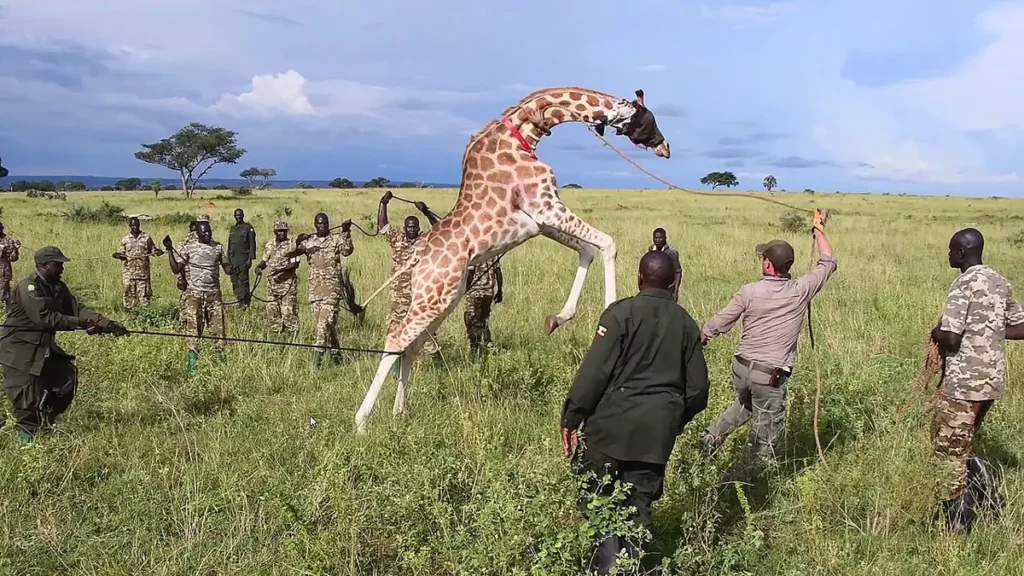
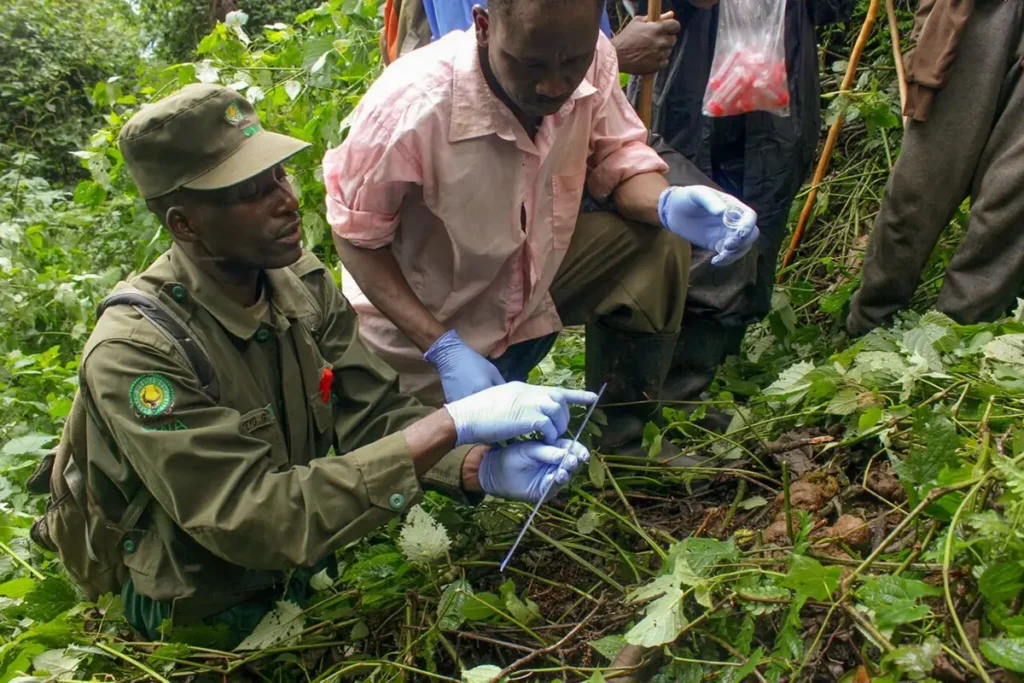
UWA rangers are the frontline of conservation in Uganda’s protected areas. Their roles span a spectrum from the highly visible — conducting gorilla treks, briefing visitors, patrolling park boundaries — to the less visible but equally important: anti-poaching patrols, community conflict mediation, wildlife monitoring, and emergency response to human-wildlife conflict incidents.

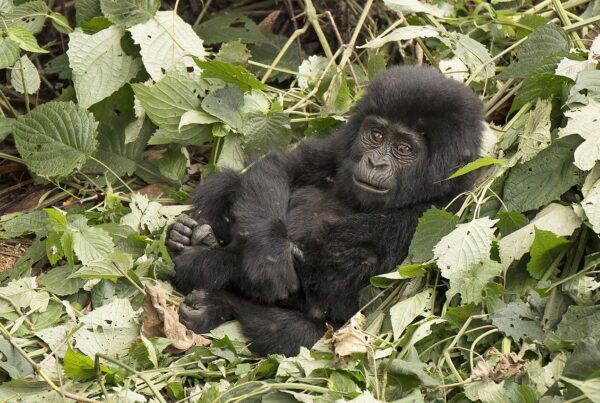
Ranger training includes both technical wildlife management skills and visitor management competencies. Gorilla trek rangers receive specific training in gorilla behaviour, group dynamics, and the protocols for safe, respectful visitor encounters. They learn to read gorilla body language, to position the group appropriately during encounters, and to manage situations where gorillas approach closer than the official 7-metre distance. This training builds on practical experience that accumulates over years of daily contact with specific gorilla families.

Field ranger work is physically and psychologically demanding. Anti-poaching patrols in dense forest, often at night, require physical fitness, alertness, and a willingness to work in conditions that visitors would find challenging under the most comfortable circumstances. Human-wildlife conflict response — investigating crop raids by elephants or gorillas, mediating between farming communities and park management, sometimes making difficult decisions about problem animals — tests rangers’ skills and judgment in ways that their training can prepare for but not fully anticipate.

Ranger salaries in Uganda, as in most African conservation contexts, do not reflect the difficulty or importance of the work. Pay for entry-level rangers falls below what comparable private sector roles would offer. Improvement in ranger compensation is consistently identified by conservation economists as one of the highest-return investments available in African wildlife protection — well-paid rangers are less susceptible to corruption, better motivated, and more likely to stay in the profession rather than leaving for better-paying alternatives.

The gorilla tracking team

Each habituated gorilla group is monitored by a dedicated team that includes both rangers and trackers. The distinction is roughly as follows: rangers are UWA employees with formal training and enforcement authority; trackers are often community members with exceptional knowledge of the specific gorilla family and the local forest terrain, employed by UWA or tour operators in a supporting role.

The tracking team’s day begins well before tourists arrive. A team leaves the ranger station at dawn — typically 6 am — to locate the gorilla family from their previous night’s nest site and follow their morning movements. This advance tracking is what makes the gorilla trek efficient: when the tourist group arrives at the briefing at 8 am and begins walking at 8:30, the trackers have already established the gorilla family’s current location and radioed it to the ranger leading the tourist group. The ranger then navigates to that location rather than conducting an open search.

The habituators — staff who conducted the original habituation programme for each gorilla family over a period of two to five years — often become the senior members of the monitoring team. Their depth of knowledge of the specific family’s individuals, relationships, and behavioural patterns is irreplaceable. When a new infant is born, when a silverback’s social position changes, when a young male begins the process of dispersal from the family — habituators often notice these dynamics before they appear in formal monitoring records.

Revenue sharing and community relations

UWA’s revenue-sharing programme distributes 20 percent of gate entry fees to parish councils surrounding national parks, to be used for community development projects. Since 2002, this programme has channelled millions of dollars into health clinics, school buildings, water infrastructure, and community halls around Bwindi, Queen Elizabeth, Murchison Falls, and other parks.

The revenue-sharing model is an acknowledgement that conservation imposes costs on communities who cannot use park land for farming, grazing, or resource extraction. Sharing tourism revenue is intended to convert these communities from parties who bear conservation costs into parties who benefit from conservation outcomes — aligning economic interest with wildlife protection rather than against it.

UWA community outreach staff work with local communities on specific conservation issues: crop-raiding mitigation (beehive fences to deter elephants, chilli pepper plantings around gardens, early-warning systems), conflict wildlife management, and education programmes in schools near park boundaries. These relationships are as important to long-term conservation success as the ranger patrols — communities who understand the value of the parks and see tangible benefits from conservation are far more effective allies than communities who perceive the park as an obstacle to their livelihoods.

What visitors can do

The practical implications for visitors are simple. Following ranger instructions precisely — maintaining distance from gorillas, not blocking trails, managing noise — protects both the gorilla family and the habituated relationship that makes the encounter possible. Tipping your ranger guide generously (USD 20–50 per person) supplements a salary that does not fully reflect the expertise and commitment involved. Engaging with your ranger as a knowledgeable professional rather than simply a guide — asking about their experience, their observations of the gorilla family, their view of conservation challenges — enriches the experience for both parties and occasionally produces conversations that are among the most valuable of the whole trip.

The gorilla you see is alive because of the system that UWA operates and the rangers who implement it daily. That is worth understanding and worth honouring.

Ready to experience Uganda’s mountain gorillas in 2026? Secure your gorilla permits early and let us craft a seamless safari tailored to your travel style, preferred trekking sector, and accommodation level. From luxury lodges to well-designed midrange journeys, every detail is handled for you. Every itinerary is carefully planned to maximize your time in the forest while ensuring comfort, safety, and unforgettable encounters.

Have questions about gorilla permits, travel dates, or the best itinerary for you? Speak with a safari expert and get clear, honest guidance to plan your trip with confidence.

When is the last time you had an adventure? African Gorillas!!! Up Close With Uganda’s Wild Gorillas Touched by a Wild Gorilla: An Unforgettable Encounter Inside Gorilla Families: Bonds, Hierarchies & Jungle Life Face to Face With a Silverback: The Wild Encounter You’ll Never Forget