Updated
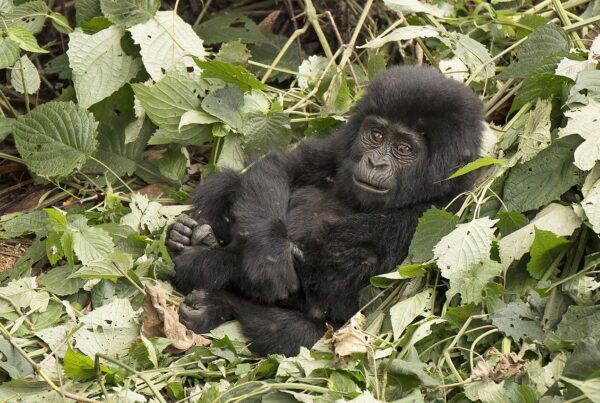
gorilla permit revenue Uganda Wildlife Authority budget is one of Africa’s most extraordinary wildlife experiences, connecting travellers with mountain gorillas in their natural forest habitat. Uganda Wildlife Authority collects tens of millions of US dollars annually from gorilla trekking permits, making it one of the best-funded national park management organisations in sub-Saharan Africa relative to the area it manages — but the question of how that money is actually spent, what proportion reaches conservation operations versus administrative overhead, and how the COVID-19 revenue collapse of 2020-2021 revealed the funding model’s vulnerabilities is rarely examined in the tourism literature that promotes gorilla trekking as a conservation mechanism. A clearer picture of where the permit money goes makes the link between your Bwindi gorilla trek and the conservation outcomes more transparent. See Uganda safari packages.
- Revenue scale: gorilla permits are UWA’s largest single revenue source; the organisation manages 10 national parks with this and other income
- Community revenue sharing: a mandated percentage of gate fees channelled to community development projects in adjacent parishes
- COVID impact: 2020-2021 revenue collapsed when all tourism stopped; revealed the danger of conservation funding dependent on a single revenue stream
- Ranger salaries: UWA employs thousands of rangers across all parks; gorilla permit revenue funds this largest cost line
- Research partnerships: UWA co-funds research with IGCP, Dian Fossey Gorilla Fund, Gorilla Doctors through shared data access and field support
Uganda Wildlife Authority collects over USD 20 million annually from gorilla trekking permits alone, making it one of the best-funded national park management organisations in sub-Saharan Africa relative to the area it manages. Understanding how this revenue is allocated — which activities it funds, where the constraints and inefficiencies lie, and what the financial priorities of UWA’s management reveal about its conservation philosophy — allows visitors to assess the value they are receiving for their permit fee beyond the immediate experience of the trek itself. This financial transparency is genuinely rare in conservation organisations, and UWA’s published budget allocations provide a more detailed picture of conservation economics than most comparable institutions offer.
How gorilla permit revenue is spent: inside Uganda Wildlife Authority’s budget
The revenue distribution framework
Uganda Wildlife Authority distributes its total revenue from park fees, permit sales, concession agreements, and other sources according to a framework established in the Uganda Wildlife Act and periodically revised by the UWA Board of Trustees. The framework prescribes that twenty percent of gorilla permit revenue is directed to the community revenue sharing programme, with the remaining eighty percent retained by UWA for operational and capital expenditure. This eighty percent is in turn allocated across operational categories according to annual budget plans developed through UWA’s planning process and approved by the Board.
The major operational categories funded from retained revenue include ranger salaries and field allowances, which represent the largest single expense category as the organisation employs several hundred field rangers across Bwindi, Mgahinga, and its other protected areas. Equipment procurement and maintenance — vehicles, radios, weapons, field technology — represents the second major category. Infrastructure maintenance including roads, visitor facilities, and ranger posts constitutes a significant ongoing expenditure particularly given the degrading effects of Bwindi’s heavy rainfall on road surfaces and building structures. Research support, veterinary services, and habituation programme expenses are funded within the operational budget with varying priority depending on annual revenue levels.
Ranger salaries: the core protection investment
Rangers are the front line of gorilla protection — the people who patrol boundaries, remove snares, monitor habituated groups, respond to poaching incidents, and maintain the daily human presence in the forest that deters illegal activity. The quality and motivation of the ranger force is therefore the most important single determinant of protection effectiveness, and ranger salaries are the mechanism through which UWA recruits and retains the capable people that effective protection requires.
Ugandan ranger salaries, while competitive by local standards, are modest by international comparison, and maintaining ranger motivation in difficult and sometimes dangerous field conditions requires management approaches that extend beyond basic compensation. Field allowances for time spent on patrol, career progression systems that reward seniority and performance, and the social status of UWA employment in communities where formal employment is scarce all contribute to ranger retention and motivation. Investment in ranger welfare — housing near their assigned areas, healthcare provision, equipment that protects their safety — produces returns in ranger performance and longevity that UWA has recognised as strategically important even in budget-constrained years.
The community revenue sharing fund: how it is managed
The twenty percent of gorilla permit revenue directed to community revenue sharing represents approximately USD 4 to 5 million annually at current permit volumes. This fund is administered through a process that involves community consultative meetings, parish-level priority setting, and UWA community warden oversight. Communities identify their priority projects — typically infrastructure including schools, health centres, roads, and water systems — and submit proposals that are evaluated against technical and financial criteria before funding is approved and transferred.
The fund has funded hundreds of community infrastructure projects since its introduction in the late 1990s, and independent evaluations have documented measurable improvements in community welfare indicators in areas receiving the funding. School enrolment, water access, and healthcare utilisation show improvement trajectories in revenue-sharing communities compared to comparable communities without proximity to gorilla tourism, though attributing these improvements exclusively to the revenue sharing fund rather than to broader development trends is methodologically challenging.
Critiques of the fund management focus on the inequitable distribution of benefits across communities — those with more effective local governance and advocacy capacity tend to receive proportionally more funding than more marginalised communities including the Batwa — and on the delay between permit revenue collection and community fund disbursement that occasionally results in years-long gaps between projected and actual community receipts. These management challenges are acknowledged within UWA and have been the subject of periodic reform efforts, with varying degrees of success.
Capital investment: infrastructure that enables the tourism product
A portion of UWA’s retained revenue funds capital investment in the park infrastructure that makes gorilla trekking possible: trailhead facilities, ranger posts, communication systems, vehicle access roads, and visitor orientation centres. These investments are not glamorous from a conservation perspective but are essential to the functioning of the tourism product that generates revenue — without maintained roads that lodge vehicles and park vehicles can use, without functional ranger posts at sector headquarters, without communication systems that allow real-time coordination between tracker teams and tourist groups, the logistics of gorilla trekking as currently operated would collapse.
The tension between capital investment in visitor infrastructure and capital investment in conservation capacity — the vehicles, equipment, and facilities that rangers need for effective protection work rather than visitor management — is a recurring budget allocation challenge that UWA manages through annual planning processes that attempt to balance both needs against available revenue. Years of high tourism revenue allow more investment in both categories; years of low revenue like the COVID-19 period force prioritisation choices that often favour visitor management infrastructure over ranger equipment, since the revenue-generating capacity of the visitor management function takes precedence when budgets are constrained.
Donor funding as a budget supplement
UWA’s tourism revenue is supplemented by international donor grants from bilateral aid programmes, conservation foundations, and multilateral bodies including the Global Environment Facility. These grants typically fund specific conservation activities — research programmes, habitat restoration projects, capacity building initiatives — that tourism revenue alone does not cover, and they often come with accountability requirements that improve the transparency and effectiveness of the funded activities.
The COVID-19 period demonstrated both the value and the limits of donor funding as a conservation finance complement to tourism revenue. When tourism revenue collapsed in 2020 and 2021, emergency donor grants from conservation foundations and international governments partially compensated for lost operational funding, allowing ranger salaries and critical monitoring activities to continue. But donor funding mobilised for emergency purposes is inherently uncertain in scale and timing, and the gap between projected needs and actual donor response left UWA managing significant budget constraints throughout the tourism closure period. The experience reinforced the importance of financial reserves and revenue diversification as strategic priorities for conservation organisations that depend primarily on tourism income.
For visitors, understanding UWA’s budget and funding challenges provides context for the permit fee that represents the most direct financial contribution most visitors make to gorilla conservation. The USD 800 is not simply the price of admission to a wildlife experience but a contribution to a conservation finance system that supports rangers, community development, research, veterinary care, and the park management infrastructure that makes the gorilla population’s continued survival and growth possible. The transparency with which UWA reports its budget allocations is itself a conservation asset — it demonstrates accountability to the international community whose financial support, both through permits and through donor programmes, the conservation enterprise depends on.
How is Uganda Wildlife Authority’s gorilla permit revenue allocated?
Uganda Wildlife Authority is a semi-autonomous government agency that retains its revenue for operational use rather than returning it to Uganda’s central treasury as standard government departments do. This makes UWA unusually financially capable relative to most African park management authorities. The revenue goes into UWA’s consolidated budget, which funds operations across all 10 national parks and multiple wildlife reserves — not only Bwindi. The largest budget lines are ranger salaries (UWA employs several thousand staff across its system) and operational costs (vehicles, fuel, equipment, maintenance). The community revenue sharing scheme, which channels a percentage of gate fee revenue to parishes adjacent to park boundaries, is a separate mandated allocation. UWA publishes annual reports with financial data; the most current figures are available from UWA’s official website. The actual allocation percentages between conservation operations, administration, and community sharing are in those reports and are the definitive source for anyone requiring current verified figures.
How did COVID-19 affect gorilla conservation funding?
The COVID-19 pandemic — which effectively halted all international tourism from March 2020 to mid-2021 — produced the most serious conservation funding crisis for mountain gorilla protection since the 1980s. UWA’s gorilla permit revenue dropped to essentially zero for 12-15 months; the community revenue sharing scheme paid out nothing to adjacent communities; lodge staff were laid off; and porter and guide incomes disappeared. UWA was able to maintain ranger operations through a combination of government emergency funding, international donor emergency grants (IGCP, the Wildlife Conservation Society, and others mobilised quickly), and reserve funds — but the episode revealed clearly how vulnerable the conservation model is to external shocks that interrupt tourism. The post-COVID recovery in gorilla tourism demand was faster than many predicted — permit bookings recovered strongly through 2022-2023 — but the crisis produced serious discussions about building more diversified and resilient funding mechanisms rather than relying almost entirely on permit revenue.
What percentage of permit revenue reaches the communities near Bwindi?
Uganda’s community revenue sharing scheme for national parks channels a percentage of gate entrance fees (including gorilla permits) to the Local Councils of parishes adjacent to park boundaries. The percentage has been subject to policy revision over time; the original scheme set the figure at 20% of gate fees for directly adjacent parishes, and subsequent policy revisions have adjusted both the percentage and the eligibility criteria. The current allocation and distribution mechanism should be confirmed through UWA’s official documentation rather than cited from older sources, as it changes with budget cycles. What is consistent: the community revenue sharing mechanism has funded schools, health centres, water points, and community infrastructure near Bwindi over the past two decades, and the suspension of distributions during COVID demonstrated how significantly adjacent communities had come to depend on this income stream as a component of their household budgets and community development planning.
Does international donor funding supplement gorilla permit revenue?
Yes — several international organisations contribute financially to gorilla conservation in Uganda alongside UWA’s own permit revenue. The International Gorilla Conservation Programme (IGCP) — a joint programme of WWF, Fauna and Flora International, and the African Wildlife Foundation — funds transboundary coordination activities across Uganda, Rwanda, and DRC including ranger training, community engagement programmes, and research. The Gorilla Doctors veterinary programme (operated by Wildlife Health Global) is funded primarily through private donations and foundation grants rather than permit revenue. The Dian Fossey Gorilla Fund International funds long-term research and monitoring at its field stations. The Wildlife Conservation Society and World Wildlife Fund both support UWA operations through technical assistance and targeted grant funding. This multi-source funding structure means that even when permit revenue is disrupted (as in COVID), some conservation functions are maintained through donor funding — the donor community mobilised emergency funding rapidly in 2020 specifically to prevent ranger layoffs during the permit revenue gap.
How transparent is Uganda Wildlife Authority about how it spends conservation revenue?
UWA publishes annual reports that include financial statements and are available through the UWA website. The reports provide budget allocation data at a category level — staff costs, operational costs, infrastructure, community programmes — though detailed programme-by-programme breakdowns of how Bwindi-specific permit revenue is spent versus revenue from other parks are not published separately. As a semi-autonomous government agency, UWA is subject to Uganda’s public finance management legislation and is audited by the Auditor General of Uganda. The community revenue sharing distribution records are published at Local Council level and are accessible to researchers and journalists. International partner organisations (IGCP, Wildlife Conservation Society) independently monitor and report on the effectiveness of the conservation investments they support. For the most accurate current financial data, UWA’s annual reports and the IGCP’s programme evaluations are the primary sources — tourism promotional content (including content on this site) provides context and explanation, not definitive financial data.
- Gorilla Trekking Cost in Uganda – 2025 Permit, Safari & Budget Breakdown
- Uganda’s Gorilla Permit Revenue Broke Records in 2025: Where It Goes
- How the $800 Uganda Gorilla Permit Compares to Other Wildlife Fees
- The role of the Uganda Wildlife Authority: rangers, management, and the people behind conservation
- How Uganda’s tourism revenue is distributed: from permits to communities
- Why Gorilla Trekking in Uganda Is Africa’s Most Unforgettable Wildlife Adventure
- 2025 Uganda Gorilla Trekking Permits – Cost, Booking, Rules & More
- Uganda Gorilla Trekking Permit 2025 – Cost, Booking & Availability Guide
- What a 3-Day Uganda Wildlife and Cycling Safari Did to My Family Was Beyond Anything We Expected
- Wildlife in Uganda – Where Nature Still Roars, Hums, and Soars Free