Updated
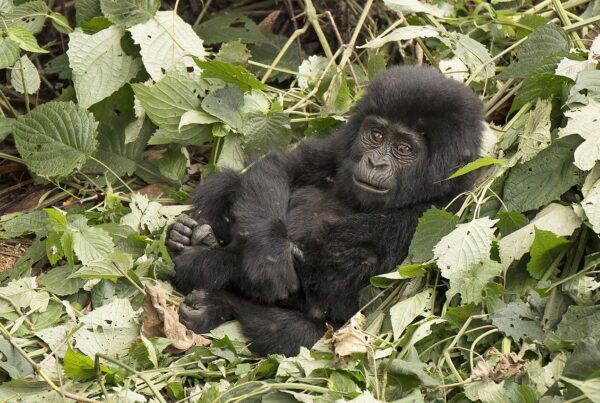
gorilla permit conservation funding Uganda is one of Africa’s most extraordinary wildlife experiences, connecting travellers with mountain gorillas in their natural forest habitat. When a visitor pays for a Uganda gorilla trekking permit, that payment enters a conservation funding chain that reaches from Uganda Wildlife Authority’s central treasury to ranger salaries in Bwindi, to community revenue-sharing funds in the villages that surround the park, to the Gorilla Doctors veterinary programme monitoring individual gorilla health — making gorilla trekking not just wildlife tourism but the primary funding mechanism for the conservation infrastructure that has driven the mountain gorilla population from an estimated 254 individuals in the early 1980s to over 1,063 today. Understanding where permit money actually goes is both a factual question and a practical one for visitors deciding how to structure their Bwindi experience. See Uganda safari packages that include the full conservation context alongside the gorilla encounter itself.
- Permit price: set by Uganda Wildlife Authority; revenue goes to UWA’s conservation and operations budget
- Community revenue sharing: a percentage of park gate revenues channelled to communities surrounding Bwindi and Mgahinga
- What UWA funds with permit revenue: ranger salaries, patrol vehicles, anti-poaching operations, research, gorilla monitoring
- Gorilla Doctors: separate veterinary programme funded by donations and conservation partnerships; monitors habituated families
- Population result: mountain gorilla population grew from 254 (early 1980s) to 1,063 (2018 census)
When you hand over $800 for a gorilla trekking permit in Uganda, you might wonder where that money actually goes. The question is more than idle curiosity—it goes to the heart of whether gorilla tourism is genuinely conservation finance or simply expensive wildlife watching with a green label attached. The answer, in Uganda’s case, is substantive: the permit fee model has been one of the most effective conservation funding mechanisms in Africa over the past three decades, and tracing the dollar reveals a system that connects tourist expenditure directly to the survival of an endangered species.
How gorilla permits fund Uganda’s conservation: following the $800 dollar
The Uganda Wildlife Authority revenue share
Gorilla trekking permits are issued by Uganda Wildlife Authority (UWA), the government body responsible for managing all national parks and wildlife in Uganda. Of the $800 permit fee (as of 2025), UWA retains a portion for its operational budget—ranger salaries, park infrastructure, anti-poaching patrols, veterinary services for the gorilla groups, and administrative costs. UWA’s operating budget is substantially dependent on gorilla permit revenue; without it, the organisation would require significantly higher government subsidy to maintain current protection levels. The gorilla is, in a very direct sense, funding its own survival through the value it generates as a tourism asset.
The community revenue share: 20 percent to local villages
Uganda pioneered one of the earliest formal community revenue-sharing programmes in African national park management. Under Uganda’s Wildlife Act, 20 percent of gate fees and permit revenues from national parks are distributed to local communities in the parishes adjacent to the park. For communities neighbouring Bwindi—which generates some of Uganda’s highest per-park permit revenue—this represents a significant annual income stream. The funds are administered through elected Community Conservation Committees and channelled into projects chosen by the community: school construction and maintenance, water supply infrastructure, health centre equipment, and road repairs. The principle is straightforward: communities that receive tangible economic benefits from the park have a material interest in protecting it rather than converting it to farmland.
Does the community share work in practice?
The community revenue-sharing model has been extensively studied in southwestern Uganda, and the findings are broadly positive with important caveats. Communities that have received consistent revenue share over many years show measurably higher levels of support for the park in attitude surveys—fewer respondents supporting illegal entry, more supporting anti-poaching efforts. The physical infrastructure funded by community shares is visible across the parishes surrounding Bwindi: classrooms, boreholes, health clinics. However, researchers have also documented challenges: uneven distribution of funds between parishes, governance failures in some Community Conservation Committees, and the perception among more distant communities that the benefits cluster in the villages immediately adjacent to park gates. Ongoing reform and monitoring are needed to ensure the share reaches its intended beneficiaries equitably.
Gorilla Doctors: veterinary care funded by tourism
One of the direct conservation programmes funded in part by gorilla tourism revenue is the Gorilla Doctors—an international veterinary organisation that provides medical care to habituated mountain gorilla groups across Uganda, Rwanda, and the DRC. Gorilla Doctors teams monitor habituated gorilla families regularly, respond to medical emergencies (snare wounds, respiratory infections, injuries), and conduct post-mortem examinations of gorillas that die naturally to advance knowledge of mountain gorilla health. Their work has been directly credited with saving the lives of numerous gorillas that would otherwise have died from treatable conditions. The organisation is funded by a combination of institutional grants, private donations, and revenues channelled from gorilla tourism through UWA and the Rwanda Development Board.
Anti-poaching and ranger operations
Uganda Wildlife Authority maintains a network of ranger posts around Bwindi, conducting regular foot patrols through the park to detect and remove snares, monitor gorilla group locations, and deter illegal entry for bushmeat hunting or crop raiding retribution. This operational capacity is permit-revenue dependent. A reduction in gorilla permit sales—whether from pandemic travel shutdowns, political instability, or competitor destination pricing—translates directly into reduced ranger patrol capacity within months. The COVID-19 pandemic made this vulnerability starkly visible: when gorilla tourism collapsed in 2020, UWA faced immediate budget shortfalls and multiple conservation organisations launched emergency fundraising appeals to maintain basic ranger operations. Tourism revenue is not merely a supplement to conservation—it is the primary operating mechanism.
Conservation beyond the park boundary
Some of the most impactful conservation work funded by gorilla tourism takes place outside the park boundary—in the buffer zone and surrounding community land where human-wildlife conflict is most acute. Programmes include: crop compensation schemes for farmers whose fields are raided by gorillas or elephants moving outside park boundaries; beehive fence projects (gorillas dislike bees and do not cross beehive fence lines—a low-cost, non-lethal deterrent); and tree nursery programmes that plant fruit and fodder trees in community land to provide gorilla foraging resources without requiring illegal park entry. These buffer zone programmes are funded through a combination of NGO grants, community conservation fund allocations, and direct contributions from tour operators under their conservation commitments.
The Bwindi Community Hospital
One of the most remarkable institutions built on the foundation of gorilla tourism is the Bwindi Community Hospital, located just outside the park at Buhoma. Founded initially as a small community health post in the 1990s, it has grown into a fully functioning district hospital serving tens of thousands of people in the Bwindi area—people who previously had no access to surgical care, maternal health services, or specialist treatment within any reasonable travel distance. The hospital was established with the explicit argument that conservation fails when the communities surrounding a park have unmet basic needs that the park cannot address. Healthy communities are less likely to engage in illegal park activities; communities that associate the gorilla with their own improved wellbeing become its advocates rather than its adversaries. Many tour operators and lodges contribute to the hospital as part of their conservation commitments.
The permit price debate
There is an ongoing debate within conservation economics about whether gorilla permit prices should be higher or lower. The argument for higher prices: restricting volume while increasing revenue per visitor reduces ecological impact, funds more conservation per visitor, and positions gorilla trekking as an ultra-premium experience that generates more community benefit per trekker. Rwanda has pursued this strategy, raising its permit price to $1,500 in 2017 and attracting a higher-spending visitor profile. The argument for lower or stable prices: broader access democratises the experience, brings in total revenue that higher prices at lower volumes cannot match, and allows smaller operators and community-run enterprises to participate in the tourism economy. Uganda has historically occupied the middle ground—lower than Rwanda, higher than the DRC—and the current $800 price represents that deliberate positioning.
What your permit actually buys
Your $800 gorilla permit buys you one hour with a habituated gorilla family in one of the world’s most biodiverse forests. It also funds ranger patrols that removed thousands of snares from the forest in the last year. It funds the community health worker in the village adjacent to the park boundary. It funds the tree nursery that produces 50,000 seedlings annually for buffer zone planting. It funds the veterinary team that treated the silverback’s snare wound in March. It funds the school that the Community Conservation Committee selected as this year’s revenue-share project. The encounter is extraordinary. What it makes possible is more extraordinary still.
- How One Viral Gorilla Photo Raised Half a Million Dollars for Conservation
- How gorilla tourism funds conservation in Uganda: the economics of saving a species
- The economics of eco-lodges: how sustainable accommodation funds conservation
- 2025 Uganda Gorilla Trekking Permits – Cost, Booking, Rules & More
- Meet the conservationist protecting mountain gorillas in the heart of the impenetrable forest.
- Exploring the Uganda Wildlife Conservation Education Centre
- Discounted Gorilla Permits in Uganda for International Travelers
- Why Bwindi Gorilla Permits Sell Out for February First (And How to Get One in 2026)
- Uganda Gorilla Trekking Cancellation and Refund Policy
- Uganda Gorilla Permits for Students: Discounts and How to Qualify
Where exactly does Uganda gorilla permit revenue go?
Uganda gorilla permit revenue goes to Uganda Wildlife Authority, the semi-autonomous government agency responsible for managing Uganda’s national parks. UWA uses this revenue across its operations: ranger salaries and equipment across all parks (not just Bwindi); vehicle maintenance and fuel for patrol operations; anti-poaching equipment and technology; management of park infrastructure; research and monitoring programmes; and a mandated community revenue-sharing scheme. The community revenue-sharing scheme channels a percentage of overall park gate fees (including gorilla permits) to community development projects in parishes adjacent to national park boundaries — this has funded schools, health centres, and water projects near Bwindi. The exact current percentage in the community sharing scheme is published by UWA and is subject to policy review, so confirm the current allocation through UWA or a reliable conservation source.
Does the gorilla permit pay for actual ranger salaries at Bwindi?
Yes — Uganda Wildlife Authority ranger salaries across the organisation are funded through the revenue generated by park entrance fees and permits, of which gorilla permits are by far the single largest revenue source. Rangers at Bwindi include: the armed rangers who accompany every gorilla trek group for safety; the trail trackers who locate gorilla families every morning before the visitor groups depart; anti-poaching rangers who conduct boundary patrols removing snares and enforcing against illegal encroachment; and the law enforcement rangers who process wildlife crime cases. Each habituated gorilla family at Bwindi requires a dedicated team of rangers for daily monitoring and trek management — this represents a significant ongoing personnel cost that is sustained by permit revenue.
How does gorilla tourism benefit communities near Bwindi directly?
Community benefit from gorilla tourism takes several forms. First, the UWA revenue-sharing scheme provides funds for community development projects in adjacent parishes. Second, the direct employment economy around Bwindi: local community members work as porters (hired at the briefing point), local guides for community cultural walks, craft sellers, lodge staff, and cooks — these jobs provide incomes tied directly to the tourism generated by the gorilla families. Third, community enterprises like the Buhoma Community Rest Camp, the Ride 4 a Woman cooperative, and craft cooperatives channel visitor spending directly into family incomes. Fourth, the Bwindi Community Hospital — the primary healthcare facility for surrounding communities — was established and is supported partly through gorilla tourism revenue. The combined economic argument for conservation (gorillas as income generators) is the most effective tool in sustaining community support for the park.
Is gorilla tourism actually effective as conservation?
The evidence from 40 years of gorilla tourism in Uganda and Rwanda is that it has been more effective than most alternative conservation financing models would have been. The mountain gorilla population has grown from approximately 254 individuals in the early 1980s to over 1,063 in 2018 — a period that coincides with the establishment and growth of gorilla tourism revenue. No other great ape is the only one whose wild population is currently increasing. Critics of the model note that habituation creates disease exposure risk, that community benefit is uneven, and that tourism revenue is vulnerable to external shocks (COVID demonstrated this clearly). These are valid concerns. But the counterfactual — no gorilla tourism, no permit revenue, conservation funded by government budgets and donor grants alone — has not demonstrably produced better outcomes for other great ape species in comparable situations.
How does Uganda’s gorilla conservation compare to Rwanda’s?
Both countries use the same fundamental model — high-price limited-access tourism with community revenue sharing and dedicated conservation infrastructure. Rwanda’s Volcanoes National Park charges a significantly higher permit price than Uganda’s Bwindi and has invested heavily in premium lodge infrastructure, positioning gorilla trekking as a luxury product. Uganda’s permit provides comparable gorilla encounter quality at a lower price point but with more logistically demanding access (longer drives, more diverse accommodation range). Rwanda maintains tighter visitor controls and more consistent service standards. Both countries contribute significantly to the conservation fund that sustains ranger operations, veterinary monitoring, and community programmes. The DRC’s Virunga National Park manages the third portion of the Virunga gorilla range under much more difficult security and funding conditions.
- How One Viral Gorilla Photo Raised Half a Million Dollars for Conservation
- How gorilla tourism funds conservation in Uganda: the economics of saving a species
- The economics of eco-lodges: how sustainable accommodation funds conservation
- 2025 Uganda Gorilla Trekking Permits – Cost, Booking, Rules & More
- Meet the conservationist protecting mountain gorillas in the heart of the impenetrable forest.
- Exploring the Uganda Wildlife Conservation Education Centre
- Discounted Gorilla Permits in Uganda for International Travelers
- Why Bwindi Gorilla Permits Sell Out for February First (And How to Get One in 2026)
- Uganda Gorilla Trekking Cancellation and Refund Policy
- Uganda Gorilla Permits for Students: Discounts and How to Qualify