Updated
Uganda rainy seasons gorilla trekking is one of Africa’s most extraordinary wildlife experiences, connecting travellers with mountain gorillas in their natural forest habitat. Uganda’s weather is one of the first things safari planners ask about—and one of the most frequently misunderstood. Uganda is an equatorial country, which means it receives rainfall year-round, but the rainfall is not evenly distributed: there are two distinct rainy seasons and two distinct dry seasons, and each creates different trekking conditions in the forest. Understanding the pattern—and what it means in practice for gorilla trekking—takes the guesswork out of timing your trip.
Uganda’s rainy seasons explained: how rainfall affects your gorilla trek
Uganda’s four seasons at a glance
Uganda’s climate follows a broadly bimodal pattern: two wet seasons (March–May and October–November) and two dry seasons (June–August and December–February). In practice the boundaries are not precise—rainfall varies by altitude, by proximity to the Great Lakes, and from year to year with ENSO cycles—but this framework is reliable enough for trip planning. The short dry season (December–February) and the long dry season (June–August) are the peak tourism periods, coinciding with school holiday periods in the Northern Hemisphere. The wet seasons see fewer visitors, lower rates at some lodges, and different but not worse trekking conditions.
Bwindi’s microclimate
Bwindi Impenetrable National Park sits at the edge of the Albertine Rift at elevations between 1,160 and 2,607 metres, straddling a highland ridge system that generates its own weather. The park receives rainfall throughout the year—even the dry seasons are not fully dry at Bwindi. Misty mornings are common year-round, and afternoon showers occur even in June and August. The difference between Bwindi’s wet and dry seasons is one of degree rather than kind: during the wet seasons rainfall is heavier, more frequent, and more sustained; during the dry seasons rainfall is lighter, briefer, and more occasional. For practical trekking purposes, this means the forest is always wet underfoot to some degree, and waterproof gear is essential at any time of year.
The long dry season: June to August
June, July, and August are the most popular months for gorilla trekking in Uganda. The reasons are clear: school holidays in Europe and North America align with this window, and the weather at Bwindi is at its most reliably clear. Mornings often dawn crisp and clear, with mist in the valleys burning off by mid-morning. Afternoon cloud build-up is common but heavy sustained rain is less frequent than in the wet seasons. The forest floor is firm enough to make the steep ascents less slippery, though mud persists on shaded slopes. The disadvantage of this peak period is that permits are in highest demand—booking six to twelve months in advance is strongly recommended—and lodge rates are at their highest.
The short dry season: December to February
December through February is the second dry season and the second peak in gorilla trekking bookings, driven partly by Northern Hemisphere winter holidays and partly by genuinely excellent trekking conditions. January is often the clearest month of the year at Bwindi—cool nights, bright mornings, and the spectacular possibility of clear views south to the Virunga volcanoes. This is also the season when the vegetation is at its most open, the trail slightly less overgrown, and the gorillas sometimes found at lower elevations. December from the 26th onward is extremely busy; January and February offer better availability while retaining the good weather.
The long rainy season: March to May
March through May is the long rainy season—sustained, heavy afternoon rains across most of Uganda, with Bwindi receiving some of its wettest conditions of the year. Trekking in this period is wetter, muddier, and occasionally more challenging: trails that are steep and firm in dry season become slick with red laterite mud in the rain, and the final section down steep slopes can be genuinely treacherous without good waterproof boots and trekking poles. But the wet season has compensations that dry-season visitors miss entirely: the forest is at its most vivid green, the vegetation lush and overflowing. Waterfalls that are dry trickles in August become cascading white torrents in April. The morning mist is thick and atmospheric, hanging in the valley like a Victorian painting. Bird activity is intense—many species are breeding, and the cacophony of the forest at dawn in April is extraordinary. Lodge rates are at their lowest, and permit availability is far better than in peak season.
The short rainy season: October to November
October and November bring the short rains—generally less intense than the March–May rains but still significant at Bwindi. This is a shoulder season: fewer visitors than the dry periods, lower rates than peak season, and trekking conditions that vary from day to day. Some days in October and November are entirely dry and beautiful; others bring persistent rain from morning onward. The short rains are less predictable than the long rains—more variable from year to year. The gorilla families are found throughout their range regardless of rain, and the trek proceeds in all but truly dangerous conditions. For budget-conscious travellers who can tolerate some uncertainty about weather, October–November offers excellent value.
What rain actually means on trek
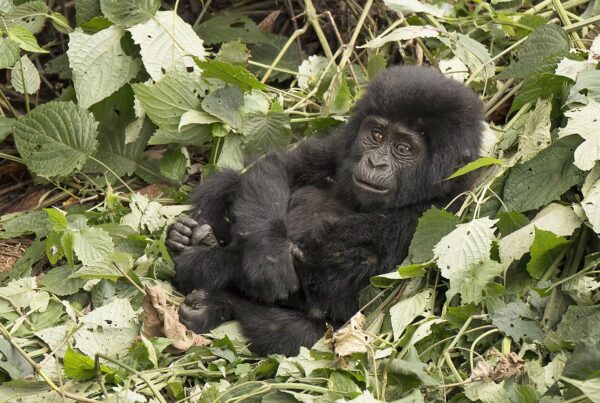
Rain during a gorilla trek is not a disaster—it is part of the forest experience. The gorilla families continue their normal activities in rain; if anything, rain suppresses human noise and makes the forest feel more intimate. Rangers and guides provide plastic rain ponchos if you have not brought your own, though a quality waterproof jacket and trouser is more comfortable for extended hiking. The main practical effects of rain on trek are: trail surfaces become more slippery (trekking poles become essential rather than optional); camera gear needs protection (a rain sleeve or a dry bag for the camera body is critical); and if you are using a GPS or phone for navigation, these need waterproofing too. The gorillas themselves are unbothered by rain—the silverback sits like a boulder while the rain runs off his fur, and the juveniles continue playing in the undergrowth with complete indifference to the weather.
Temperature through the seasons
Bwindi’s temperature is moderated by altitude. The park sits high enough that temperatures rarely exceed 25°C even in the dry season, and nights are cool year-round—sometimes dropping to 10°C or below at the highest elevations. The temperature difference between valley and ridge can be significant: warm and humid in the lower forest zones, cool and windy on exposed ridges. Dressing in layers is sensible regardless of season. The wet season brings slightly warmer daytime temperatures than the dry season—the cloud cover traps heat overnight—but the rain and wind can make it feel considerably cooler. A lightweight fleece packed in the daypack is useful in any month.
Choosing your season
For first-time visitors prioritising the best weather and trail conditions, the dry season (June–August or December–February) is the right choice—but book permits early. For experienced travellers, photographers looking for lush green forest and dramatic mist, or budget-conscious trekkers, the wet seasons offer equally memorable experiences with fewer crowds and better permit availability. The gorillas are there year-round. The forest is extraordinary year-round. The season you choose shapes the aesthetic of the experience—golden dry-season light versus green wet-season lushness—but it does not determine whether the encounter happens. That part is largely guaranteed.
- Best Time for Gorilla Trekking in Uganda – Monthly Guide to 2025 Seasons
- Uganda gorilla trekking explained: everything a first-timer needs
- Uganda Gorilla Trekking from Kigali: The Cross-Border Option Explained
- How Many People Are Allowed Per Gorilla Family Per Day: Uganda’s Strict Limit Explained
- Gorilla Trekking Group Size: Maximum People Per Trek in Uganda Explained
- How Long Do You Spend With Gorillas During the Trek? The One-Hour Rule Explained
- What Time Does Gorilla Trekking Start? Schedules Explained for Uganda
- Can You Use a Drone in Bwindi? Drone Laws in Uganda Explained
- What Is the Gorilla Trekking Age Limit? Uganda Rules Explained
- Can You Trek Gorillas Twice in One Day? Double Trekking Explained