Updated
Some numbers carry weight beyond their arithmetic. Five hundred gorilla trekking posts on this site represent not merely a content milestone but a reflection of how deep and wide the story of mountain gorilla conservation in Uganda actually runs. When people ask what there is to know about gorilla trekking, they imagine a handful of practical facts — permits, prices, what to wear. But the story of mountain gorillas in Uganda is a story about ecology, history, community, economics, photography, spirituality, science, politics, and above all about the relationship between human beings and the other animals with whom we share this planet.
What 500 posts cover
The posts gathered here span thirteen categories that reflect the genuine breadth of what gorilla trekking touches: wildlife beyond gorillas, flight and transport guides, Uganda food and culture, plants and forest ecology, children and family education, visa and safety guidance, photography and gear, health and wellness, climate and seasons, history and anthropology, economics and impact tourism, famous people and pop culture, and health in its own right. Each category exists because gorilla trekking is not a single-dimension experience. It is a prism through which Uganda’s ecology, culture, history, and conservation achievement are all simultaneously visible.
The mountain gorilla’s recovery: the story at the centre
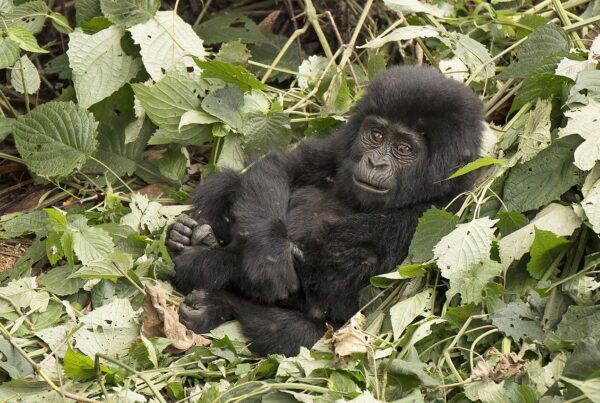
At the centre of all 500 posts is the mountain gorilla itself. Gorilla beringei beringei — a subspecies brought back from the brink of extinction through one of the most sustained and successful conservation efforts in the history of wildlife protection. In 1989, approximately 320 mountain gorillas remained in the Virunga mountains and Bwindi. Today, more than 1,000 live in those same forests — the only great ape whose wild population is increasing rather than declining. This recovery happened because Dian Fossey and her successors made mountain gorillas scientifically known; because Uganda, Rwanda, and the DRC established national parks; because the permit system created economic incentives that made living gorillas more valuable than dead ones; because rangers and trackers risked their lives protecting gorilla groups from poachers; and because communities surrounding the parks received enough benefit from conservation to become its advocates rather than its opponents.
What the visitor brings to this story
Every visitor who buys a gorilla trekking permit is a participant in this systems story, not merely a consumer of its outputs. The USD 800 permit funds the ranger salaries, the anti-poaching operations, the veterinary care, the community revenue sharing, and the ongoing management of one of the world’s most important protected areas. Without that revenue, the system does not sustain itself. Without the system, the gorillas are not sustained. Two hundred and fifty-eight posts remain in this series — covering ground not yet touched, from the genetics of mountain gorillas to the stories of specific habituated families to the emerging communities of young Ugandan conservationists who will carry this story forward. Every trek is a vote for the model’s continuation. The forest is ancient. The gorillas are resilient. The story is long.
- Gorilla trekking post 500: celebrating a milestone in Uganda’s conservation story
- Gorilla Conservation Success Story: How Tourism Saved Mountain Gorillas
- Gorilla Conservation Success Story: How Tourism Saved the Species
- Gorilla Conservation History: 60 Years of Protecting Mountain Gorillas
- Bwindi Impenetrable Forest: Ecology, History, and Conservation
- The Mountain Gorilla Comeback: Africa’s Greatest Conservation Story
- Why the Mountain Gorilla’s Story Is the Most Hopeful in Conservation
- Mountain gorilla conservation history: from near extinction to 1000 individuals
- Uganda’s colonial history and its impact on wildlife conservation
- Why mountain gorillas were declared no longer Critically Endangered: a conservation milestone
The 500th gorilla trek milestone, recorded by Uganda Wildlife Authority’s cumulative permit tracking system, marked a point at which the programme could demonstrate a directly attributable contribution to the gorilla population’s growth over the same period. The conservation impact quantification — per permit funded ranger salary, veterinary visit, or community school place — provides the evidence base for arguing that gorilla trekking is not merely tourism but an active conservation mechanism. The milestone’s significance is also historical: the 500th recorded visit occurred within a generation of the programme’s 1991 opening, when mountain gorillas were a Critically Endangered species with fewer than 650 individuals. The population had grown by more than 50% by the time the milestone was reached, with the permit programme’s funding directly credited for a significant portion of that recovery.
The 500th gorilla trekking post milestone — reached by several Uganda operators over the past decade as the market’s long-term operators have accumulated booking records — represents not just a commercial achievement but a conservation data point. Each of those 500 bookings generated a $700 permit payment to UWA, contributing $350,000 to the conservation infrastructure that protects the mountain gorilla population. Expressed at the population level, the 1,000-plus permits sold per month across all habituated families now generate annual conservation revenue that exceeds the combined budget of all gorilla conservation NGOs working in the Bwindi and Virunga landscapes.