Updated
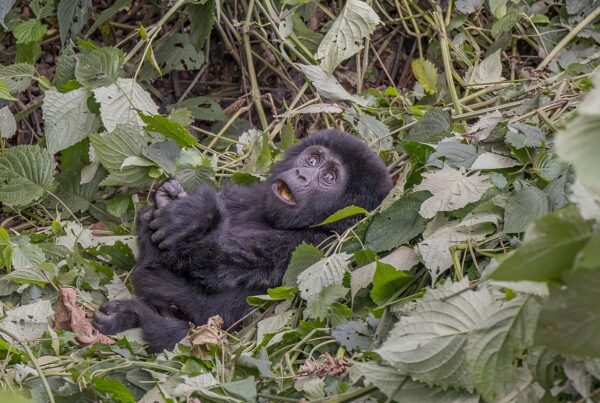
The mountain gorilla is one of the best ways to explain endangered species to children, because its story has a clear problem, clear causes and a hopeful turn. In the early 1980s only about 250 mountain gorillas were left in the Virunga volcanoes; today there are just over 1,000 across the Virungas and Bwindi, after decades of protection paid for partly by tourism. Here is how to explain what “endangered” means, why species decline, and what children can do, adjusted for different ages.
Start with what “endangered” means
Many children think endangered and extinct mean the same thing. Make the difference clear: extinct means none are left anywhere, like the dodo; endangered means there are still some, but so few, or under so much threat, that they could disappear if nothing changes. The IUCN Red List, used by scientists worldwide, ranks species from Least Concern to Critically Endangered and Extinct. Mountain gorillas were moved from Critically Endangered to Endangered in 2018 because their numbers grew. See our guide to why mountain gorillas were downlisted.
Use real numbers
Children over about eight handle real numbers well, and they make the idea concrete. Just over 1,000 mountain gorillas could fit in one school hall; they live in only two places, the Virunga volcanoes shared by Uganda, Rwanda and Congo, and Bwindi Impenetrable National Park in Uganda. Comparing this to the number of children in their school, or the population of their town, helps. See our guide to how many mountain gorillas are left.
Why species become endangered
Three causes cover most cases and are easy to remember. Losing their home: forests are cleared for farms and towns, and around Bwindi and the Virungas, farmland now reaches the park boundary. Being hunted or trapped: gorillas are rarely the target, but they get caught in wire snares set for antelope, and in the past infants were captured for zoos. Disease: gorillas can catch human illnesses such as colds, which is why visitors keep at least seven metres away and wear masks. Climate change is a growing fourth threat for many species.
Tell the story of the people involved
Children connect with people. Dian Fossey studied mountain gorillas in Rwanda for 18 years and campaigned against poaching; she was murdered in 1985, a crime never solved. David Attenborough’s 1978 film of him sitting among gorillas showed millions of people how gentle they are. Most of all, there are the rangers and trackers of Uganda, Rwanda and Congo who patrol every day, remove snares and check on each gorilla family, and the vets of Gorilla Doctors who treat injured gorillas in the wild.
Explain why the gorilla recovered
Older children can understand that protection costs money and needs local support. Each gorilla trekking permit in Uganda costs US$800, or US$600 in April, May and November, and that money pays for rangers and park management, while a share goes to communities around the park for schools, clinics and roads, so neighbours benefit from the gorillas staying alive. Contrast this with Grauer’s gorilla in eastern Congo, which has declined sharply due to conflict and mining and is Critically Endangered: it shows that recovery depends on what people do.
Adjusting for age
For children under eight, focus on gorilla families: babies riding on their mothers’ backs, the silverback as a protective dad, and the people who look after them. Avoid frightening detail about poaching. Between eight and twelve, add numbers, threats, maps and simple research projects. Teenagers can discuss harder questions: is it fair to keep farmers out of a forest? Does tourism help or harm? Should money from permits go to local people? See our guide to gorilla books and films for children.
What children can do
End with action, so the story feels hopeful. Children can recycle old mobile phones, as metals such as coltan are mined in gorilla areas of Congo, raise money for a gorilla conservation charity, give a school presentation, or start a wildlife journal on a family trip. Children under 15 cannot trek gorillas, but they can meet rescued wildlife at the Uganda Wildlife Conservation Education Centre in Entebbe. See our guide to wildlife journals for children.
Frequently asked questions
There are still some left, but so few that they could disappear forever unless people protect them.
Just over 1,000, in the Virunga volcanoes and Bwindi.
Yes. They were moved from Critically Endangered to Endangered in 2018.
Recycle old phones, raise money for a gorilla charity and share what they learn with others.