Updated
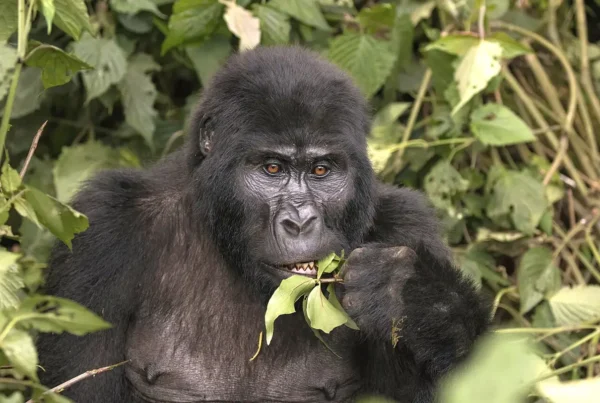
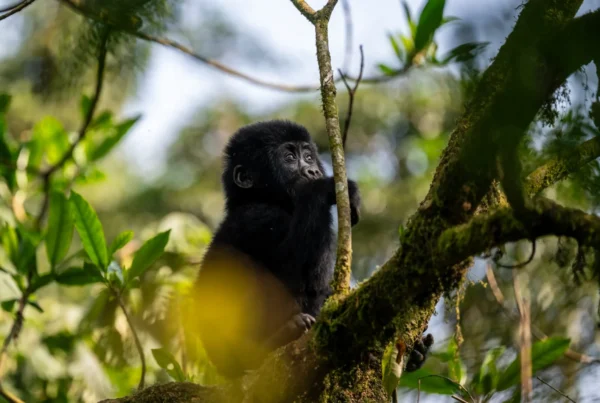
The minimum age for gorilla trekking in Uganda is 15, and the trekker must have turned 15 by the date of the trek. The same rule applies in Rwanda and Congo. Rangers can ask for a passport to check age, and permits are not issued to younger children, with no exceptions for families. There is no upper age limit: people in their 70s and 80s trek regularly, helped by porters, families that are often closer to the trailhead and, if needed, a sedan chair carried by porters.
Why the limit is 15
There are two reasons. Children catch colds and other respiratory infections more often than adults, and those infections can be dangerous to gorillas, which share most of our DNA. And the trek itself demands patience and calm: walking for hours on steep, muddy ground, then staying quiet and still near a silverback, including if he charges. Younger children may find this frightening or hard to manage, and a sudden movement or scream could provoke the gorillas. See our guide to gorilla trekking rules.
Trekking with teenagers
Teenagers of 15 and over often love gorilla trekking and handle the walk well. Book permits in their name with their passport details, prepare them for the length of the day, the rules and the possibility of a long, muddy walk, and make sure they have proper boots and rain gear. A porter helps. Our guide to taking teenagers gorilla trekking covers preparation in detail.
Families with younger children
Families with children under 15 can still enjoy Uganda. One parent can trek while the other stays with younger children at the lodge, then swap on another day with a second permit. Younger children can join many other activities: chimpanzee tracking in Kibale usually has a minimum age of 12, golden monkey tracking in Mgahinga is popular with families, game drives and boat trips in Queen Elizabeth and Murchison Falls have no age limit, and Ngamba Island’s chimp sanctuary near Entebbe welcomes children. See our guides to golden monkey tracking and chimpanzee tracking.
Older travellers
Age alone does not stop anyone trekking. What matters is fitness and health: talk to your doctor if you have heart, lung or joint problems, and tell the ranger at the briefing so they can try to assign a family that has been closer recently. Hire a porter, use a walking stick and take your time. For those who cannot walk far, porters can carry a sedan chair, arranged in advance at extra cost. See our guides for older travellers and trekking with limited mobility.
Booking
Gorilla permits cost US$800, or US$600 in April, May and November, and are issued in each trekker’s name for a specific date. If a child turns 15 shortly before your trip, check the date of birth against the trek date before booking. The four-hour Gorilla Habituation Experience in Rushaga has the same minimum age. See our guide to booking a gorilla permit.
Frequently asked questions
15 years old on the day of the trek, in Uganda, Rwanda and Congo.
No. Permits are not issued to children under 15, and rangers can check passports.
No. Fitness matters more than age, and porters and sedan chairs help those who need it.
Game drives, boat trips, Ngamba Island, community walks and, from about 12, chimp and golden monkey tracking.