

Updated
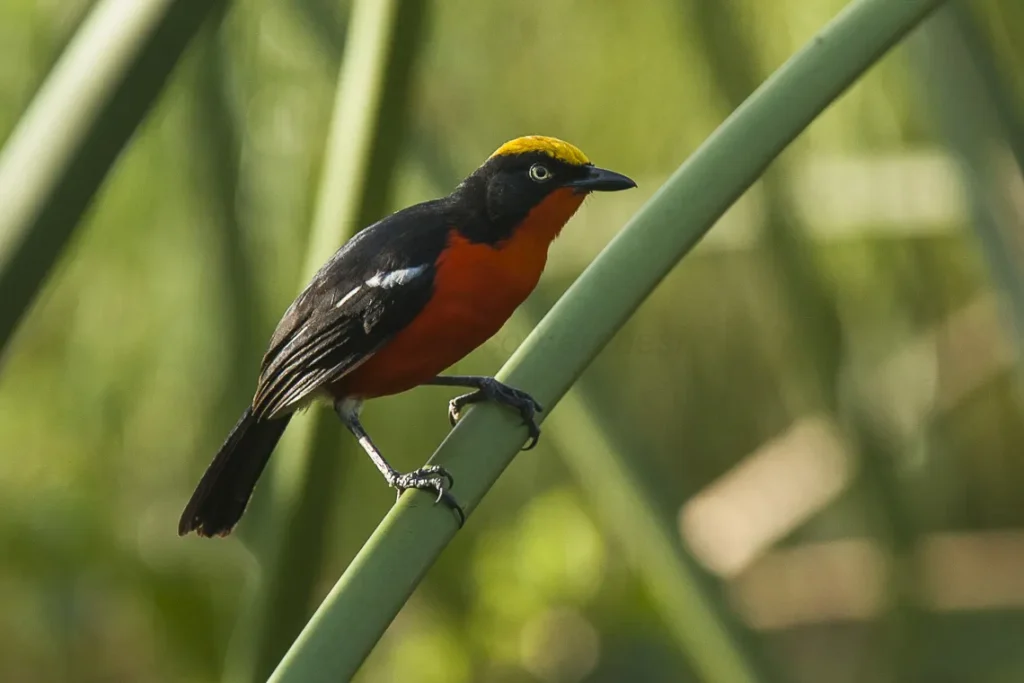
The papyrus gonolek is a striking bushshrike with a crimson throat and breast, black back, golden-yellow crown and white wing bar. It lives only in papyrus swamps around Lake Victoria and a few other lakes in East and Central Africa, and is listed as Near Threatened because those swamps are being drained and cut. In Uganda it is a sought-after bird at Mabamba, Lutembe Bay and other papyrus swamps near Entebbe and Kampala.
Habits
Gonoleks stay low inside dense papyrus, hunting insects among the stems, and are usually found by their calls. Pairs duet with harsh churring and clicking notes, one bird answering the other almost instantly. They hold territories year-round and nest within the papyrus. Patience at a swamp edge, or a slow canoe trip, gives the best views as a bird pops up to the top of a stem.
Threats
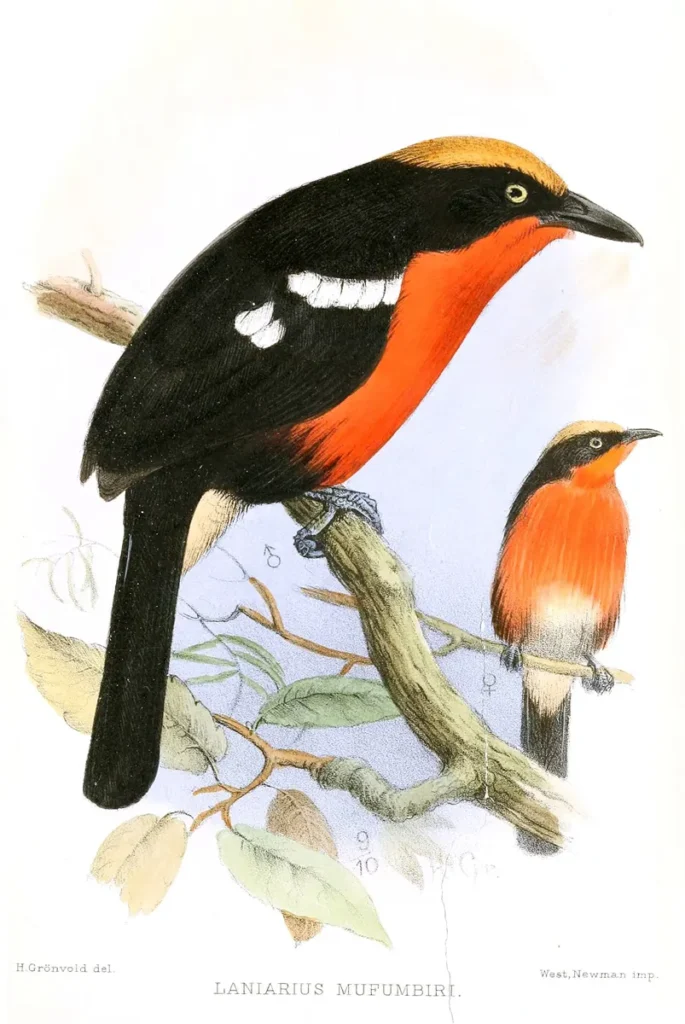
Papyrus swamps around Lake Victoria are being cleared for farming, brick-making and building, and papyrus is harvested for mats and roofing. Because the gonolek cannot live anywhere else, losing these swamps directly reduces its range. Protected wetlands such as Mabamba, a Ramsar site, are important for its survival.
Where to see it
Mabamba Swamp, west of Entebbe, is the classic site, often seen on the same canoe trip as the shoebill. The gorilla permit costs US$800, or US$600 in April, May and November. See our guides to Mabamba Bay birding, Uganda’s wetlands, shoebills at Mabamba and Uganda birding.
Frequently asked questions
In papyrus swamps near Lake Victoria, especially Mabamba and Lutembe Bay.
It is listed as Near Threatened because of papyrus swamp loss.
Listen for the pair’s harsh duet and wait at the swamp edge.
Insects and other small invertebrates among the papyrus.










