

Updated
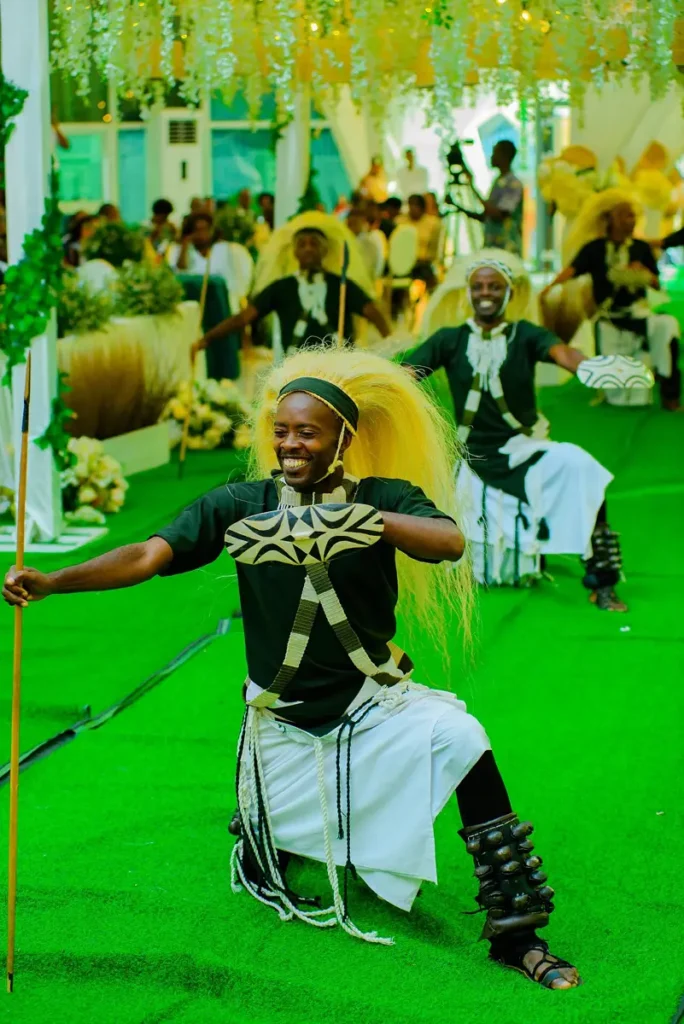
Intore is the famous warrior dance of Rwanda, originally performed at the royal court by young men chosen and trained for the purpose; the name roughly means “the chosen ones”. Dancers wear long, flowing headdresses resembling a lion’s mane, beaded bands and ankle bells, carry spears and shields, and leap and stamp to powerful drumming. It is also performed across the border in Kinyarwanda-speaking parts of south-west Uganda, especially around Kisoro near the gorilla parks.
The dance and its costume
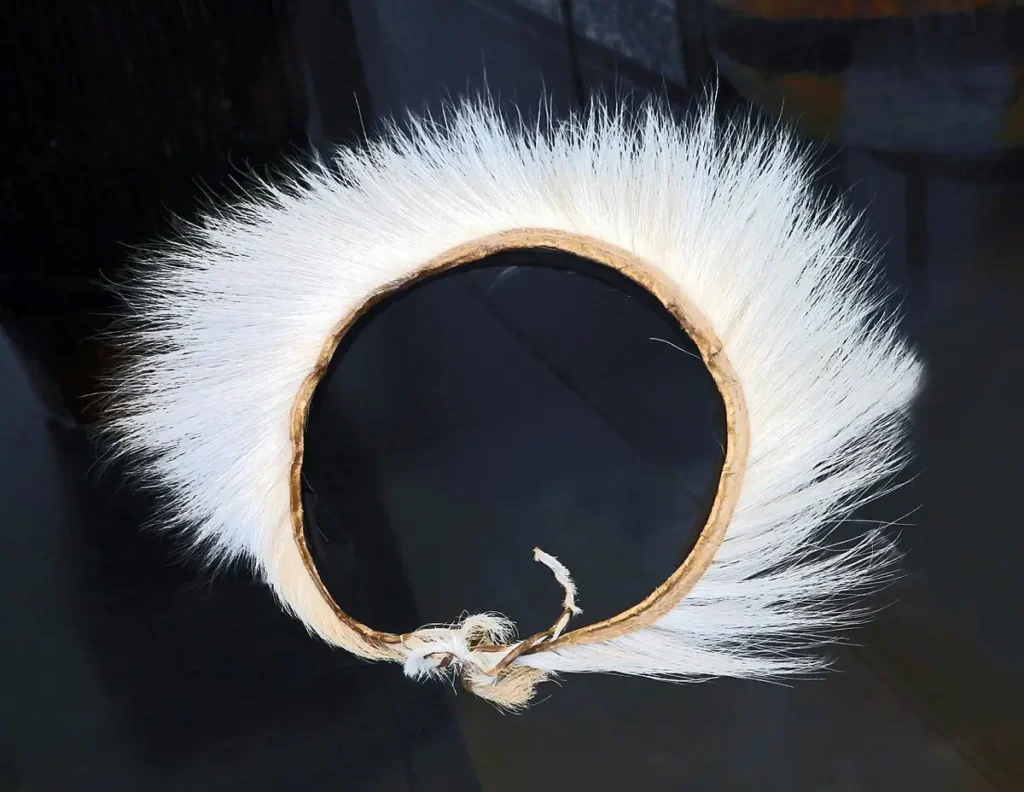
A full intore performance usually combines three parts: the drummers, playing large ingoma drums in complex rhythms; the women’s dance, graceful and slow, with arm movements that echo the shape of long cattle horns; and the men’s warrior dance, with high jumps, rapid footwork and mock combat. The men’s headdresses, made of long pale fibres, swing with every leap, and bells on the ankles add to the rhythm. Songs often praise cattle, courage and history.
History
In the Rwandan kingdom, intore were young men trained in dance, oratory and martial skills for the king’s court, and their performances celebrated victories and ceremonies. After independence, the dance became a national symbol, performed by troupes such as Rwanda’s national ballet and at weddings and public events. In Uganda, Bafumbira communities around Kisoro keep similar traditions, which developed in the same cultural area before the 1910 border divided it. See our guide to the Bafumbira people.
Where to see it
Near Mgahinga and Bwindi’s southern sectors, lodges and community groups often host evening performances of dance and drumming, sometimes including intore-style dances. In Rwanda, performances are common around Musanze and at the Volcanoes National Park headquarters before treks. Watching and paying fairly supports local groups. See our guides to Ugandan music and music and dance near Bwindi.
Other dances in Uganda
Uganda has many dance traditions: Kiganda dance with its fast hip movements in Buganda, the leaping Bakiga dances of Kigezi, the Acholi bwola royal dance and the Karamojong jumping dances. The Ndere Centre in Kampala shows many of them in one evening. The gorilla permit costs US$800, or US$600 in April, May and November. See our guide to the Ndere Centre.
Frequently asked questions
Roughly “the chosen ones”, for the young men selected to dance at the royal court.
It is Rwandan in origin but also performed by Kinyarwanda-speaking communities in south-west Uganda.
Long mane-like headdresses, beads, ankle bells, and spears and shields.
At lodge and community performances around Kisoro and in Musanze, Rwanda.










