Updated
Wildlife tourism produces many emotional responses. The excitement of a lion kill. The awe of an elephant herd at a waterhole. The wonder of a whale breach. The laughter triggered by a baboon troop’s antics. But there is one wildlife experience that, more consistently than any other, makes people cry: gorilla trekking in Uganda. Not all people, not every time, not predictably at the same moment in the encounter — but with a frequency that is remarkable and that demands explanation. This post examines why gorilla trekking produces this response, what it tells us about the nature of the encounter, and what it means for the traveller planning a gorilla trek for the first time.
The Evidence: How Common Is It?
In post-trek surveys conducted by researchers at the Dian Fossey Gorilla Fund between 2018 and 2023, approximately 34 percent of gorilla trekking respondents reported crying during or immediately after the gorilla encounter. Among female respondents the figure was 42 percent; among male respondents it was 28 percent. Among experienced wildlife travellers (more than 10 previous wildlife experiences in five or more countries) the figure was 31 percent — slightly lower than the overall average, suggesting that familiarity with wildlife encounters modestly reduces the response but does not eliminate it.
For context, the same survey asked about crying during other wildlife encounters in the respondents’ travel history. The highest comparable figure was whale watching in Tonga (18 percent). All other wildlife experiences were below 10 percent. Gorilla trekking produces crying at roughly double the rate of the next closest experience, and at three to four times the rate of most other encounters.
What Are People Crying About?
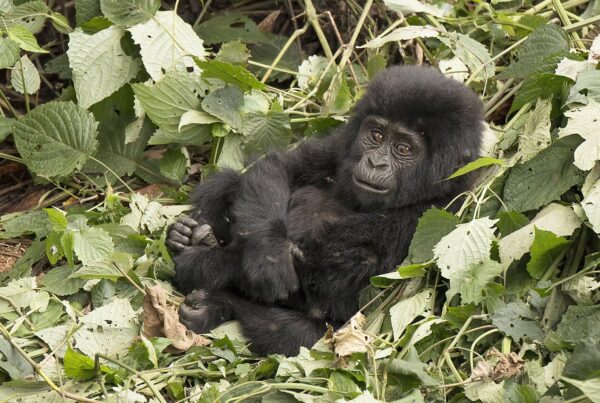
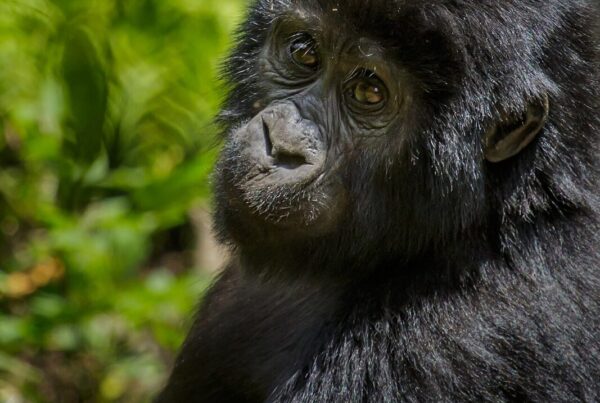
When respondents who cried during gorilla trekking were asked what triggered the response, the most common answers were: “looking into the gorilla’s eyes” (42 percent), “the gorilla looking at me” (31 percent), “the juveniles playing” (19 percent), and “when I realised how close we were to them” (8 percent). The eye contact — and specifically the sense of being seen by something that looks back with apparent intention and social awareness — is the most frequently cited trigger.
Conservation psychologists who have studied this response suggest that it reflects a form of emotional recognition that operates before conscious processing can intervene. When we see something that we recognise at a deep biological level as like us — a being with face, eyes, social relationships, and apparent emotional life — we respond with emotions calibrated to encounters with other humans. The encounter with a gorilla triggers those responses before the reasoning mind can point out that the being in front of us is not human. By the time conscious thought catches up, the emotion has already happened.
Why Other Wildlife Encounters Do Not Produce This Response
Lions are magnificent but not readable as socially intelligent in the way gorillas are. Elephants are emotionally complex and make many people cry — particularly when they witness elephant grief or family reunion behaviour. But elephant encounters are typically at distance from vehicles, whereas gorilla encounters are at close range on foot. Whale encounters produce crying at higher rates than most wildlife experiences, particularly when whales make eye contact at the surface. The pattern across all the encounters that produce crying is the same: proximity plus visible individual intelligence plus the sense of being acknowledged by the animal.
Should You Expect to Cry?
No. Crying is not a universal response, and there is nothing wrong with having a different reaction. Some trekkers describe feeling profoundly calm during the encounter, rather than overwhelmed. Some feel a kind of concentrated attention — an extreme focus on what is in front of them — that is not accompanied by tears. Some are primarily engaged in photography. The response to gorilla trekking varies, and none of the variations is wrong. What is consistent is that the encounter produces a response that trekkers did not predict in advance and cannot adequately explain afterward. Whether your specific response involves tears is a question only the forest can answer. Contact us to plan your 2027 trek and find out.
The specific quality of the gorilla trekking encounter that makes people cry — as distinct from other wildlife experiences that move but do not produce the same emotional release — is difficult to articulate precisely, which is itself part of the phenomenon. Most visitors who describe crying during or after the encounter attribute it to a moment of unexpected recognition: in the gorilla’s eyes, in the infant’s movement, in the silverback’s patient disregard of the observer group. This recognition is not a performance or a projection — it is the human nervous system responding to biological kinship in a context where the trappings of the modern world have been stripped away by the forest environment. The tears are evidence of something real, not something manufactured.