Updated
book gorilla trekking Uganda now is one of Africa’s most extraordinary wildlife experiences, connecting travellers with mountain gorillas in their natural forest habitat. Stop for a moment and think about this: if you booked gorilla trekking in Uganda right now — this week — where would you be in three months? You would be in Bwindi Impenetrable Forest, standing in the presence of mountain gorillas, watching a silverback move through the canopy light with a calm authority that makes the 80km drive through the Ugandan highlands and the steep morning walk through ancient forest feel like the most straightforwardly correct decision you have made in years. Start with the cost breakdown, find an accredited operator, and book your gorilla permit.
- Lead time: 4-6 weeks minimum for off-peak; 3-4 months for June-September and December-February peak season; book permits before everything else
- Permit cost: USD 800 per person; via accredited Uganda operator or direct from Uganda Wildlife Authority at ug-booking.com
- Flights: Entebbe International Airport (EBB); direct from London, Amsterdam, Brussels, Istanbul; connecting via Nairobi or Addis from USA
- Visa: Uganda e-visa USD 50 at visas.immigration.go.ug; most nationalities also get on-arrival at Entebbe
Stop for a moment and think about this: if you booked gorilla trekking in Uganda right now — this week, today — where would you be in three months? You would be in Bwindi Impenetrable Forest, standing in the presence of mountain gorillas. You would be having the experience that people spend years talking about having and then look back on as the most extraordinary thing they ever did. Three months is not a long time. And the only thing between you and that moment is a decision.
What If You Booked Gorilla Trekking Right Now: Where Would You Be in 3 Months
The Gap Between Wanting and Doing
Most people who end up doing gorilla trekking spent years thinking about it first. They saved the article. They bookmarked the tour operator website. They told their partner they wanted to go “someday.” Someday stretched into years, and the trip stayed in the category of things that feel important but not urgent — until something shifted, and they booked, and they went, and they came back changed.
The shift is rarely dramatic. It is usually small — a conversation, a photo, a moment of clarity while doing something mundane. But the result is decisive: the booking gets made, the trip becomes real, and three months later, the thing that lived in the category of “someday” becomes a memory you carry for the rest of your life.
What Three Months of Planning Looks Like
Three months is plenty of time to plan a gorilla trekking trip. The logistics are simpler than people expect. You need a permit ($800 per person for international tourists in 2027), a flight to Entebbe, a transfer to Bwindi, accommodation for the trek days, and an itinerary for the surrounding days if you want to see more of Uganda. A good tour operator handles all of it.
The planning process itself is enjoyable. Choosing your lodge — a luxury forest camp or a comfortable mid-range guesthouse. Deciding whether to combine Bwindi with chimpanzee trekking in Kibale or a safari in Queen Elizabeth. Figuring out how many days to spend and which forest sector to trek in. These are the kind of decisions that build anticipation in a way that enriches the eventual experience.
Permit Availability in 2027
If your target window is July or August 2027 — the peak of the dry season and the most popular time to trek — booking now is essential. Peak-season permits sell out far in advance, and once they are gone, they are gone. Mid-season windows like April, May, and November offer easier availability, slightly lower lodge rates, and the lush green beauty of the forest in its wet season. Any time of year is good for gorilla trekking — the gorillas do not take a dry season.
The Uganda Wildlife Authority limits each habituated gorilla family to eight trekkers per day. With roughly 20 habituated families at Bwindi and Mgahinga, that is a maximum of around 160 trekkers across the entire country per day. In a world of mass tourism, gorilla trekking remains genuinely exclusive — not by price alone, but by design.
Where You Would Be: A Day in the Life
Three months from now, if you book today, here is what your trek morning looks like. You wake early at a lodge on the forest edge. The air is cool and smells of damp earth and vegetation. You eat breakfast as rangers give the pre-trek briefing — explaining the rules, describing the family you will visit, estimating the hike time. Then you set off into the forest.
The hike varies from one to five hours depending on where the gorilla family has moved overnight. Rangers track their location from the previous evening’s nest site. As you walk, the forest closes around you. The sound of the outside world fades. Birds you cannot name call from the canopy. Your guide points out the path the gorillas took through the undergrowth — broken branches, knuckle prints in soft soil, fresh dung still steaming in the morning air.
The Moment of Contact
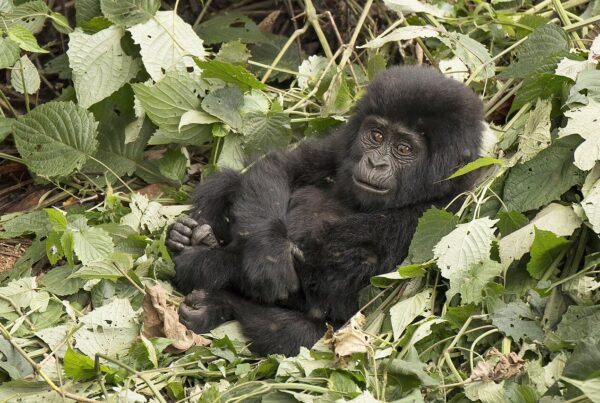
And then you find them. The ranger holds up a hand. You stop. Through the undergrowth, a shape resolves — enormous, dark, unhurried. A silverback. He glances at your group with an expression that contains no alarm, no aggression, and no particular interest. You are visitors in his world, and he has accepted your presence as he accepts the birds and the rain. You have one hour with his family. You use every second of it.
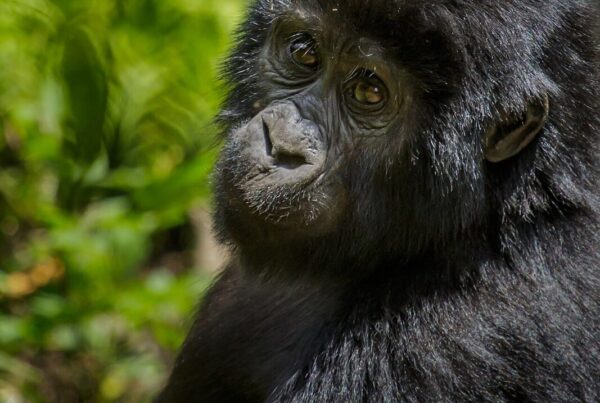
That is where you would be in three months. Not imagining it. Not watching a documentary about it. Actually there, actually breathing that air, actually looking into those eyes. The only thing required to make that happen is a decision made today.
The Cost of Waiting
Waiting has a cost that is easy to underestimate. Not a financial cost — though permit prices do not go down — but an opportunity cost. Every season you wait is a season you did not go. Every year you postpone is a year that the trip lives in the category of “someday” rather than “I did that.”
Mountain gorillas are thriving now, in 2027, because of decades of conservation effort. But their habitat remains under pressure. The forests of southwestern Uganda are surrounded by one of the most densely populated rural regions in Africa. The equilibrium that makes gorilla trekking possible is the result of ongoing work — work that depends on continued permit revenue and political will. Now is not just a good time to go. Now is the right time to go.
Three Months From Now
Picture yourself three months from today. You can be at home, doing what you are doing now — still thinking about gorilla trekking, still saving articles, still telling yourself someday. Or you can be at the edge of a forest that has existed for 25,000 years, about to walk into it and find something you did not know you were looking for.
The booking takes less time than another afternoon of planning. The decision, once made, creates momentum — flights, permits, itinerary, anticipation — that carries you forward until you are standing in Bwindi with your own eyes seeing what you spent years only imagining.
Book now. Three months from today, you will be there.
What can I realistically book and do in Uganda within the next 3-4 months?
A 3-4 month lead time is workable for most Uganda travel periods. Off-peak months (October-November, March-May): permit availability at Bwindi is generally good with 4-8 weeks notice; a 5-7 day trip can be fully planned and booked in 2-3 weeks once you decide to go. Peak months (June-September, December-February): 3-4 months notice is the minimum for popular sectors; Buhoma permits go fastest; Rushaga and Ruhija may have availability with 6-8 weeks notice. What you can book in one week: contact an accredited Uganda operator, confirm permit dates, book flights (price-sensitive so act promptly), arrange visa online (1-5 business days processing); accommodation can follow. The full trip: add Kibale chimps and QENP to the gorilla trek for Uganda’s complete primate-plus-savannah circuit.
What does the journey to Bwindi actually look like from the airport?
The overland journey is part of the experience. Entebbe to Bwindi by road: approximately 6-8 hours depending on route and road conditions; the main route goes through Kampala, Mbarara, Kabale, to Buhoma (most common) or Rushaga/Nkuringo (southern sectors). What the drive shows: equatorial forest turning to rolling farmland, then the escarpment of the Albertine Rift, then the dense green hills of southwestern Uganda that indicate you are approaching the gorilla zone; the landscape changes completely in the final 50km. By charter flight: fly-in itinerary from Entebbe or Kampala to Kihihi airstrip (near Buhoma) or Kisoro airstrip (near Nkuringo) takes 1 hour; ideal for time-limited visitors; charter cost is USD 500-800 per person each way depending on group size and aircraft. Accommodation: lodges at all Bwindi sectors range from USD 80/night guesthouses to USD 1,200/night luxury camps; most operators recommend mid-range lodges at USD 180-350/night for a comfortable but not extravagant stay.
What happens the morning of your gorilla trek?
The morning is structured and specific. Pre-dawn breakfast: most lodges serve breakfast from 6:00am for trekking guests; the drive to the park gate is 15-40 minutes from most Bwindi lodges; start time at the gate is typically 7:30-8:00am. Briefing: the UWA rangers brief all groups at the park gate — rules for the trek, the gorilla family assigned to your group, current location; this is where you get your trekking pole and meet your porter if you hired one. The trek: follows the ranger from the gate into the forest; lead ranger is in contact with trackers who have been following the gorillas since dawn from yesterday’s nest site; duration to gorillas varies from 30 minutes to 4 hours. The encounter: when the ranger signals to stop, you are with the gorillas; the 60-minute window starts; no talking above a whisper; no flash photography; stay together as a group. After: the trek back typically takes 1-2 hours; most lodges serve a late lunch on return.
What other Uganda parks can I add to a gorilla trekking trip?
The Uganda wildlife circuit is designed for combination. Kibale Forest: Kibale Forest NP for chimpanzee trekking and the Kibale habituation experience; en route between Kampala and Bwindi; 1-2 days; the complementary great ape experience. Queen Elizabeth NP: QENP between Kibale and Bwindi; tree-climbing lions at Ishasha, Kazinga Channel; 1-2 days. Murchison Falls: Murchison Falls NP in the north — Nile boat safari, Rothschild giraffe, elephant; added as a northern loop; 2-3 days. Lake Mburo: Lake Mburo NP on the road between Kampala and Bwindi — zebra, impala, hippo; overnight break on the drive south. See the 7-day gorilla itinerary.
Can I book gorilla trekking without a tour operator — directly with Uganda Wildlife Authority?
Yes, direct booking is possible but comes with trade-offs. Direct UWA booking: permits can be booked directly at ug-booking.com; USD 800 per person; this works if you are self-driving and managing accommodation independently. What you do not get: transport from Entebbe to Bwindi; accommodation; guide services in park (this is provided by UWA rangers on the day); contingency planning if your permit date changes or weather causes delay. Who benefits: experienced self-drive travellers who have already visited Uganda or similar destinations and are comfortable managing logistics independently; backpackers with flexible schedules. Who benefits more from operators: first-time Uganda visitors; groups; those on fixed schedules who need permit and accommodation guaranteed; see accredited Uganda operators and full cost comparison.
- Why Would My Soul Long for a 9-Day Uganda Gorilla Trekking and Wildlife Safari?
- Is Uganda Gorilla Trekking Right for You? The Honest Self-Assessment
- Gorilla Trekking Boots: How to Choose the Right Pair
- Is Uganda Safe to Visit Right Now? Here’s What the Data Actually Says
- The Biology Reason Why Gorilla Country Is the Safest Place in Uganda Right Now
- Kenya or Uganda Safari — Which Should You Book Right Now?
- What Every Travel Agent Needs to Tell Clients About Uganda Right Now
- Gorilla Knuckle-Walking Distributes Weight Better Than Walking Upright
- What Would Happen if All Mountain Gorillas Disappeared: The Ecosystem Impact
- The 6 Best Gorilla Trekking Videos on YouTube Right Now