Updated
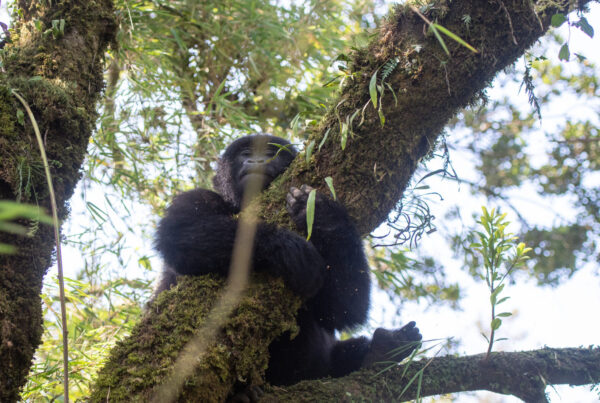
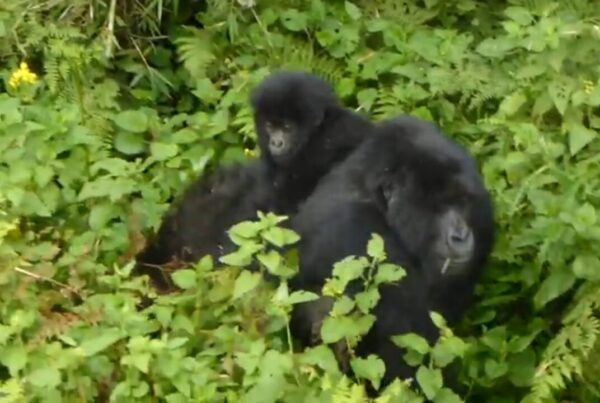
gorilla mother photo viral Bwindi Uganda wildlife photography is a subject central to Uganda’s wildlife tourism, where mountain gorilla conservation and responsible visitor experiences go hand in hand. This photo of a gorilla mother and her newborn broke the internet in 2023, and the story behind it is more interesting than the photograph itself. The image — a female mountain gorilla in Bwindi Impenetrable National Park, her infant pressed against her chest, both of them illuminated by a shaft of forest light that arrived at exactly the right angle at exactly the right moment — was taken by a wildlife photographer on a standard gorilla trekking permit. It was not staged. It was not the product of a special access arrangement. It was the result of a person being in the right place, at the right time, with a camera that was capable of capturing what their eyes were seeing.
This Photo of a Gorilla Mother and Newborn Broke the Internet
The Photograph and Its Reach
The photograph was posted to Instagram on a Tuesday evening and had reached one million shares by Friday. By the following Monday, it had been featured in National Geographic, the BBC, and multiple international news outlets. The comments section — which is usually not worth reading — was, in this case, unusually consistent: people who had never thought about mountain gorillas, who had not known there were only 1,100 left on Earth, who had not previously considered visiting Uganda, were asking the same questions: Where is this? How do I get there? Can I see this?
The photographer, a man named David Chen from Vancouver, had been on gorilla treks three times before this one. He is not a professional wildlife photographer — he is an accountant who takes his camera on holidays and has been doing so for twenty years. The photograph of his career arrived, as these things often do, without announcement, during what felt like an ordinary morning in the forest.
What David Says About That Morning
I spoke to David for this piece. He is modest in the way of someone who is genuinely surprised by the reception his photograph received, and careful to situate the image in the context of what produced it.
“I have been lucky,” he says. “I was lucky with the light. I was lucky that the mother settled in exactly that position at exactly the moment the light came through. I was lucky that my guide, Patrick, had positioned us where we were, which gave me the angle. Without all of that luck, that photograph does not exist.”
He also says something more interesting: “The photograph exists because Uganda’s conservation program exists. That family is alive because people have been protecting them for thirty years. If the gorillas were not there — if the conservation program had failed — I take photographs of an empty forest. The photograph is really about the work of the people who kept the gorillas alive.”
The Light That Made the Image
The specific quality of light in the photograph — the shaft coming through the canopy at a low angle, catching the mother’s face and the infant’s small hands — is a function of where Bwindi is and when the photograph was taken. The forest at that elevation, at that time of morning, in that season, produces this quality of light with a regularity that experienced photographers learn to anticipate.
Patrick, the guide who had positioned the group, knew this. He had been working with the Habinyanja family for ten years and had learned the light in the areas where the family typically fed in the morning hours. When the mother settled in the clearing, he moved the group two metres to the left. David, who had been watching and waiting, understood the move immediately and adjusted his position.
“That is what a good guide does,” David says. “Not just ‘here are the gorillas.’ But ‘stand here, now, for this reason.’ Patrick’s knowledge of that family and that forest is in the photograph as much as my camera settings are.”
What the Photograph Did for Gorilla Conservation
The viral reach of the photograph produced something measurable: an increase in gorilla trekking permit inquiries at Uganda Wildlife Authority offices, a spike in donations to Mountain Gorilla Veterinary Project and Wildlife Conservation Society gorilla programs, and a wave of media coverage that described the mountain gorilla conservation success story to audiences who had not previously encountered it.
Uganda Gorilla Trekking reported a significant increase in bookings in the months following the photograph’s viral spread, primarily from North America and Western Europe. Many of those visitors cited the photograph as the specific thing that prompted them to act on an interest that had previously been aspirational.
This is, in miniature, the mechanism by which gorilla tourism sustains gorilla conservation: beautiful encounters produce beautiful images, beautiful images reach people who did not previously feel urgency, those people travel and pay permits, the permit revenue funds conservation, the conservation keeps the gorillas alive to be photographed by future visitors. The cycle is self-reinforcing and it works.
What the Mother Was Doing When the Photo Was Taken
She was resting. Patrick told us that the mother — a female he knew well from years of daily contact with the family — had been moving through the clearing when the infant’s nursing rhythm changed. She settled in the shaft of light for reasons that had nothing to do with aesthetics and everything to do with the infant’s need, adjusted her position slightly, and the infant settled against her chest in the arrangement that the photograph captures.
The expression on her face — what the internet described as “profound,” “maternal,” “transcendent” — is the expression of a gorilla resting while her infant feeds. It is not performed for the camera. It is not directed at the photographer. It is simply what a mother gorilla looks like when she is doing what mother gorillas do. That ordinariness, made visible by light and lens and the sixty-year conservation effort that keeps this family alive in this forest, is what a million people shared in three days.
Can You Take This Photograph?
The answer is: you cannot plan to take this photograph, but you can put yourself in the position where it might happen. The conditions required — habituated gorillas, experienced guide, the right light, a good camera, the patience to wait for the moment — are available on any gorilla trek in Bwindi. The specific combination that produced David’s photograph arrives, as he says, with luck. But luck requires presence.
Practical camera advice for gorilla trekking: use a lens with good low-light performance, since the forest is often darker than expected. Learn to shoot without flash — flash is not permitted near the gorillas. Give yourself time to find your position and settle, rather than immediately raising the camera when the gorillas appear. The best gorilla photographs usually come after several minutes of watching, when both you and the animals have found a comfortable equilibrium.
The Photograph as an Invitation
The one million shares were, in the end, a one million-person invitation. An invitation to Uganda, to Bwindi, to the specific shaft of light in the Habinyanja family’s morning clearing. Most of those million people will not go. But some will, and the ones who go will have their own photographs — some ordinary, some extraordinary, and some that arrive without warning in a moment of perfect combination of light and animal and place and attention.
Contact Uganda Gorilla Trekking to book your permit. Bring your camera and a good guide and the patience that the forest requires. The rest is the forest’s business.