Updated
Churchill Uganda Pearl of Africa 1908 history is a fascinating chapter in Uganda’s rich and complex story, shaped by the forces of geography, trade, and human movement across East Africa. In 1907, Winston Churchill visited Uganda as Under-Secretary of State for the Colonies. He was thirty-two years old, already a veteran of several wars and a successful author, and he arrived in Uganda by rail from Mombasa, passing through Kenya before entering what was then the Uganda Protectorate. He spent several months in the country, travelling through Buganda, visiting the Nile at Ripon Falls, hunting, and observing the country’s extraordinary landscape and wildlife. In 1908 he published his account of the journey, “My African Journey,” in which he wrote the phrase that has defined Uganda’s international identity ever since.
How Winston Churchill Called Uganda the Pearl of Africa in 1908
The Phrase and Its Context
“Uganda is a fairy tale. You climb up a railway instead of a beanstalk, and at the top there is a wonderful new world. The scenery is different, the vegetation is different, the climate is different, and, most of all, the people are different from anything elsewhere to be seen in the whole range of Africa. For magnificence, for variety of form and colour, for profusion of brilliant life — bird, insect, reptile, beast — for vast scale — Uganda is truly the pearl of Africa.”
Churchill wrote this after travelling through south-western Uganda, where the green volcanic landscape, the density of birdlife, and the quality of the light had struck him as unlike anything he had seen elsewhere in Africa or on his wider travels. He was a perceptive naturalist and a good writer — his description of Uganda as “a fairy tale” and “the pearl of Africa” captured something real about the country’s improbable concentration of beauty in a small geographic space.
What Churchill Saw
Churchill’s Uganda was a different country from the Uganda of today in important respects — it was a British protectorate at the height of the colonial era, and his perspective was shaped by the attitudes of his class and time. But the natural landscape he described — the green hills, the volcanic crater lakes, the extraordinary birdlife, the equatorial light — is the same landscape that visitors encounter today. His instinct that Uganda was something exceptional within Africa has been validated by every measure of biodiversity, ecological diversity, and natural richness that has been applied to the country since.
He visited Ripon Falls on the Nile — the point at which Lake Victoria discharges into the Nile and which Churchill identified as “the most important river junction in the world.” The falls were later submerged by the Owen Falls Dam (now Nalubaale Dam), constructed in 1954, but the site near Jinja remains an important location on the Ugandan tourist circuit. Churchill fished for Nile perch in the river and wrote enthusiastically about the quality of the fish.
The Phrase in Contemporary Uganda
“Pearl of Africa” is now Uganda’s official tourism tagline, emblazoned on airport signage, marketing materials, and the national airline. It is a phrase with colonial origins that has been entirely reclaimed — what began as an Englishman’s compliment to a British protectorate is now a Ugandan statement of identity and pride. The phrase’s longevity reflects its accuracy: Uganda remains, by multiple biodiversity measures, one of the most ecologically rich countries in Africa, and the particular quality of its landscape — the density and greenness that Churchill noticed, the combination of forest and savannah and lake and mountain in a small area — is genuinely comparable to nothing else in East Africa.
Uganda in 2027
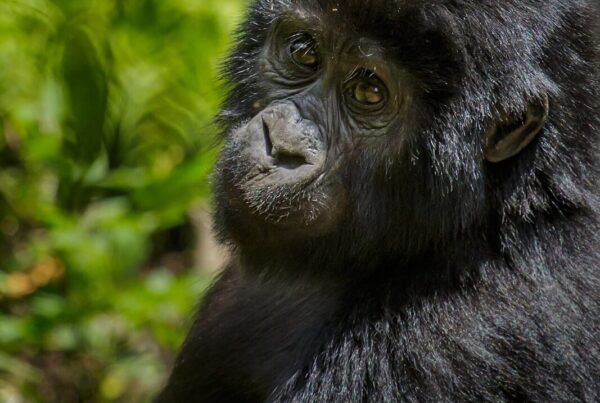
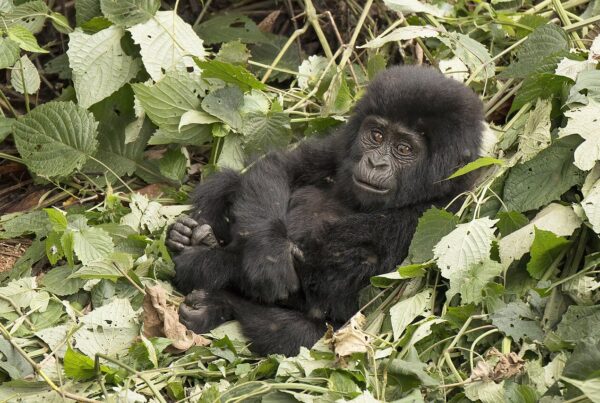
The Uganda that gorilla trekking visitors experience in 2027 would be unrecognisable to Churchill in most respects — Kampala is a city of two million people, the Nile is dammed, and the country has been through a century of colonial administration, independence, dictatorship, and recovery. But the quality that prompted the “pearl of Africa” description — the extraordinary concentration of life and colour and biodiversity in a small and improbably green country — remains. Churchill noticed the birds. He noticed the plants. He noticed the landscape. He never saw a mountain gorilla. The gorillas were in the same forest they are in today, unknown to science until Matschie described the species in 1903. They are part of the pearl he was describing, even if he did not know it.
Frequently Asked Questions
Uganda is home to the mountain gorilla (Gorilla beringei beringei), one of two subspecies of eastern gorilla. They live exclusively in the Virunga volcanic highlands (Uganda/Rwanda/DRC) and Bwindi Impenetrable Forest (Uganda only). Mountain gorillas are the only gorilla subspecies that cannot survive in captivity — every individual you can trek is a wild animal.
The standard gorilla trekking permit gives you exactly 1 hour with the gorilla family. This time begins when you make first contact with the family — the ranger signals the start. The Gorilla Habituation Experience gives 4 hours with a semi-wild family. The walk to find the gorillas can take 30 minutes to 5 hours depending on where the family has moved.
Stay calm, crouch down slowly, avoid direct eye contact, and remain quiet. Do not run — running triggers a chase response. Rangers accompanying your group manage close approaches. Habituated gorillas are accustomed to humans and almost never make contact, but a charging silverback is managed by staying still and following ranger instructions immediately.
A maximum of 8 visitors per habituated gorilla family per day for standard trekking. The Gorilla Habituation Experience has a maximum of 4 visitors per family per day. These limits are set by UWA to minimise stress on the gorilla families and maintain the quality of the experience.
Uganda is home to the mountain gorilla (Gorilla beringei beringei), one of two subspecies of eastern gorilla. They live exclusively in the Virunga volcanic highlands (Uganda/Rwanda/DRC) and Bwindi Impenetrable Forest (Uganda only). Mountain gorillas are the only gorilla subspecies that cannot survive in captivity — every individual you can trek is a wild animal.