Updated
There are two species of gorilla: the western gorilla (Gorilla gorilla), which includes the western lowland gorilla of Central Africa’s rainforest basin and the critically endangered Cross River gorilla of the Nigeria-Cameroon border; and the eastern gorilla (Gorilla beringei), which includes the mountain gorilla of Uganda, Rwanda, and the DRC, and the eastern lowland gorilla (also called Grauer’s gorilla) of eastern DRC. Mountain gorillas and western lowland gorillas are both available for trekking experiences in 2027, though in very different contexts, at very different costs, and with very different encounter qualities. This post compares the two experiences for travellers trying to decide which to prioritise — or which to do first if they plan to eventually do both.
Mountain Gorillas: The Established Experience
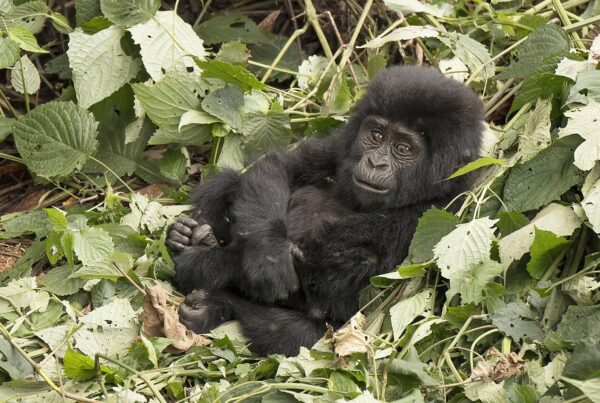
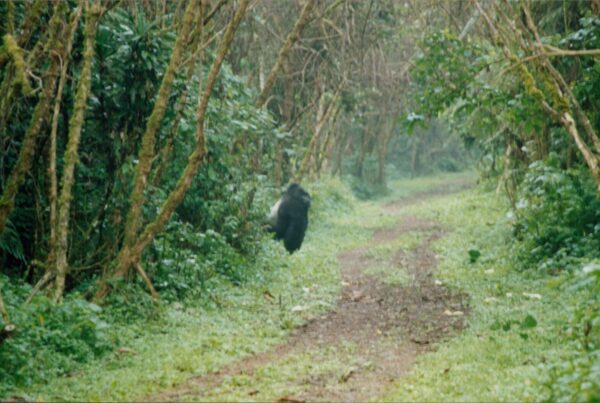
Mountain gorilla trekking in Uganda (Bwindi, Mgahinga) is the most established and best-managed gorilla trekking experience in the world. The habituation programme has been running since the late 1980s. The permit system is managed by Uganda Wildlife Authority. The community benefit mechanisms are well-developed. The encounter quality is consistent — families are tracked daily, guides are experienced, and the physical encounter with the gorillas in their natural forest habitat is as good as gorilla trekking gets anywhere. The permit costs USD 700 in Uganda (USD 1,500 in Rwanda). The access logistics are well established and the supporting tourism infrastructure is good.
Mountain gorillas are larger than western lowland gorillas. Adult male mountain gorillas (silverbacks) typically weigh 140 to 200 kilograms. Their imposing physical size — combined with the intimacy of the dense forest encounter — contributes to the specific quality of the mountain gorilla trekking experience. The silverback’s physical presence at seven metres is a visceral experience that western lowland gorilla encounters in different environments do not replicate.
Western Lowland Gorillas: The Rare Alternative
Western lowland gorillas can be trekked in the Republic of Congo (primarily in Nouabale-Ndoki National Park and its associated concessions), in Gabon, and in the Central African Republic. The encounter quality at the best sites — particularly the habituated families of Mbeli Bai in the Congo Basin — is extraordinary for different reasons than mountain gorilla encounters. Bai encounters involve watching gorillas at an open forest clearing (bai) from a raised hide platform, observing natural social behaviour — feeding, social interaction, inter-family encounters — over extended periods of time. The observation is less intimate in proximity terms (you are typically further from the gorillas) but longer in duration and richer in observable social complexity.
Western lowland gorilla trekking is significantly more expensive and logistically demanding than mountain gorilla trekking. Reaching Mbeli Bai requires flights to Brazzaville or Bangui, charter flights to remote airstrips, and lodge stays that are priced at USD 500 to 1,500 per person per night. The total cost of a Congo Basin gorilla experience is typically USD 8,000 to 15,000 per person excluding intercontinental flights — three to five times the cost of a Uganda gorilla trekking trip of comparable duration.
The Experience Comparison
Mountain gorilla trekking is the more emotionally intense individual encounter — the close proximity, the silverback’s gaze, the physical realness of large apes at arm’s length. Western lowland gorilla bai observation is the richer behavioural observation experience — longer duration, more gorillas visible simultaneously, more complex social behaviour observable over time. They serve different interests and produce different qualities of memory.
Which First?
For most travellers: mountain gorillas first. The combination of lower cost, better logistics, guaranteed encounter quality, and the specific physical intimacy of the mountain gorilla encounter makes Uganda the right starting point. Western lowland gorilla trekking, if you can reach the best sites and afford the cost, is an extraordinary addition to rather than a substitute for the mountain gorilla experience. Contact us to plan your Uganda mountain gorilla trek in 2027 — the experience that most gorilla-interested travellers should begin with.
The mountain gorilla’s specific adaptations to the high-altitude forest — the denser fur coat, the larger lung capacity relative to body weight, the higher dietary tolerance for the particular plant species that grow above 2,000 metres — represent evolutionary specialisations that were absent from the common ancestor shared with the lowland gorilla and developed over the period of geographic separation that the Albertine Rift’s uplift created. This evolutionary divergence, estimated at less than 2 million years ago, is recent enough that the two subspecies are interfertile in captivity but distinct enough that their management as separate conservation units is scientifically justified.
The decision between mountain and western lowland gorilla trekking ultimately rests on whether the visitor prioritises accessibility or wilderness depth.