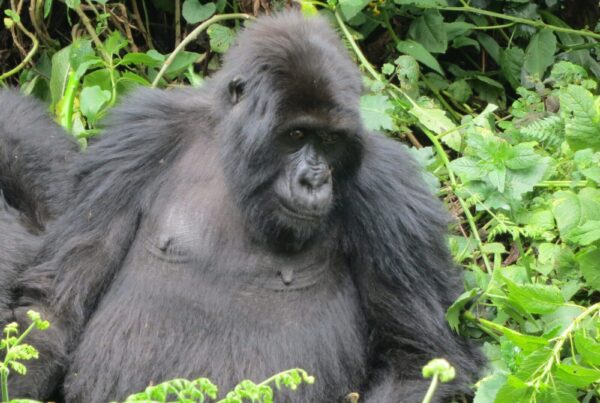
A combined Kenya, Tanzania, and Uganda safari is not three separate trips forced together — it is a single ecological and experiential argument: East Africa’s wildlife is distributed across a series of distinct ecosystems (Masai Mara’s migratory plains, Serengeti-Ngorongoro’s volcanic crater floor, Bwindi’s Albertine Rift forest) that each produce a category of encounter unavailable in the other two, meaning that a traveller who sees only one country has experienced one argument in a three-part case, and that the full case only becomes comprehensible when you have sat in the Mara watching 1,000 wildebeest ford a river, stood on the edge of Ngorongoro’s caldera, and then found yourself crouched in Bwindi’s forest seven days later making eye contact with a silverback gorilla who has seen hundreds of visitors and found every one of them unremarkable. This guide covers the three-country East Africa itinerary in practical terms: the 14–21 day structure that does each country justice without rushing, the logistics of moving between Kenya, Tanzania, and Uganda by domestic flight, the specific parks and experiences that justify a third country being added rather than more time in two, and the cost reality of an itinerary that is genuinely premium. For Uganda gorilla permits, see the permit guide; for Uganda-only itineraries at lower cost, see the safari itineraries.
Three-Country East Africa Safari: Overview
- Minimum realistic duration: 14 days; 18–21 days to do each country justice
- Kenya highlight: Masai Mara — predator concentration, great migration river crossings (Jul–Oct)
- Tanzania highlights: Serengeti + Ngorongoro Crater — wildlife density, caldera landscape
- Uganda highlight: Bwindi gorilla trekking + Kibale chimpanzees + Queen Elizabeth NP
- Movement: fly Nairobi–Arusha and Entebbe–Nairobi; overland within each country
- East Africa Tourist Visa covers Uganda, Kenya, Rwanda on one USD $100 visa — Tanzania requires separate eVisa
For travellers who refuse to compromise, who want to experience everything East Africa has to offer in a single extraordinary journey, a three-country safari combining Kenya, Tanzania, and Uganda represents the pinnacle of African wildlife travel. Each country contributes something irreplaceable: Kenya’s Masai Mara with its predator concentrations and legendary great migration river crossings; Tanzania’s Serengeti and Ngorongoro Crater with unmatched savannah biodiversity and landscape drama; and Uganda’s mountain gorillas with intimate, transformative encounters that no other wildlife experience can replicate. Together, these three nations form a trilogy that defines what an African safari can be.
Why Visit All Three Countries?
The argument for a three-country safari is simple: no single nation offers everything. Kenya delivers the great migration and exceptional predator viewing, but it lacks mountain gorillas. Tanzania has the Serengeti’s endless plains and the incomparable Ngorongoro Crater, but it cannot match Uganda’s primate diversity. Uganda offers gorillas and chimpanzees in abundance, but its savannah wildlife, while excellent, does not rival the scale of the Mara-Serengeti ecosystem.
By combining all three, you create a safari of extraordinary comprehensiveness. You will witness the thunder of wildebeest hooves across the savannah, the silent power of a leopard draped over an acacia branch, the vastness of a volcanic crater teeming with wildlife, and the soul-stirring intimacy of sitting among mountain gorillas in a misty rainforest. No other region on Earth packs such diversity into such a compact area.
The Itinerary: Three Weeks, Three Countries
Days One to Four: Masai Mara, Kenya
Begin in Nairobi, Kenya’s dynamic capital. After a night to recover from your international flight, transfer to the Masai Mara National Reserve, approximately five to six hours by road or 45 minutes by air. Four days in the Mara allows multiple game drives across different sectors of the reserve, increasing your chances of encountering the great migration if you are travelling between July and October.
The Mara’s rolling grasslands support extraordinary concentrations of lions, cheetahs, leopards, hyenas, and elephants. The Mara River, which forms the boundary between Kenya and Tanzania, is the stage for the migration’s most dramatic moments: thousands of wildebeest plunging into crocodile-infested waters in a frenzied crossing. Hot air balloon safaris at dawn offer a perspective that ground-based game drives cannot match.
Visit a Maasai village to understand the culture of the people who have coexisted with this wildlife for centuries. The Maasai’s traditional way of life, with its emphasis on cattle herding and warrior traditions, provides essential cultural context for the landscapes you are exploring.
Days Five to Seven: Serengeti National Park, Tanzania
Cross into Tanzania at the Isebania or Namanga border and enter Serengeti National Park, the Masai Mara’s vast southern extension. The Serengeti is significantly larger than the Mara, and its different sectors offer distinct experiences throughout the year. The central Seronera region provides excellent year-round game viewing, with reliable predator sightings and abundant resident wildlife. The northern Lobo area is best during the migration, when the herds cross back into Kenya.
The Serengeti’s kopjes, granite outcrops rising from the plains, are iconic landmarks that feature in countless wildlife documentaries. Lions use them as lookout points, and cheetahs survey the grasslands for prey from their summits. The open terrain allows exceptional photography, with clean backgrounds and golden light at dawn and dusk.
Days Eight to Nine: Ngorongoro Crater
Descend into the Ngorongoro Crater, the world’s largest inactive volcanic caldera and one of Africa’s most extraordinary wildlife concentrations. The crater’s 260-square-kilometre floor supports an estimated 25,000 large mammals, including the Big Five: lion, leopard, elephant, buffalo, and the critically endangered black rhino.
The crater’s self-contained ecosystem creates unique viewing opportunities. Because the animals cannot migrate in and out, they are present year-round, and the relatively open terrain means sightings are frequent and reliable. The crater rim, where most lodges are situated, offers spectacular views over the floor below, particularly at sunrise when mist rises from the grasslands.
Days Ten to Eleven: Travel to Uganda
Fly from Kilimanjaro International Airport or Arusha Airport to Entebbe International Airport. Several airlines operate this route, including Precision Air and Uganda Airlines, with flight times of approximately two hours. Use this transitional period to rest, reorganise your luggage, and prepare mentally for the shift from savannah safari to forest trekking.
Overnight in Entebbe or Kampala. Entebbe’s lakeside location and relaxed atmosphere provide a gentle re-entry, while Kampala offers excellent restaurants and craft markets if you prefer urban energy.
Days Twelve to Fourteen: Bwindi Impenetrable Forest, Uganda
Transfer to Bwindi Impenetrable National Park, either by road or by domestic flight to Kihihi or Kisoro airstrip. With three days allocated, you can undertake two gorilla treks with different families, significantly enhancing your experience. Many travellers find the second trek more relaxed and rewarding than the first, as familiarity with the process allows deeper engagement with the encounter.
Between treks, explore Bwindi’s broader offerings. The park supports over 350 bird species, including 23 Albertine Rift endemics found nowhere else in Uganda. Guided forest walks reveal butterflies, orchids, and smaller primates. Community visits to the Batwa pygmies provide cultural context and support local livelihoods.
Days Fifteen to Sixteen: Queen Elizabeth National Park
Drive north to Queen Elizabeth National Park for classic savannah game viewing that complements Bwindi’s forest experience. The Kazinga Channel boat cruise is a highlight, offering close-up views of hippos, elephants, buffalo, and abundant birdlife from water level. Game drives in the Kasenyi plains reveal lions, leopards, and Ugandan kob.
If time permits, visit the Ishasha sector in the park’s south, famous for its tree-climbing lions. This unusual behaviour, rarely seen elsewhere in Africa, creates extraordinary photographic opportunities.
Days Seventeen to Eighteen: Kibale Forest
Continue to Kibale Forest National Park, Uganda’s primate capital, for chimpanzee trekking. Kibale’s habituated chimpanzee communities allow close observation of our closest living relatives in their natural forest habitat. The experience differs significantly from gorilla trekking: chimpanzees are more active, more vocal, and often move rapidly through the canopy.
The Bigodi Wetland Sanctuary, adjacent to Kibale, offers excellent birding and additional primate viewing in a more controlled environment. Guided walks along the boardwalk reveal great blue turacos, papyrus gonoleks, and numerous kingfishers.
Days Nineteen to Twenty-One: Murchison Falls and Departure
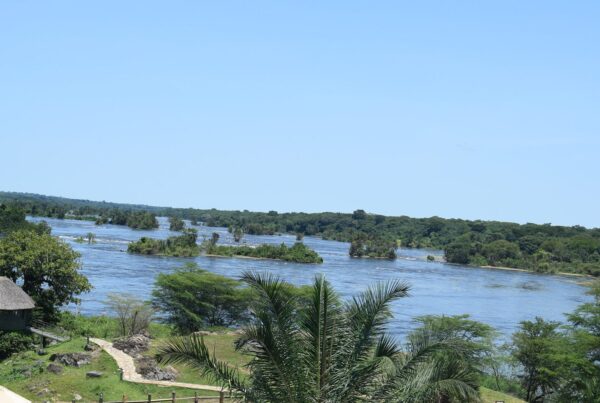
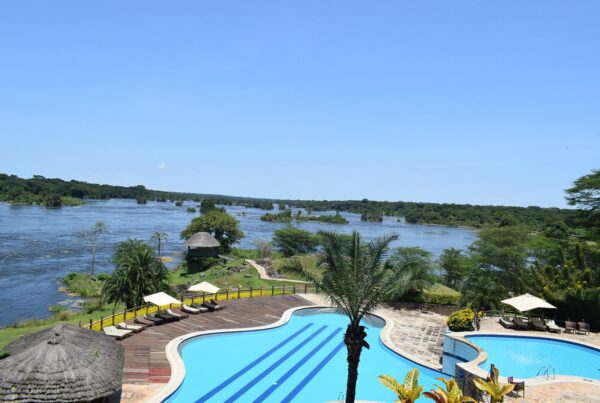
Conclude your safari at Murchison Falls National Park, Uganda’s largest protected area. The park’s namesake falls, where the Nile forces through a seven-metre gorge, are one of Africa’s most dramatic natural spectacles. Game drives on the northern bank reveal elephants, giraffes, lions, and buffalo in classic savannah scenery. The Nile boat cruise to the falls offers exceptional hippo and crocodile viewing.
From Murchison, drive or fly back to Entebbe for your international departure. If your flight departs in the evening, spend your final hours at the Uganda Wildlife Education Centre or shopping for crafts at Entebbe’s markets.
Visas and Border Crossings
The East African Tourist Visa is the most convenient option for this itinerary, covering Kenya, Uganda, and Rwanda for 90 days on a single $100 document. However, Tanzania is not part of the East African Tourist Visa arrangement, so you will need a separate Tanzanian visa, obtainable online for $50.
Border crossings between Kenya and Tanzania at Isebania or Namanga are straightforward for most nationalities. Have your passport, visas, and yellow fever vaccination certificate readily accessible. The process typically takes 30 minutes to two hours depending on queues.
Costs and Budgeting
This is a premium itinerary, and the costs reflect its comprehensiveness. Budget $10,000 to $15,000 per person excluding international flights. Major expenses include:
- Gorilla permits: $800 per trek
- Masai Mara park fees and accommodation: $300 to $1,800 per day
- Serengeti and Ngorongoro permits and accommodation: $400 to $2,000 per day
- Domestic flights: $200 to $500 per sector
- Vehicle and driver hire: $150 to $300 per day
Physical Considerations
This itinerary is physically demanding. Three weeks of early mornings, long drives, and active trekking requires good fitness and stamina. The transition from savannah safari, which is largely vehicle-based, to forest trekking, which is intensely physical, can be jarring. Build rest days into your schedule, stay hydrated, and listen to your body. If you are not in good physical condition, consider shortening the itinerary or replacing some active components with gentler alternatives.
Photography Gear
A three-country safari demands a versatile camera kit. For the savannah portions, a 100-400mm or 200-600mm telephoto zoom is essential for framing distant animals. For gorilla and chimpanzee trekking, a fast 24-70mm f/2.8 is the workhorse lens. Bring a second camera body to avoid changing lenses in dusty or humid conditions. Memory cards fill rapidly; carry at least 256GB of storage.
Best Timing
The great migration crosses the Mara River between July and October, making this the ideal window for the Kenyan and Tanzanian portions. Uganda’s gorilla trekking is excellent year-round, though the dry seasons of June to September and December to February offer the firmest trails. The perfect alignment is July to September, when migration viewing is at its peak and Bwindi’s conditions are optimal.
Final Thoughts
A three-week, three-country East African safari is not a holiday; it is a pilgrimage to the continent’s greatest wildlife theatres. It requires significant investment of time, money, and physical energy. But the return is immeasurable: memories of the migration’s thundering herds, the crater’s concentrated wildlife, and the gorilla’s quiet gaze that will shape how you see the natural world for the rest of your life. Kenya, Tanzania, and Uganda are three nations, one extraordinary ecosystem, and the definitive African safari experience.
Frequently Asked Questions
The most logistically efficient sequence for a three-country East Africa safari is Uganda first (Entebbe arrival), then Kenya (fly Entebbe to Nairobi), then Tanzania (fly or overland Nairobi to Arusha for northern Tanzania), with international departure from Kilimanjaro or Nairobi. This sequence puts the most physically demanding activity (gorilla trekking at Bwindi) early in the trip when energy levels are highest, transitions through Nairobi’s excellent air connections, and ends with Tanzania’s Serengeti and Ngorongoro as the final landscape — ending a safari in Ngorongoro Crater is widely considered among the most satisfying conclusions to an East African trip. The alternative sequence — Kenya, Uganda, Tanzania — works if your international flights route through Nairobi as a hub. The least efficient sequence is Tanzania first: Kilimanjaro Airport has limited connections for the Uganda segment, often requiring a Nairobi connection anyway. How do you get between Kenya, Tanzania, and Uganda on a safari? The practical inter-country connections for a Kenya-Tanzania-Uganda safari circuit are: Nairobi (Kenya) to Entebbe (Uganda) by direct flight with Kenya Airways, RwandAir, or Uganda Airlines — 1.5 hours, multiple daily flights; Nairobi to Arusha (Tanzania gateway) by direct flight with Kenya Airways, Precision Air, or Fly540 — 45 minutes, or 4–5 hours by overland shuttle; Entebbe (Uganda) to Nairobi by direct flight — same carriers, 1.5 hours. Most travellers using a tour operator have inter-country flights handled as part of the trip package. Within each country, the most common movement is lodge-to-lodge by private safari vehicle (Tanzania, Uganda) or by scheduled domestic flight between parks (Kenya’s Mara camps to Nairobi are typically serviced by Bush Link Air, AirKenya, or SafariLink domestic flights — 45 minutes versus 5 hours by road). Tanzania’s northern circuit parks (Serengeti, Ngorongoro, Tarangire) are best accessed from Arusha by domestic charter to Seronera or other bush airstrips. What is the best season for a Kenya, Tanzania, Uganda combined safari? The optimal season for a three-country safari depends on which experiences you prioritise. The Masai Mara great migration’s most dramatic crossing events occur July through October — if witnessing the Mara River crossing is a priority, your Kenya dates need to fall in this window. Tanzania’s Serengeti calving season (January–March) and the Serengeti migration’s central plains phase (December–March) are separate optima from the Mara crossing. Uganda gorilla trekking is available year-round with consistent 98–99% success rates in all seasons; the dry seasons (June–September, December–February) offer better trail conditions but are also peak booking periods. The most popular three-country itinerary timing that captures gorilla trekking, Tanzania wildlife density, and Mara predator concentration is: Uganda June (gorillas before migration peak), Kenya August–September (Mara crossing peak), Tanzania October (post-migration dry). A second optimal window is Tanzania January–March (calving), Kenya July–August, Uganda either end of this period. How many days does a Kenya, Tanzania, Uganda safari need? The minimum realistic duration for a three-country East Africa safari that does each destination justice is 14 days, but 18–21 days provides a significantly more satisfying experience. A 14-day structure might allocate 4 days Uganda (gorilla trekking at Bwindi, Kibale chimps or Queen Elizabeth), 4 days Kenya (Masai Mara), and 5 days Tanzania (Serengeti + Ngorongoro), with travel days connecting them. This creates a safari that touches all three destinations but with limited redundancy — one park per country rather than two. An 18-day structure adds flexibility for a second gorilla trek at Bwindi, a Serengeti fly-camp night, and an extra Masai Mara morning game drive — the experiences that move a safari from “very good” to “exceptional” typically require those additional days. Trips shorter than 14 days can visit two countries but should not attempt all three — the travel overhead between destinations erodes the park time below what each experience requires to be fully satisfying. Is a three-country East Africa safari worth the extra cost compared to Uganda alone? Whether adding Kenya and Tanzania to a Uganda gorilla trip is worth the additional cost depends on what you want from the safari. Uganda alone gives you mountain gorillas, chimpanzees, great savannah wildlife at Queen Elizabeth and Murchison Falls, and spectacular scenery — it is a complete safari in itself at a lower overall cost than a three-country circuit. Kenya and Tanzania add the great migration spectacle, Ngorongoro Crater’s volcanic landscape, the particular character of open savannah predator viewing in a different ecosystem, and the experience of East Africa’s most iconic bush camps and lodges. If gorilla trekking is your primary motivation and you have limited time and budget, Uganda alone is the right choice. If East Africa wildlife in its broadest form — from tropical rainforest primates to volcanic crater big game to the great migration — is what you want, and budget is not the primary constraint, the three-country circuit is worth it. There is no experience in the world quite like moving from Bwindi’s forest to the Serengeti’s horizon in the same trip. Start planning the three-country East Africa circuit Gorilla Permit Guide — secure the Uganda component permit before planning the rest Uganda Gorilla Families — the Uganda anchor of the three-country itinerary Rwanda Gorilla Families — Rwanda option as an alternative to Uganda’s Bwindi Full Safari Cost Guide — Uganda component cost within the broader three-country budget Safari Itineraries — Uganda itinerary structures that connect cleanly to Kenya and Tanzania routing Further Reading Uganda Gorilla Trekking and the Perfect 2-Week East Africa Trip Itinerary Nairobi to Kampala Overland: The East Africa Road Trip Guide 2027 Uganda vs Kenya football rivalry: the east African derby explained Gorilla trekking combined with Zanzibar beach: the perfect East Africa two-centre trip Best multi-country safari routes combining Uganda and East Africa 3 Days Congo Gorilla Trekking Safari: Raw Encounters in Africa’s Wildest Jungle Uganda Birding Safari — 22-Days: A Journey Into the Feathered Soul of Africa Wildlife Safaris: What to See, Expect, Prepare & Plan — Plus Where to Go in Africa Uganda Cycling Safaris: Pedal into the Heart of Africa’s Untamed Beauty Africa Adventure Safaris and Tours
The practical inter-country connections for a Kenya-Tanzania-Uganda safari circuit are: Nairobi (Kenya) to Entebbe (Uganda) by direct flight with Kenya Airways, RwandAir, or Uganda Airlines — 1.5 hours, multiple daily flights; Nairobi to Arusha (Tanzania gateway) by direct flight with Kenya Airways, Precision Air, or Fly540 — 45 minutes, or 4–5 hours by overland shuttle; Entebbe (Uganda) to Nairobi by direct flight — same carriers, 1.5 hours. Most travellers using a tour operator have inter-country flights handled as part of the trip package. Within each country, the most common movement is lodge-to-lodge by private safari vehicle (Tanzania, Uganda) or by scheduled domestic flight between parks (Kenya’s Mara camps to Nairobi are typically serviced by Bush Link Air, AirKenya, or SafariLink domestic flights — 45 minutes versus 5 hours by road). Tanzania’s northern circuit parks (Serengeti, Ngorongoro, Tarangire) are best accessed from Arusha by domestic charter to Seronera or other bush airstrips. What is the best season for a Kenya, Tanzania, Uganda combined safari? The optimal season for a three-country safari depends on which experiences you prioritise. The Masai Mara great migration’s most dramatic crossing events occur July through October — if witnessing the Mara River crossing is a priority, your Kenya dates need to fall in this window. Tanzania’s Serengeti calving season (January–March) and the Serengeti migration’s central plains phase (December–March) are separate optima from the Mara crossing. Uganda gorilla trekking is available year-round with consistent 98–99% success rates in all seasons; the dry seasons (June–September, December–February) offer better trail conditions but are also peak booking periods. The most popular three-country itinerary timing that captures gorilla trekking, Tanzania wildlife density, and Mara predator concentration is: Uganda June (gorillas before migration peak), Kenya August–September (Mara crossing peak), Tanzania October (post-migration dry). A second optimal window is Tanzania January–March (calving), Kenya July–August, Uganda either end of this period. How many days does a Kenya, Tanzania, Uganda safari need? The minimum realistic duration for a three-country East Africa safari that does each destination justice is 14 days, but 18–21 days provides a significantly more satisfying experience. A 14-day structure might allocate 4 days Uganda (gorilla trekking at Bwindi, Kibale chimps or Queen Elizabeth), 4 days Kenya (Masai Mara), and 5 days Tanzania (Serengeti + Ngorongoro), with travel days connecting them. This creates a safari that touches all three destinations but with limited redundancy — one park per country rather than two. An 18-day structure adds flexibility for a second gorilla trek at Bwindi, a Serengeti fly-camp night, and an extra Masai Mara morning game drive — the experiences that move a safari from “very good” to “exceptional” typically require those additional days. Trips shorter than 14 days can visit two countries but should not attempt all three — the travel overhead between destinations erodes the park time below what each experience requires to be fully satisfying. Is a three-country East Africa safari worth the extra cost compared to Uganda alone? Whether adding Kenya and Tanzania to a Uganda gorilla trip is worth the additional cost depends on what you want from the safari. Uganda alone gives you mountain gorillas, chimpanzees, great savannah wildlife at Queen Elizabeth and Murchison Falls, and spectacular scenery — it is a complete safari in itself at a lower overall cost than a three-country circuit. Kenya and Tanzania add the great migration spectacle, Ngorongoro Crater’s volcanic landscape, the particular character of open savannah predator viewing in a different ecosystem, and the experience of East Africa’s most iconic bush camps and lodges. If gorilla trekking is your primary motivation and you have limited time and budget, Uganda alone is the right choice. If East Africa wildlife in its broadest form — from tropical rainforest primates to volcanic crater big game to the great migration — is what you want, and budget is not the primary constraint, the three-country circuit is worth it. There is no experience in the world quite like moving from Bwindi’s forest to the Serengeti’s horizon in the same trip. Start planning the three-country East Africa circuit Gorilla Permit Guide — secure the Uganda component permit before planning the rest Uganda Gorilla Families — the Uganda anchor of the three-country itinerary Rwanda Gorilla Families — Rwanda option as an alternative to Uganda’s Bwindi Full Safari Cost Guide — Uganda component cost within the broader three-country budget Safari Itineraries — Uganda itinerary structures that connect cleanly to Kenya and Tanzania routing Further Reading Uganda Gorilla Trekking and the Perfect 2-Week East Africa Trip Itinerary Nairobi to Kampala Overland: The East Africa Road Trip Guide 2027 Uganda vs Kenya football rivalry: the east African derby explained Gorilla trekking combined with Zanzibar beach: the perfect East Africa two-centre trip Best multi-country safari routes combining Uganda and East Africa 3 Days Congo Gorilla Trekking Safari: Raw Encounters in Africa’s Wildest Jungle Uganda Birding Safari — 22-Days: A Journey Into the Feathered Soul of Africa Wildlife Safaris: What to See, Expect, Prepare & Plan — Plus Where to Go in Africa Uganda Cycling Safaris: Pedal into the Heart of Africa’s Untamed Beauty Africa Adventure Safaris and Tours
The optimal season for a three-country safari depends on which experiences you prioritise. The Masai Mara great migration’s most dramatic crossing events occur July through October — if witnessing the Mara River crossing is a priority, your Kenya dates need to fall in this window. Tanzania’s Serengeti calving season (January–March) and the Serengeti migration’s central plains phase (December–March) are separate optima from the Mara crossing. Uganda gorilla trekking is available year-round with consistent 98–99% success rates in all seasons; the dry seasons (June–September, December–February) offer better trail conditions but are also peak booking periods. The most popular three-country itinerary timing that captures gorilla trekking, Tanzania wildlife density, and Mara predator concentration is: Uganda June (gorillas before migration peak), Kenya August–September (Mara crossing peak), Tanzania October (post-migration dry). A second optimal window is Tanzania January–March (calving), Kenya July–August, Uganda either end of this period. How many days does a Kenya, Tanzania, Uganda safari need? The minimum realistic duration for a three-country East Africa safari that does each destination justice is 14 days, but 18–21 days provides a significantly more satisfying experience. A 14-day structure might allocate 4 days Uganda (gorilla trekking at Bwindi, Kibale chimps or Queen Elizabeth), 4 days Kenya (Masai Mara), and 5 days Tanzania (Serengeti + Ngorongoro), with travel days connecting them. This creates a safari that touches all three destinations but with limited redundancy — one park per country rather than two. An 18-day structure adds flexibility for a second gorilla trek at Bwindi, a Serengeti fly-camp night, and an extra Masai Mara morning game drive — the experiences that move a safari from “very good” to “exceptional” typically require those additional days. Trips shorter than 14 days can visit two countries but should not attempt all three — the travel overhead between destinations erodes the park time below what each experience requires to be fully satisfying. Is a three-country East Africa safari worth the extra cost compared to Uganda alone? Whether adding Kenya and Tanzania to a Uganda gorilla trip is worth the additional cost depends on what you want from the safari. Uganda alone gives you mountain gorillas, chimpanzees, great savannah wildlife at Queen Elizabeth and Murchison Falls, and spectacular scenery — it is a complete safari in itself at a lower overall cost than a three-country circuit. Kenya and Tanzania add the great migration spectacle, Ngorongoro Crater’s volcanic landscape, the particular character of open savannah predator viewing in a different ecosystem, and the experience of East Africa’s most iconic bush camps and lodges. If gorilla trekking is your primary motivation and you have limited time and budget, Uganda alone is the right choice. If East Africa wildlife in its broadest form — from tropical rainforest primates to volcanic crater big game to the great migration — is what you want, and budget is not the primary constraint, the three-country circuit is worth it. There is no experience in the world quite like moving from Bwindi’s forest to the Serengeti’s horizon in the same trip. Start planning the three-country East Africa circuit Gorilla Permit Guide — secure the Uganda component permit before planning the rest Uganda Gorilla Families — the Uganda anchor of the three-country itinerary Rwanda Gorilla Families — Rwanda option as an alternative to Uganda’s Bwindi Full Safari Cost Guide — Uganda component cost within the broader three-country budget Safari Itineraries — Uganda itinerary structures that connect cleanly to Kenya and Tanzania routing Further Reading Uganda Gorilla Trekking and the Perfect 2-Week East Africa Trip Itinerary Nairobi to Kampala Overland: The East Africa Road Trip Guide 2027 Uganda vs Kenya football rivalry: the east African derby explained Gorilla trekking combined with Zanzibar beach: the perfect East Africa two-centre trip Best multi-country safari routes combining Uganda and East Africa 3 Days Congo Gorilla Trekking Safari: Raw Encounters in Africa’s Wildest Jungle Uganda Birding Safari — 22-Days: A Journey Into the Feathered Soul of Africa Wildlife Safaris: What to See, Expect, Prepare & Plan — Plus Where to Go in Africa Uganda Cycling Safaris: Pedal into the Heart of Africa’s Untamed Beauty Africa Adventure Safaris and Tours
The minimum realistic duration for a three-country East Africa safari that does each destination justice is 14 days, but 18–21 days provides a significantly more satisfying experience. A 14-day structure might allocate 4 days Uganda (gorilla trekking at Bwindi, Kibale chimps or Queen Elizabeth), 4 days Kenya (Masai Mara), and 5 days Tanzania (Serengeti + Ngorongoro), with travel days connecting them. This creates a safari that touches all three destinations but with limited redundancy — one park per country rather than two. An 18-day structure adds flexibility for a second gorilla trek at Bwindi, a Serengeti fly-camp night, and an extra Masai Mara morning game drive — the experiences that move a safari from “very good” to “exceptional” typically require those additional days. Trips shorter than 14 days can visit two countries but should not attempt all three — the travel overhead between destinations erodes the park time below what each experience requires to be fully satisfying. Is a three-country East Africa safari worth the extra cost compared to Uganda alone? Whether adding Kenya and Tanzania to a Uganda gorilla trip is worth the additional cost depends on what you want from the safari. Uganda alone gives you mountain gorillas, chimpanzees, great savannah wildlife at Queen Elizabeth and Murchison Falls, and spectacular scenery — it is a complete safari in itself at a lower overall cost than a three-country circuit. Kenya and Tanzania add the great migration spectacle, Ngorongoro Crater’s volcanic landscape, the particular character of open savannah predator viewing in a different ecosystem, and the experience of East Africa’s most iconic bush camps and lodges. If gorilla trekking is your primary motivation and you have limited time and budget, Uganda alone is the right choice. If East Africa wildlife in its broadest form — from tropical rainforest primates to volcanic crater big game to the great migration — is what you want, and budget is not the primary constraint, the three-country circuit is worth it. There is no experience in the world quite like moving from Bwindi’s forest to the Serengeti’s horizon in the same trip. Start planning the three-country East Africa circuit Gorilla Permit Guide — secure the Uganda component permit before planning the rest Uganda Gorilla Families — the Uganda anchor of the three-country itinerary Rwanda Gorilla Families — Rwanda option as an alternative to Uganda’s Bwindi Full Safari Cost Guide — Uganda component cost within the broader three-country budget Safari Itineraries — Uganda itinerary structures that connect cleanly to Kenya and Tanzania routing Further Reading Uganda Gorilla Trekking and the Perfect 2-Week East Africa Trip Itinerary Nairobi to Kampala Overland: The East Africa Road Trip Guide 2027 Uganda vs Kenya football rivalry: the east African derby explained Gorilla trekking combined with Zanzibar beach: the perfect East Africa two-centre trip Best multi-country safari routes combining Uganda and East Africa 3 Days Congo Gorilla Trekking Safari: Raw Encounters in Africa’s Wildest Jungle Uganda Birding Safari — 22-Days: A Journey Into the Feathered Soul of Africa Wildlife Safaris: What to See, Expect, Prepare & Plan — Plus Where to Go in Africa Uganda Cycling Safaris: Pedal into the Heart of Africa’s Untamed Beauty Africa Adventure Safaris and Tours
Whether adding Kenya and Tanzania to a Uganda gorilla trip is worth the additional cost depends on what you want from the safari. Uganda alone gives you mountain gorillas, chimpanzees, great savannah wildlife at Queen Elizabeth and Murchison Falls, and spectacular scenery — it is a complete safari in itself at a lower overall cost than a three-country circuit. Kenya and Tanzania add the great migration spectacle, Ngorongoro Crater’s volcanic landscape, the particular character of open savannah predator viewing in a different ecosystem, and the experience of East Africa’s most iconic bush camps and lodges. If gorilla trekking is your primary motivation and you have limited time and budget, Uganda alone is the right choice. If East Africa wildlife in its broadest form — from tropical rainforest primates to volcanic crater big game to the great migration — is what you want, and budget is not the primary constraint, the three-country circuit is worth it. There is no experience in the world quite like moving from Bwindi’s forest to the Serengeti’s horizon in the same trip. Start planning the three-country East Africa circuit Gorilla Permit Guide — secure the Uganda component permit before planning the rest Uganda Gorilla Families — the Uganda anchor of the three-country itinerary Rwanda Gorilla Families — Rwanda option as an alternative to Uganda’s Bwindi Full Safari Cost Guide — Uganda component cost within the broader three-country budget Safari Itineraries — Uganda itinerary structures that connect cleanly to Kenya and Tanzania routing Further Reading Uganda Gorilla Trekking and the Perfect 2-Week East Africa Trip Itinerary Nairobi to Kampala Overland: The East Africa Road Trip Guide 2027 Uganda vs Kenya football rivalry: the east African derby explained Gorilla trekking combined with Zanzibar beach: the perfect East Africa two-centre trip Best multi-country safari routes combining Uganda and East Africa 3 Days Congo Gorilla Trekking Safari: Raw Encounters in Africa’s Wildest Jungle Uganda Birding Safari — 22-Days: A Journey Into the Feathered Soul of Africa Wildlife Safaris: What to See, Expect, Prepare & Plan — Plus Where to Go in Africa Uganda Cycling Safaris: Pedal into the Heart of Africa’s Untamed Beauty Africa Adventure Safaris and Tours