Updated
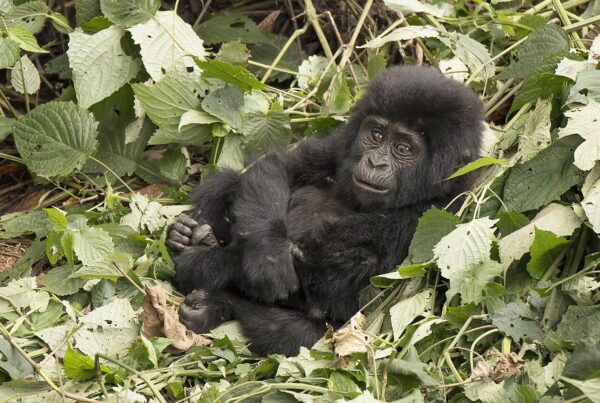
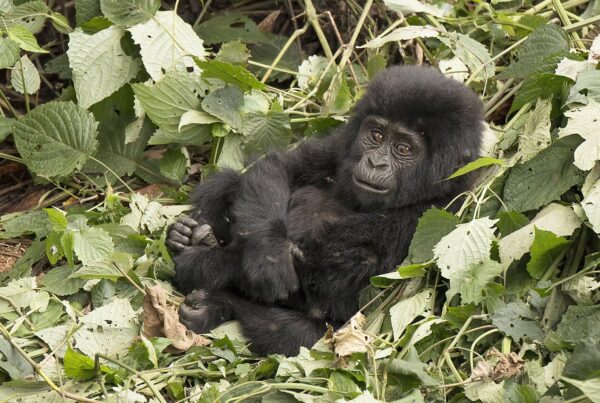
gorilla trekking wildlife worth more alive economics is one of Africa’s most extraordinary wildlife experiences, connecting travellers with mountain gorillas in their natural forest habitat. The argument that wildlife is worth more alive than dead — that the economic value of a living gorilla or elephant far exceeds the value of its body parts — has been made for decades by conservationists. But arguments are not evidence. Evidence requires a real-world test: a situation where the economic comparison can be made concretely, where the money generated by living wildlife can be measured against the money that poaching would generate, and where the long-term calculations can be compared. Gorilla trekking in Uganda and Rwanda provides the clearest evidence available for this argument, and the numbers are not close.
How Gorilla Trekking Proved That Wildlife Is Worth More Alive
The Dead Gorilla Calculation
A mountain gorilla killed for bushmeat has minimal commercial value — the trade in great ape bushmeat exists but is small-scale and limited by taboos in most markets. The primary value of a dead gorilla historically was as an infant’s fate: poachers who captured infants to sell to private collectors or foreign zoos killed the adults who defended them. The price paid for a live infant gorilla in international markets in the 1980s was several thousand dollars — a significant sum in an impoverished rural economy, but a one-time transaction that destroyed the breeding animal and the social group it belonged to.
The Living Gorilla Calculation
A habituated gorilla family in Uganda generates permit revenue continuously for as long as it exists. With eight permits at $800 USD per day per family, and approximately 250 trekking days per year, a single gorilla family generates approximately $1.6 million USD in permit revenue per year. Over a ten-year period — which is a short fraction of a gorilla’s lifespan — that family generates over $16 million in direct permit revenue.
This is the direct permit calculation only. The indirect economic value — lodge revenue, transport, guide income, community spending, regional multiplier effects — multiplies the economic contribution of each habituated family by a factor that varies by estimate but is consistently very large. The total economic value of a living gorilla family to the regional economy over its lifetime is, by any reasonable calculation, vastly larger than any alternative use of the individuals it contains.
The Policy Consequence
When the economic value of living wildlife exceeds the value of dead wildlife in a way that is tangible and locally distributed — when rangers receive salaries funded by permit revenue, when community members earn income from tourism, when local governments receive tax revenue from lodge operations — the political economy of conservation changes. Wildlife has constituents: people whose livelihoods depend on it and who will therefore defend it.
This is the mechanism by which gorilla trekking changed the conservation of mountain gorillas. Before tourism revenue, ranger patrols were funded by government budgets that were always inadequate. Anti-poaching operations competed for the same government funds as schools and hospitals and roads, and wildlife always lost. After gorilla trekking was established and permit revenue was demonstrated to be substantial and growing, the political case for investing in ranger capacity was transformed. The gorillas had become an economic asset rather than an economic burden.
The Comparison With Other Models
The gorilla trekking model is not the only mechanism by which wildlife value has been demonstrated. Photographic safari tourism in Kenya and Tanzania generates substantial revenue that funds national park management. Trophy hunting — controversial but economically significant in Zimbabwe, Zambia, and Botswana — creates different incentives but applies the same underlying principle: wildlife generates income when alive that landowners have a financial interest in maintaining.
What distinguishes the gorilla trekking model is the specificity of the economic argument and the directness of the conservation outcome. A permit paid in Uganda goes to the Uganda Wildlife Authority, which uses it to fund specific operations with documented conservation results. The mountain gorilla population has grown from 620 to over 1,100 in the period during which the trekking revenue has been operating. The correlation between cause and effect is unusually clear for a complex conservation intervention.
What This Means for Travellers
The $800 USD permit for gorilla trekking in Uganda in 2027 is not merely an admission fee to a wildlife experience. It is a payment into an economic system that has been demonstrated to protect a critically endangered species at scale. The visitor who pays the permit is not being asked to donate to a conservation charity. They are purchasing an extraordinary experience, and the economic logic of their purchase — multiplied across thousands of annual visitors — is what makes the experience available for future visitors and the gorillas available for future generations.
The argument that wildlife is worth more alive has been proved in Uganda. The proof is 1,100 mountain gorillas, a growing population, and a forest that is intact despite being surrounded by one of the world’s fastest-growing human populations. The mechanism is tourism. The evidence is in the numbers.