Updated
gorilla trekking vs whale watching comparison is one of Africa’s most extraordinary wildlife experiences, connecting travellers with mountain gorillas in their natural forest habitat. Whale watching and gorilla trekking sit at the top of many wildlife travellers’ lists for the same reason: both offer close encounters with large, intelligent mammals in wild environments, and both have the potential to produce the kind of profound wildlife experience that changes how a person understands their relationship to the natural world. But they are different in almost every practical detail — the environment, the reliability of encounter, the emotional quality of what happens during the best versions of each — and when forced to choose, we make a specific argument. Gorilla trekking wins. This is why, with full acknowledgment of what whale watching at its best can offer.
Gorilla Trekking vs Whale Watching: A Close Call but Gorillas Win
The Whale Watching Experience: What It Offers
Whale watching at its finest — a humpback breaching ten metres from a small boat in the waters off the Azores, or a blue whale’s breath rising 12 metres off Sri Lanka — is genuinely extraordinary. The scale of large cetaceans is difficult to internalise until you are beside them. The blue whale is the largest animal ever to have lived on earth; seeing one from a vessel of any size produces a visceral recalibration of scale that no photograph prepares you for. For travellers who are drawn to the ocean and to cetacean intelligence, whale watching at the right location in the right season is a legitimate rival to any wildlife experience on earth.
The challenges: whale encounters are less reliable than gorilla encounters. Operators can put you on the water in the right location at the right time of year, but they cannot guarantee that whales will surface close to the boat, or at all. A poor whale watching day — three hours at sea with distant blows and no breaches — is a disappointment that gorilla trekking, with its permit-guaranteed encounter, does not replicate. The best whale watching operators have high encounter rates (typically 85 to 95 percent in the right location and season), but the floor is lower than gorilla trekking.
The Gorilla Trekking Experience: What Makes It Different
The core difference between whale watching and gorilla trekking is the quality of mutual recognition available in each. Whales are in their element — water — when humans encounter them. The encounter is defined by the physical boundary between sea and surface. Even the most intimate whale encounter is mediated by water and the constraints of marine observation. You watch the whale; the whale may or may not notice you.
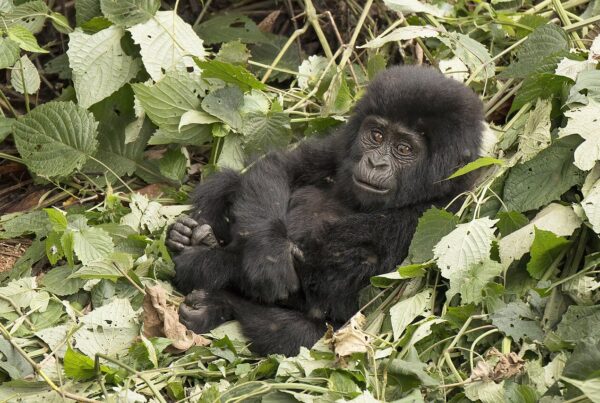
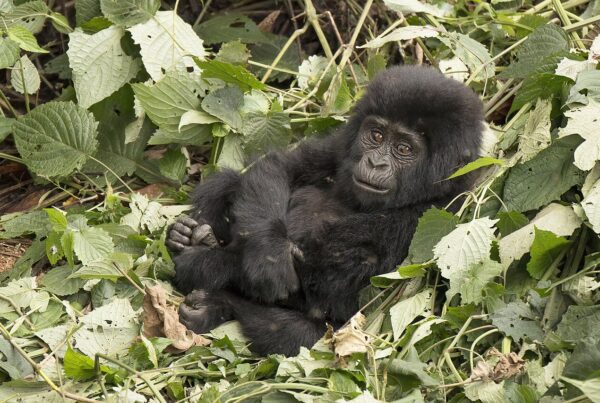
Gorillas share our element — terrestrial habitat, forest floor, the air we breathe. They are visually oriented, like us. They make eye contact. They assess us with something that resembles curiosity or evaluation. A gorilla that approaches to within a metre of a trekking group — not to display aggression but out of what appears to be simple interest — is performing an act of social cognition that is legible to human observers in a way that a whale’s underwater passes are not. The gorilla encounter has a quality of mutual recognition — “I see you; you see me” — that whale watching rarely achieves.
Reliability of the Encounter
Gorilla trekking permits in Uganda guarantee an encounter with a habituated gorilla family — not a guaranteed duration (the minimum is one hour), not a guaranteed behaviour (gorillas do what gorillas do), but a guaranteed physical presence with a family whose location is tracked daily. In over 30 years of gorilla trekking in Bwindi, there have been very few permitted treks that failed to reach a gorilla family. The encounter rate is effectively 100 percent for departures on confirmed permit days.
Quality whale watching operators typically quote encounter rates of 85 to 95 percent for sightings, and perhaps 50 to 70 percent for close encounters (whale within 50 metres of the boat). The best days on the water — close breach, spy-hop, or eye contact at the surface — are extraordinary. The median day is a credible wildlife experience but not a transformative one.
The Physical and Conservation Dimensions
Whale watching is physically accessible to most travellers — a boat ride, some motion sickness risk, and standing on deck. Gorilla trekking requires moderate fitness and willingness to walk through challenging terrain. The physical effort of gorilla trekking contributes to the sense that the encounter was earned — a psychological dimension that whale watching, enjoyable as it is, lacks.
On conservation impact, gorilla trekking permit fees directly fund conservation at a known and documented rate (20 percent of permit revenue to community benefit programmes, remainder to UWA conservation budget). Whale watching conservation contributions are less direct and more variable by operator. Both experiences can support conservation, but the gorilla trekking funding chain is more transparent and more documented.
Contact us to plan your Uganda gorilla trekking experience for 2027. We are confident it will provide the wildlife encounter that whale watching, for all its excellence, cannot quite match.