Updated
Two wildlife encounters have achieved near-mythological status among serious divers and wildlife travellers in 2027: diving with whale sharks and gorilla trekking in Uganda. Both require specific timing, specific locations, and a willingness to accept that the encounter is ultimately on the animal’s terms. Both deliver a quality of wildlife experience that most travel cannot rival. But they are very different in their physical demands, their geographic accessibility, their reliability, and the emotional quality of what they offer. This comparison makes the case for each — and for why gorilla trekking edges whale sharks as the more universally transformative choice.
Whale Shark Diving: The Best Locations in 2027
The world’s best whale shark diving destinations in 2027 include: Ningaloo Reef in Western Australia (March to July), the Yucatan Peninsula at Isla Holbox and Isla Mujeres in Mexico (June to September), the Maldives (September to November), Djibouti (November to January), and the Galapagos. Each location has a different character and offers slightly different encounter conditions — Ningaloo is extraordinary for close snorkelling encounters, the Yucatan aggregations can involve hundreds of whale sharks simultaneously, and the Galapagos adds context within one of the world’s most remarkable marine ecosystems.
Whale shark encounters are among the most accessible of premium wildlife experiences in one sense: they require snorkelling ability rather than scuba certification. But they are also among the most physically demanding on arrival — entering choppy open water from a moving vessel, swimming hard to keep pace with a large, fast-moving shark, and managing the sensory overwhelm of a six to 12 metre animal moving past you at close range requires confidence in the water that not all travellers have.
What the Whale Shark Encounter Is Like
A whale shark encounter at its best is among the most visually arresting experiences in wildlife travel. The animal is vast — the largest fish on earth, up to 18 metres long and 20 tonnes in weight — and the experience of swimming beside one, watching its spotted flanks in clear water, is unlike anything else. Whale sharks filter-feed with their mouths open in a pattern that makes them accessible and observable rather than evasive. The encounter has the quality of scale that gorilla trekking lacks: you feel small in the presence of something immense.
What the whale shark encounter does not typically offer is mutual recognition. Whale sharks are not interested in you. They do not make eye contact. They are not socially intelligent in the way that great apes are. They are extraordinary and beautiful, but the encounter is essentially one-directional: you observe them. They ignore you.
Gorilla Trekking: The Mutual Encounter
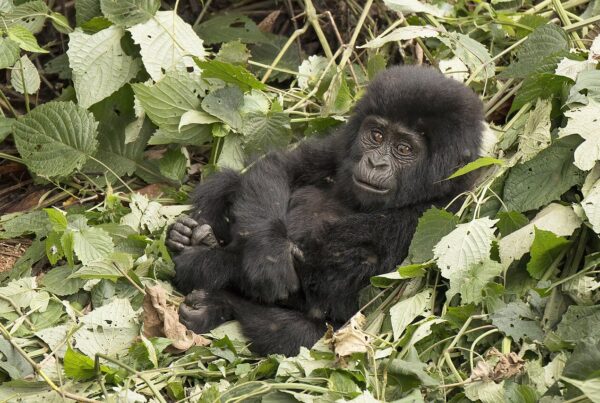
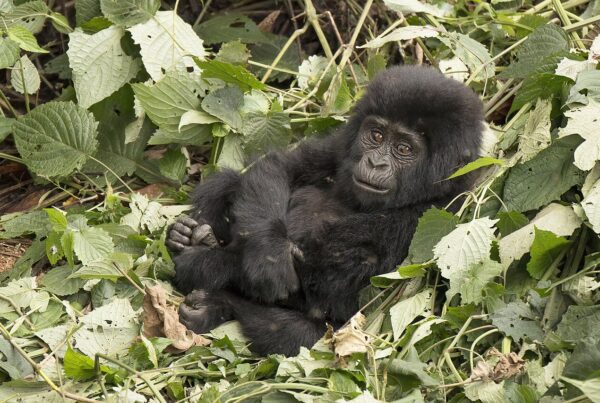
Gorilla trekking offers a different kind of encounter. Gorillas are aware of the trekking group. They look at you. They sometimes approach. A silverback who holds your gaze for three seconds is communicating something — not language, but something: assessment, recognition, tolerance. The encounter has a relational quality that whale shark diving, extraordinary as it is, does not produce. You are not simply in the presence of a large animal. You are in the presence of a social being that is observing you with something analogous to the curiosity you are bringing to it.
The physical element — trekking through forest, the earned encounter — also contributes to the emotional impact. You arrive at the gorilla encounter after physical effort. The whale shark encounter involves a boat ride and entering water from a platform. Both involve putting yourself in the way of something large and non-threatening. But only gorilla trekking makes you work for the encounter in a way that shapes how it feels when you reach it.
Reliability, Cost, and the Verdict
Quality whale shark tour operators at peak locations quote encounter rates of 85 to 95 percent on departure days. Gorilla trekking guarantees the encounter. Whale shark diving from Ningaloo or the Yucatan costs USD 100 to 400 for a day trip — significantly less than a gorilla trekking permit. The on-water cost is much lower; the total trip cost (including flights to Australia or Mexico from most origin points) is comparable to Uganda.
Our verdict: dive with whale sharks if you can dive, if you have access to one of the peak locations at the right time, and if the marine environment is where you feel most alive. Trek gorillas if you want the one wildlife encounter that everyone who has done it describes as uniquely, permanently moving. Both are on the right list. Gorilla trekking makes the list at a higher position for more travellers. Contact us to plan your 2027 Uganda expedition.