Updated
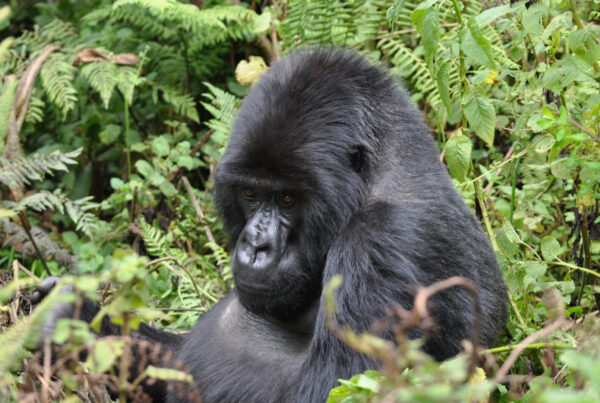
Wildlife photographers planning gorilla trekking in Uganda approach the experience with a set of professional priorities that differ from those of standard visitors. You are managing the photographic opportunity as well as the personal experience, and the specific conditions of Bwindi — the forest light, the seven-metre distance rule, the limited and unpredictable duration of the encounter — require technical preparation that most travel photography does not. This guide addresses gorilla trekking Uganda for professional and serious amateur wildlife photographers: what to prepare, what to bring, and what to realistically expect from the hour.
Permit Arrangements for Photographers
The standard gorilla permit is $800 USD per person and is the correct permit for photography purposes for the vast majority of professional and amateur wildlife photographers. Uganda Wildlife Authority does offer extended-access arrangements for documentary film and specific research photography projects — these involve additional fees, specific application requirements, and lead times of several months. For editorial and commercial still photography, the standard permit is appropriate and sufficient.
Some operators offer photography-specific trek arrangements — smaller groups (four rather than eight), guides selected for their knowledge of individual gorilla behaviour, and timing that optimises the likelihood of active gorilla behaviour during your hour. These arrangements command a premium but produce better photographic conditions. They are worth the additional cost for professional photographers with editorial assignments or commercial purposes.
Equipment for the Forest
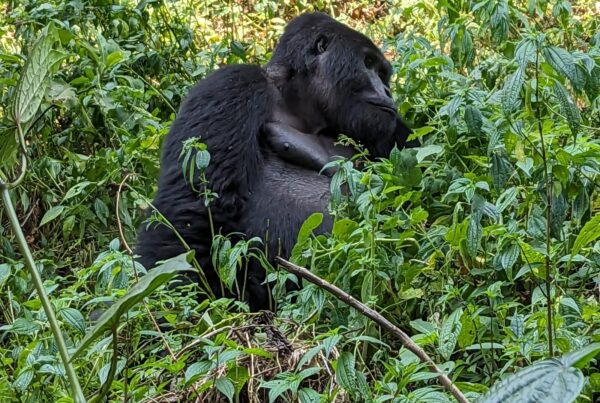
The Bwindi forest presents specific photographic challenges. Light levels are low — the dense canopy reduces available light significantly even in the middle of the day, and gorillas in deep forest shade require high ISO sensitivity. Humidity is high, which means condensation on lenses is a real risk when moving between temperature zones — acclimate your equipment gradually when arriving at altitude. Rain is frequent and can arrive without warning; all equipment should be protected with weather-sealed bodies and waterproof covers for lenses and bags.
Lens choice: the seven-metre minimum distance means that lenses shorter than 200mm will produce images that show the gorillas within their forest context rather than isolating them as subjects — which may be artistically valid but limits editorial utility. A 300-400mm prime or zoom at f/2.8-f/4 is the working professional’s standard choice. Mirrorless bodies with good high-ISO performance outperform DSLRs in the low-light conditions typical of dense forest encounters. Bring sufficient battery capacity for a full day — cold nights at altitude drain batteries faster than standard conditions.
Managing the Hour
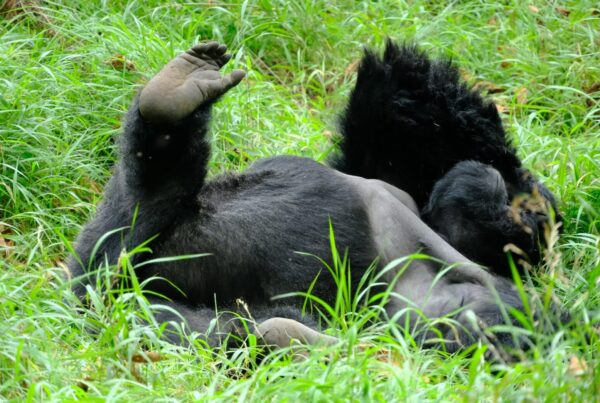
The permitted hour with the gorilla family is not a controllable photographic session. The gorillas move, the light changes, the density of the undergrowth between you and the animals varies with their position. Experienced wildlife photographers advise: shoot continuously during active behaviour and selectively during static behaviour, prioritise eye contact and family interaction shots over pure silverback portraits, and accept that ten percent of the frames will be usable — this is normal for forest wildlife photography at close range.
Contact us to plan your 2027 gorilla photography trip. The permit is $800. The Habinyanja family at Buhoma is known to guides as particularly photogenic — good light access, active juveniles, and a silverback who rests in open positions. Ask your operator about family selection for photography purposes.
Professional Photography Operations at Bwindi
Professional wildlife photographers who want to work at Bwindi beyond the standard gorilla trekking permit’s allowances need to engage with UWA’s commercial photography permit process, which governs all professional photography operations (advertising, editorial, documentary, stock photography) in Uganda’s national parks. The process involves submitting a production plan, payment of a daily park fee that is substantially higher than the visitor permit, and in some cases UWA’s approval of the specific methodology — drone use, overnight camping in the park, or access to non-visitor areas. Professional photographers who want to document the full gorilla trek context — the ranger operations, the community interactions, the veterinary work — need individual permissions from each participant rather than a single UWA permit covering all subjects. An experienced Uganda-based fixer or production coordinator can navigate this process more efficiently than the photographer working independently from abroad.
The professional wildlife photographer’s specific challenge at Bwindi — producing commercially licensable images that are technically superior to the visitor-level photographs that flood the stock agency market — requires a combination of technical preparation and behavioural knowledge that the standard gorilla trekking permit access alone does not fully support. The most sought-after professional gorilla images are those that capture rarely-observed behaviours (a chest beat in full display, a birth, a silverback carrying a juvenile) or that achieve technical quality levels (shallow depth of field at close range, motion-blur separation in low forest light) that require non-standard equipment. These objectives often require multiple permit days and a specific briefing with the ranger about the day’s photographic priorities — a conversation that the UWA commercial photography permit framework is designed to accommodate.