Sustainability professionals — people who work in ESG, corporate responsibility, environmental consulting, impact investing, or green policy — bring a specific lens to travel that most tourism providers are not equipped to satisfy. The questions that sustainability professionals ask about their travel experiences are not the questions most tourists ask: How does the economic model work? Who captures the revenue? What are the measurable conservation outcomes? Is this actually sustainable or is it sustainability-branded extraction? Gorilla trekking Uganda is one of the few wildlife tourism experiences that can answer all of these questions satisfactorily, and this guide addresses why.
The Conservation Model: The ESG Case
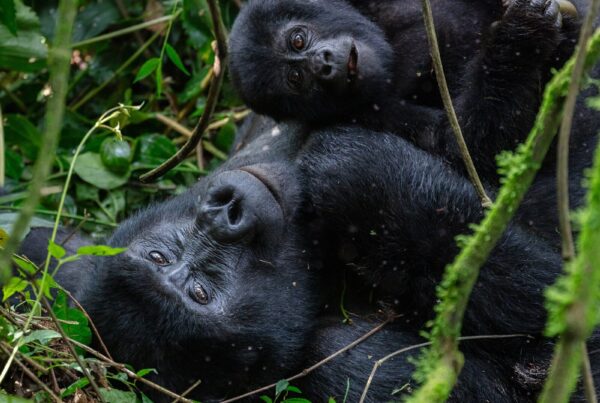
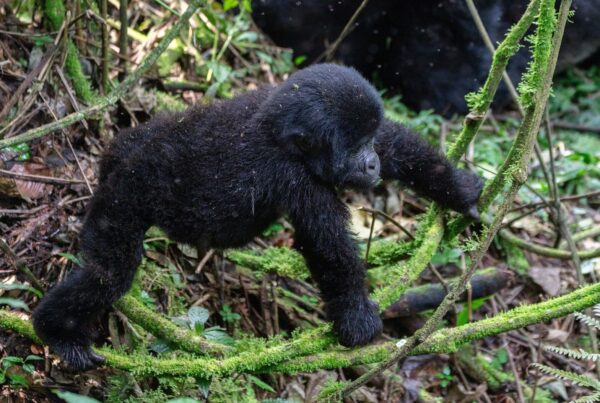
The mountain gorilla conservation model is a documented case study in successful conservation finance. The permit system — $800 per international visitor — generates revenue distributed across ranger employment, anti-poaching operations, veterinary services, research infrastructure, and community benefit programmes. The outcome is measurable and documented: the mountain gorilla population has grown from 254 individuals in 1981 to over 1,060 in 2027. This is one of the most successful conservation outcomes of the last half-century, and it was achieved primarily through tourism-funded conservation rather than donor dependency.
For sustainability professionals, this is an impact story that survives rigorous scrutiny. The revenue is tracked by Uganda Wildlife Authority, the conservation outcomes are monitored by multiple independent research organisations, and the community benefit distribution is documented in UWA annual reports. The $800 permit is impact-positive in ways that are verifiable, not aspirational.
What Sustainability Professionals Observe at Bwindi
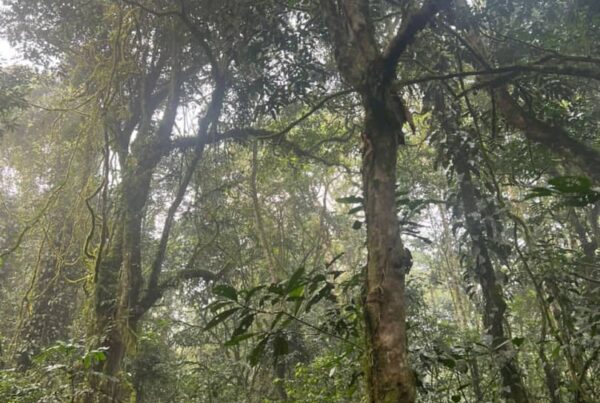
The ground-level complexity of the Bwindi conservation model — the community wardens, the crop compensation schemes, the land use conflicts at the forest edge, the tension between conservation objectives and community development aspirations — is more visible at Bwindi than at most conservation sites. Community walks organised through operators expose this complexity directly. The result, for sustainability professionals accustomed to policy-level analysis, is a ground-truth encounter with the operational reality that the policies are trying to manage. This is professionally useful in ways that most field visits are not.
Writing About It Professionally
Several sustainability consultants and ESG professionals who have visited Bwindi have published accounts of the conservation model in professional publications — analyses of the tourism-conservation funding mechanism, assessments of the community benefit sharing model, comparisons with other conservation finance approaches. These accounts contribute to the professional literature on conservation finance and environmental economics. If your visit is partly professional in purpose, discuss documentation access with your operator in advance. Contact us to plan your 2027 gorilla trekking Uganda sustainability trip. The permit is $800. The model works. Come and see why.
Frequently Asked Questions
The global mountain gorilla population is approximately 1,100 individuals — one of the smallest populations of any great ape. They exist in two separate populations: one in the Virunga Massif spanning Uganda, Rwanda, and DRC; and one in Bwindi Impenetrable Forest (Uganda only). The population has grown from approximately 620 in the 1980s, largely due to tourism-funded conservation.
Uganda Wildlife Authority directs 20% of every gorilla permit fee to communities adjacent to Bwindi and Mgahinga. These funds pay for school construction, healthcare programmes, borehole maintenance, and community microfinance. Permit revenue also funds ranger salaries, anti-poaching patrols, and the research teams that monitor gorilla health daily.
The Batwa (also called Twa) are an indigenous forest people who lived inside Bwindi for thousands of years until it was gazetted as a national park in 1991. Conservation displaced them from their ancestral forest. Gorilla tourism revenue now funds Batwa cultural programmes and livelihoods. The Batwa Cultural Trail at Buhoma sector is run by the Batwa community and is one of the most authentic cultural experiences near Bwindi.
Mountain gorillas are classified as Endangered on the IUCN Red List — one step down from Critically Endangered, which they held until 2018. Their population has grown consistently since the 1980s, making them one of the few great ape populations increasing in number. This recovery is directly attributed to the conservation funding generated by gorilla tourism.
Uganda is home to the mountain gorilla (Gorilla beringei beringei), one of two subspecies of eastern gorilla. They live exclusively in the Virunga volcanic highlands (Uganda/Rwanda/DRC) and Bwindi Impenetrable Forest (Uganda only). Mountain gorillas are the only gorilla subspecies that cannot survive in captivity — every individual you can trek is a wild animal.