Art groups — photography collectives, painting societies, sketch clubs — find gorilla trekking Uganda a subject that resists the ordinary categories of wildlife art. The mountain gorilla is not a convenient subject: the forest light is complex, the animals move without warning, the emotional density of the encounter challenges both technical and expressive capability. This is precisely what makes it artistically productive. Art groups that have worked in Bwindi report that the experience resets their creative practice in ways that studio work and conventional subject matter do not. This guide addresses gorilla trekking Uganda for art groups.
For Photographers
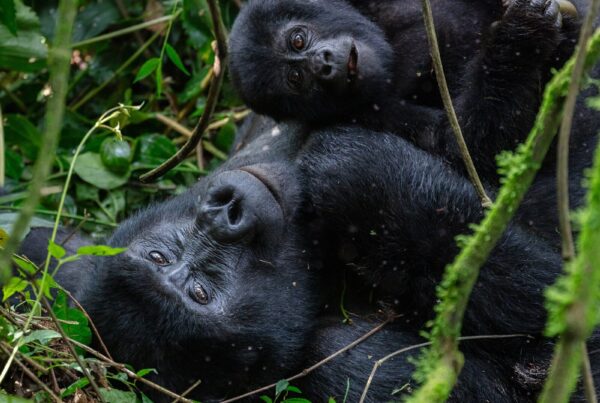
The photographic challenges of Bwindi are substantial and well-documented: low forest light requiring high ISO and fast glass; the seven-metre minimum distance limiting intimate framing; the prohibition on flash; the movement and unpredictability of the gorillas within the hour. The photographers who produce the most compelling work from gorilla treks in Uganda are those who approach the hour as a documentary exercise rather than a portrait session — accepting what is happening rather than trying to impose composition on it. The resulting images are often structurally imperfect and emotionally powerful in a ratio that most wildlife photography does not achieve.
The gorilla permit is $800 per person. Photography-optimised trek arrangements — smaller groups, guides selected for their knowledge of individual gorilla behaviour — are available through some operators at a premium. The additional investment produces better photographic conditions and is worth it for groups with serious photographic ambitions.
For Painters and Sketchers
Painters and sketchers face a different challenge in the forest: the gorilla encounter moves too quickly for detailed work during the hour itself. The most productive approach for non-photographic artists is to use the hour for intensive observational drawing — gesture, proportion, movement — and the post-trek period at the lodge for the interpretive work that the encounter material inspires. Several artists who have worked at Bwindi describe the three days following the trek as among the most productive of their practice — the encounter’s emotional density continues to generate visual ideas for days after the experience itself.
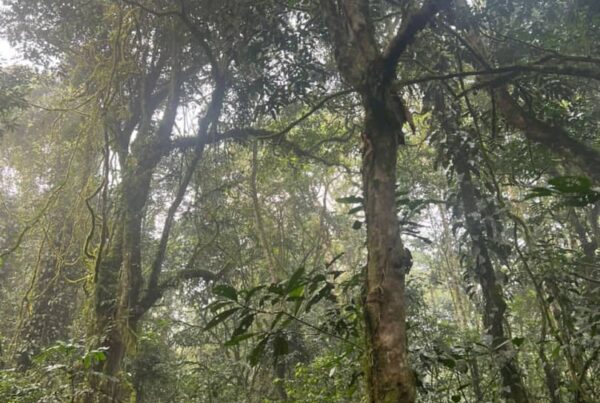
The forest itself — the quality of light, the layering of the canopy, the specific textures and colours of the understory — is a subject that rewards extended time. Art groups that spend three to four days at Bwindi rather than the minimum overnight find that the forest becomes increasingly productive as a subject the longer they are immersed in it. Contact us to plan your 2027 art group gorilla trekking Uganda trip. The permit is $800. The forest is the most complex subject your group has ever worked in.
Frequently Asked Questions
A versatile zoom lens in the 24–200mm range (or equivalent on crop sensor) works for most forest conditions. A fast lens (f/2.8) handles the low light under the forest canopy. Mirrorless cameras with fast autofocus track gorilla movement well. Flash is strictly prohibited. Bring a rain cover — the forest is damp year-round.
Set: Shutter priority at minimum 1/250s (to freeze movement), Auto ISO with a ceiling of 6400, continuous autofocus, burst mode. Shoot in RAW for post-processing flexibility. In the dense understorey, light is limited — prioritise shutter speed over aperture. Wide-angle shots require patience as gorillas occasionally approach very close.
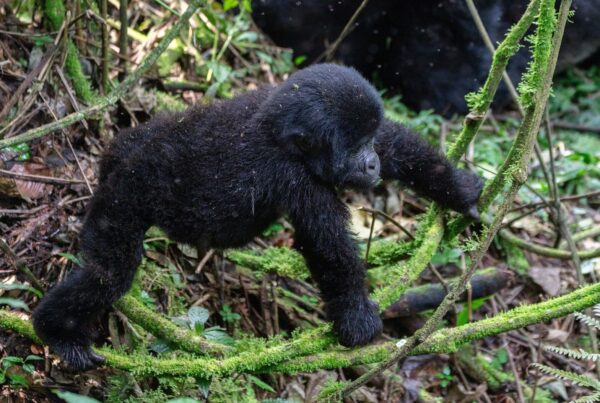
UWA guidelines require a minimum 7-metre distance from gorillas at all times. In practice, gorillas regularly approach the human group on their own — rangers manage this by repositioning the group when needed. Most trekkers end up photographing gorillas at 3–10 metres. Infant gorillas sometimes approach even closer, which rangers discourage gently.
Yes — video cameras and smartphone video are permitted. Flash is the only restriction. A monopod is useful for steadier video in low light. If you plan serious video work (wildlife documentary standard), consider the Gorilla Habituation Experience ($1,800) which gives 4 hours to film natural behaviour in a smaller group of just 4 visitors.
Uganda is home to the mountain gorilla (Gorilla beringei beringei), one of two subspecies of eastern gorilla. They live exclusively in the Virunga volcanic highlands (Uganda/Rwanda/DRC) and Bwindi Impenetrable Forest (Uganda only). Mountain gorillas are the only gorilla subspecies that cannot survive in captivity — every individual you can trek is a wild animal.