Updated
Journalists, travel writers, and bloggers planning gorilla trekking in Uganda combine professional purpose with personal experience in a way that requires specific planning. The gorilla encounter is both the subject of your work and an experience you are having for yourself — managing these two modes simultaneously, while also complying with the protocols that govern the visit, requires preparation that purely personal visitors do not need. This guide addresses gorilla trekking Uganda for media professionals: press access, permit arrangements, photography protocols, and how to get the story while getting the experience.
Press Permits and Standard Permits
Uganda Wildlife Authority does not operate a separate press permit category for gorilla trekking. Journalists and bloggers purchase the standard international tourist permit at $800 USD per person. Some operators have relationships with UWA that enable media-purpose visits to be arranged with additional access — extended time with a habituated group for specific documentary or research purposes, for example — but these arrangements are not standard and require specific applications to UWA’s media liaison office well in advance of your visit.
For standard travel journalism — a feature on gorilla trekking, a travel blog post, a social media documentary — the standard $800 permit is the correct instrument. You are a visitor with a camera and a professional purpose, and the permit covers both.
Photography Protocols
The photography rules during a gorilla trek are: no flash photography at any time; no tripods or monopods without prior arrangement with the guide (they can be an obstacle in dense forest and a source of sudden movement near gorillas); no drone use within the park without a specific UWA permit (drones are prohibited without prior authorisation and are not available on short notice). Beyond these specific rules, the standard protocols apply: maintain the seven-metre distance, remain in your designated group position, and follow the guide’s instructions on positioning and movement.
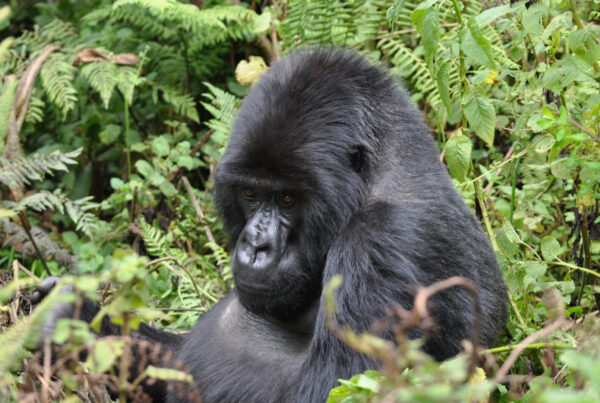
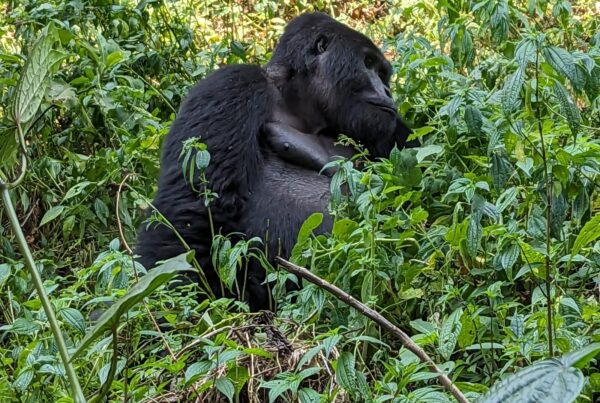
Professional photographers — both staff and freelance — typically bring longer lenses than tourist visitors, which allows higher-quality imagery at the seven-metre distance. A 400mm or 500mm lens on a full-frame body will produce publishable images from the permitted distance; shorter lenses will produce good images but may not satisfy editorial requirements for close-up wildlife photography. The forest light at Bwindi is variable and often dim — fast glass (f/2.8 or f/4) and high ISO performance are more practically useful than absolute resolution.
The Story Beyond the Encounter
The gorilla encounter is the centrepiece of the story, but experienced travel journalists note that the most publishable content often comes from the surrounding narrative: the guide’s relationship with the family, the ranger’s anti-poaching work, the community warden managing the park-community interface, the Gorilla Doctors veterinarian explaining what the conservation model has achieved. Uganda Wildlife Authority’s communication office can facilitate introductions to specific personnel for interview purposes; contact them in advance with a clear brief of your editorial requirements.
Contact us to plan your 2027 gorilla trekking Uganda press trip. The permit is $800. The story of how a mountain gorilla population recovered from 254 individuals to over 1,060 is one of the great conservation narratives of the last forty years. It is worth telling well.
Press and Blogger Access to Uganda’s Gorilla Trekking
Professional journalists and travel bloggers who seek media rates for gorilla trekking permits engage with a dual-track process: UWA’s media permit system, which handles formal journalist applications from major media organisations, and operator relationships, which manage blogger and influencer access in exchange for editorial content that reaches the operator’s target audience. The operator relationship route is more commonly used for mid-tier travel content creators — bloggers with 50,000 to 500,000 followers who can provide demonstrable value in terms of audience reach and content quality without requiring the UWA media permit application. Operators who manage media relationships understand the reciprocal nature of the arrangement and typically provide full logistical support in exchange for agreed content deliverables — a transparency about the commercial basis that both parties find more productive than the opaque ‘press trip’ format that characterised earlier media partnership models.
The media relationship management for gorilla trekking features requires a specific kind of operator communication that differs from the standard booking process. Journalists and bloggers who are producing content for specific publications or audiences need operational information (access logistics, available angles, restriction protocols) in addition to the standard booking confirmation — they need to know what they can and cannot photograph, whether drone footage requires a UWA commercial permit, and whether the guide is comfortable with the content creator’s filming methodology before the day begins. Operators who have handled media trips before can answer these questions specifically; those who have not often discover the constraints at the gate rather than in advance planning.