TALK TO AN EXPERT +256 716 068 279 WHATSAPP OPEN NOW.
Travel Logistics & FAQs

Gorilla and Human DNA: How Closely Related Are We?

Home / Travel News, Stories & Tips / Tales from the Mist / Gorilla and Human DNA: How Closely Related Are We?

Our Closest Primate Relatives After Chimpanzees

Gorillas occupy a unique position in the human evolutionary family tree. They are our third-closest living relatives after chimpanzees and bonobos, sharing more of our genetic material than any other non-hominid animal. The comparison of human and gorilla genomes has produced not only a quantitative measure of genetic relatedness but a new understanding of the specific biological mechanisms that distinguish our two lineages and the deep evolutionary history we share. For visitors to Bwindi, this genetic closeness is more than a biological curiosity — it is the reason the encounter feels so different from encounters with any other wildlife.

The 98% Figure: What It Actually Means

The commonly cited figure is that humans and gorillas share approximately 98% of their DNA. This number requires some unpacking to be interpreted accurately. The comparison is between the protein-coding sequences of human and gorilla genomes — the portions of DNA that encode the proteins that build and run both organisms. When these coding sequences are compared base by base, approximately 97 to 98% of the compared positions are identical between humans and gorillas.

However, the protein-coding sequences represent only approximately 2% of the total genome. The remaining 98% of the genome includes regulatory sequences, introns, repetitive elements, and regions of function not fully understood. When the comparison is expanded to the full genome, the sequence similarity between humans and gorillas is approximately 95%, reflecting that the non-coding regions diverge more substantially than the coding sequences over evolutionary time.

Additional complexity comes from structural variation — differences in chromosome structure, copy number variations (where a gene segment is present in different numbers of copies in different species), and chromosomal rearrangements. Gorillas have 48 chromosomes to humans’ 46, with two gorilla chromosomes corresponding to the fused human chromosome 2 that distinguishes humans from all other great apes. This chromosomal difference does not affect the overall genetic similarity but represents a major structural distinction between the two species’ genomes.

Comparative Genomics: What the Gorilla Genome Reveals

The first complete gorilla genome was published in 2012 by the Gorilla Genome Consortium, providing the first detailed comparative analysis of human, chimpanzee, and gorilla genomes. The key finding of this study was that while chimpanzees are overall more closely related to humans (approximately 98.7% coding sequence similarity compared to gorillas’ 97 to 98%), gorillas share certain gene variants more closely with humans than chimpanzees do — a phenomenon called incomplete lineage sorting.

Incomplete lineage sorting occurs when the three-way separation of the human, chimpanzee, and gorilla lineages was close enough in time that not all genes had resolved to their species-specific forms before speciation occurred. As a result, for some gene regions, gorilla variants are more similar to human variants than chimpanzee variants are — even though chimpanzees are our closer overall relative. This phenomenon gives gorillas a unique place in comparative genomics: for some aspects of our biology, the gorilla genome provides more informative comparisons than the chimpanzee genome does.

Shared Genes with Medical Relevance

The gorilla genome comparison has identified gene variants with direct medical relevance. The BRCA1 and BRCA2 genes — associated with breast and ovarian cancer risk in humans — are present in gorillas with variants that differ from human versions in ways that help researchers understand which parts of these genes are functionally critical. Immune system genes, particularly those encoding MHC (major histocompatibility complex) molecules that determine immune response specificity, show both conservation (shared between species) and divergence that reflects the different pathogen environments humans and gorillas have evolved in.

The genetic similarity between humans and gorillas also explains the disease transmission risk that drives gorilla trekking protocols. Pathogens evolved to exploit human MHC-presented peptides for immune evasion can often exploit gorilla MHC molecules as well, given their high similarity. This is not a minor detail — it is the molecular basis for why a human cold virus can infect and kill a mountain gorilla.

The Evolutionary Timeline

The divergence of the gorilla lineage from the chimp-human ancestor occurred approximately 10 to 12 million years ago. At this point, the evolutionary lineage leading to modern gorillas separated from the lineage that eventually produced chimpanzees, bonobos, and humans. The subsequent 10 to 12 million years of separate evolution account for the genetic differences that distinguish humans and gorillas — but 10 million years is a relatively short time in evolutionary terms, not long enough to produce the extreme genetic distance seen between, say, humans and rodents (separated by approximately 80 million years).

The human-chimpanzee split occurred approximately 6 to 7 million years ago — 4 to 5 million years after gorillas branched off. This more recent divergence is why chimpanzees are somewhat more similar to us than gorillas are. The gorilla lineage had an additional 4 to 5 million years to accumulate genetic differences from the chimp-human lineage before that lineage itself split.

What the Genetic Similarity Means for the Encounter

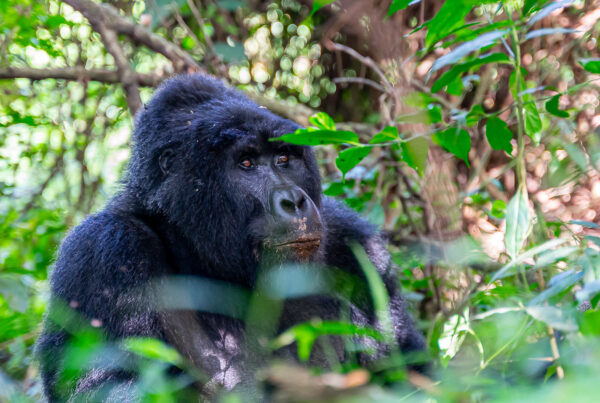
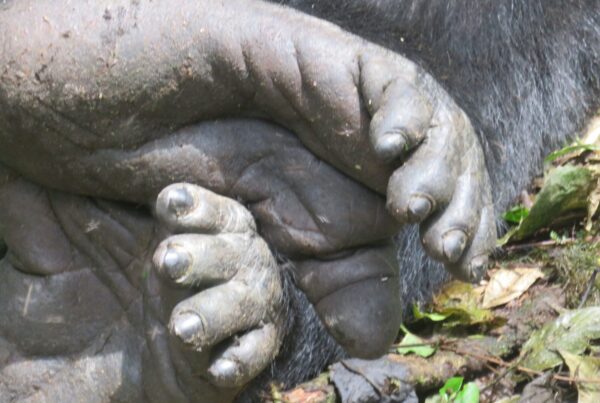
The 98% genetic similarity between humans and gorillas is not merely a statistics — it is the biological explanation for why gorilla encounters feel so different from encounters with other wildlife. When a gorilla looks at you, uses its hands with precision, shows facial expressions recognisable as emotional states, and makes social decisions in contexts that make immediate sense to human observers, you are observing the expression of a genome that is overwhelmingly similar to your own. The cognitive architecture, the emotional responses, the social intelligence — all of these emerge from genes that we largely share.

Final Thoughts

Our genetic proximity to gorillas is both a conservation tool (generating the public empathy that motivates protection and tourism) and a conservation problem (generating the disease transmission risk that threatens habituated populations). Understanding what the 98% similarity actually means — its precise scope, its evolutionary context, and its biological consequences — transforms the encounter from wonder at a charismatic large animal to something closer to recognition across the deepest evolutionary divide.

Ready to experience Uganda’s mountain gorillas in 2026? Secure your gorilla permits early and let us craft a seamless safari tailored to your travel style, preferred trekking sector, and accommodation level. From luxury lodges to well-designed midrange journeys, every detail is handled for you. Every itinerary is carefully planned to maximize your time in the forest while ensuring comfort, safety, and unforgettable encounters.

Have questions about gorilla permits, travel dates, or the best itinerary for you? Speak with a safari expert and get clear, honest guidance to plan your trip with confidence.

When is the last time you had an adventure? African Gorillas!!! Up Close With Uganda’s Wild Gorillas Touched by a Wild Gorilla: An Unforgettable Encounter Inside Gorilla Families: Bonds, Hierarchies & Jungle Life Face to Face With a Silverback: The Wild Encounter You’ll Never Forget