Gorilla Trekking on a Budget: Is It Possible?
Mountain gorilla trekking is often perceived as an exclusively luxury experience, and the $800 gorilla permit cost undeniably places it beyond the reach of some travellers. But the permit cost is the unavoidable fixed element; accommodation, transport, and surrounding activities can be scaled significantly downward to create a gorilla trekking experience that is far less expensive overall than the luxury lodge packages that dominate the marketing. For budget travellers willing to travel independently, stay in simple accommodation, and accept some trade-offs in comfort and service, gorilla trekking in Uganda is achievable at a total trip cost that compares favourably with many other premium African wildlife experiences.
The Fixed Cost: The Gorilla Permit
The gorilla trekking permit at $800 USD per foreign non-resident person is non-negotiable. Uganda Wildlife Authority sets this price uniformly and there are no discount rates, off-peak reductions, or group rates for standard foreign non-resident permits. Ugandan nationals trek for 300,000 UGX and EAC citizens for $700, but these rates are not available to other international visitors regardless of how the permit is purchased.
The permit can be purchased directly from UWA’s online booking system without going through a tour operator, which avoids any operator markup on the permit itself. Direct purchase requires USD payment (bank transfer or credit card), comfort with online booking, and willingness to manage your own logistics on trek day. The permit cost for a couple doing one gorilla trek each is $1,600 — this is the irreducible minimum cost element of any Uganda gorilla trekking trip.
Budget Accommodation Options
Each Bwindi sector has budget accommodation options that cost significantly less than the luxury forest lodges without compromising the gorilla trekking experience itself. In Buhoma, the Buhoma Community Rest Camp — managed by the local community and directing revenue to community development — provides camping and basic banda accommodation at $20 to $40 per person per night. The camp is close to the trek trailhead and has basic cooking facilities, toilets, and security. Simple guesthouses in Buhoma village offer similarly priced accommodation.
In Rushaga, community bandas and budget guesthouses near the sector headquarters provide basic but adequate accommodation at $25 to $50 per person per night. Kisoro town (17 kilometres from Rushaga) has a range of budget hotels starting at $15 to $30 per person per night, offering more town services at the cost of a daily drive to the trailhead. Budget accommodation in Nkuringo and Ruhija is similarly available though more limited in quantity.
Camping at community campsites is the cheapest accommodation option — most sectors have camping available at $10 to $20 per person per night including basic facilities. Bring your own tent or hire one locally. Camping in the highland forest air at Bwindi is a genuine experience in its own right: the forest sounds at night and the early morning bird chorus from a tent at the forest edge are among the more memorable elements of a camping gorilla trek.
Independent Transport Options
Getting to Bwindi independently without a hired private vehicle requires use of Uganda’s public bus and minibus network and local taxi services, which reduces transport costs significantly but increases journey time and complexity. From Kampala, public buses (Link Bus, Jaguar Executive Bus) depart for Kabale daily at fares of approximately $8 to $15 USD per person — a 6 to 7 hour journey to Kabale. From Kabale, local minibus taxis and boda-boda motorcycles connect to Buhoma (via Butogota) and Ruhija, though these connections require transfers and local knowledge to navigate efficiently.
For the Rushaga and Nkuringo sectors, the Kabale-Kisoro bus ($3 to $5 USD, approximately 2 hours) followed by local transport from Kisoro to the sectors ($5 to $10 for a special hire taxi) provides manageable independent access. The total public transport cost from Kampala to any Bwindi sector and back is approximately $30 to $50 per person — compared to $200 to $400 for a private vehicle hire. The trade-offs are journey time (significantly longer with public transport), comfort, flexibility, and the complexity of navigating connections in areas with limited English signage.
Budget Safari Operators
Mid-range operators — Uganda-based companies that offer gorilla trekking packages without the premium markup of international luxury operators — can provide private vehicle transport, permit procurement, and budget accommodation packages at significantly lower total costs than the branded luxury operators. Many Uganda-based operators offer 3-day gorilla trekking packages (Kampala-Bwindi-gorilla trek-Kampala) starting from $1,200 to $1,800 per person including the permit, 2 nights budget accommodation, and private vehicle transport. This compares with luxury packages from $3,000 to $5,000 per person for equivalent days with premium accommodation.
Research Uganda-based operators through Uganda Tourism Board accreditation lists, TripAdvisor reviews, and safari booking platforms. Budget operators vary significantly in reliability and quality — choose ones with verified reviews and clear communication, and confirm all inclusions (permit, accommodation, transport, meals) in writing before payment.
Eating on a Budget in Bwindi
Food costs in the Bwindi area are low by international standards. Local restaurants in Buhoma village and Kisoro town serve Ugandan staple food — rice, beans, matoke (cooked banana), posho (maize porridge), groundnut stew, chicken — at $2 to $5 per meal. Accommodation that includes meals typically costs more than accommodation without meals but may be better value than eating separately in areas where meal options are limited. Carry snacks (energy bars, nuts) from Kampala where convenience store options are more varied and prices lower than in remote highland areas.
Making the Most of a Budget Trip
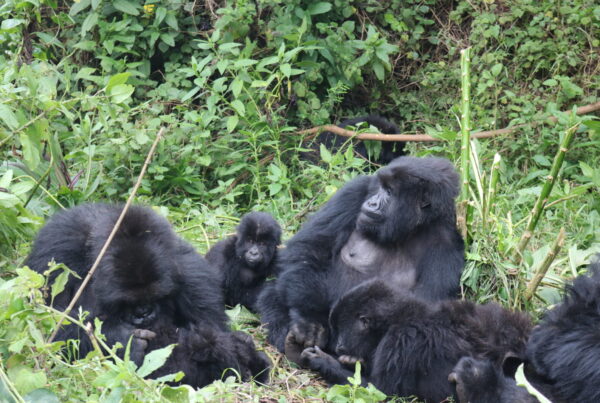
A budget gorilla trekking trip with basic accommodation and independent transport delivers the same gorilla encounter as a luxury trip — the one-hour with the gorillas is identical regardless of what surrounds it. Where budget approaches genuinely compromise the experience is in the journey: long and uncomfortable public transport days, basic facilities at night, and the absence of expert guide interpretation of what you experience. If the gorilla encounter itself is the singular priority and the surrounding experience is secondary, a budget approach is entirely viable. If the journey, the accommodation environment, and the expert knowledge of a specialist guide are also part of what you are seeking, the additional investment in a mid-range or luxury approach is justified.
Final Thoughts
Mountain gorilla trekking at any budget level is an extraordinary experience — the animals are the same, the forest is the same, and the one-hour encounter is the same whether you slept in a $20 community banda or a $500 luxury tent suite the night before. Budget travellers who plan carefully, book permits directly through UWA, use public transport or budget operators, and stay in community accommodation can trek mountain gorillas for a total trip cost of $1,000 to $1,800 per person (excluding international flights) — genuinely accessible for many travellers who assume gorilla trekking is beyond their means.
Frequently Asked Questions
Rough ranges per person (including international flights): Budget: $1,500–$2,500 (economy flight, basic lodge, group tour). Mid-range: $2,800–$4,500 (comfortable lodges, small group or private tour). Luxury: $6,000–$15,000+ (private guide, charter flights, high-end lodges). The $800 permit is a fixed cost for everyone regardless of budget.
The permit covers only the 1-hour gorilla tracking. Budget separately for: Bwindi park entry fee ($40/day), porter hire ($15–$20 per trek — strongly recommended), ranger/tracker tip ($20–$30 per person), accommodation, ground transfers, and international flights. Most tour operators bundle these except the tip.
The only official discount is the low season rate: $600 FNR during April, May, and November (vs. $800 standard). EAC foreign residents pay $700 year-round ($500 low season). There are no group discounts, early-booking discounts, or operator-negotiated rates — the permit price is fixed by Uganda Wildlife Authority.
The permit itself costs the same either way. Booking through a licensed tour operator adds their service fee but simplifies the logistics significantly — permit transfer, sector assignment, accommodation at the right sector, early morning transfers, and post-trek arrangements are all managed for you. Self-arranged gorilla trekking is possible but requires careful coordination.
Uganda is home to the mountain gorilla (Gorilla beringei beringei), one of two subspecies of eastern gorilla. They live exclusively in the Virunga volcanic highlands (Uganda/Rwanda/DRC) and Bwindi Impenetrable Forest (Uganda only). Mountain gorillas are the only gorilla subspecies that cannot survive in captivity — every individual you can trek is a wild animal.