Updated
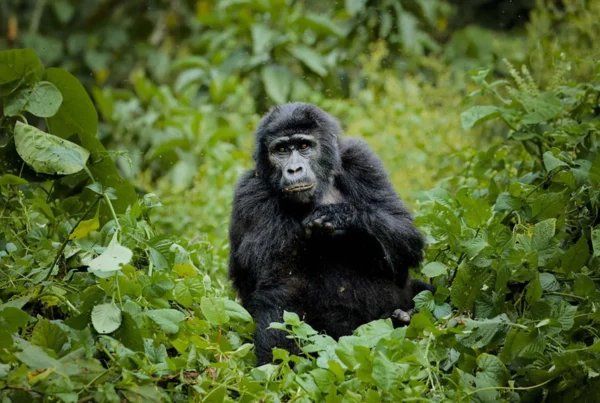
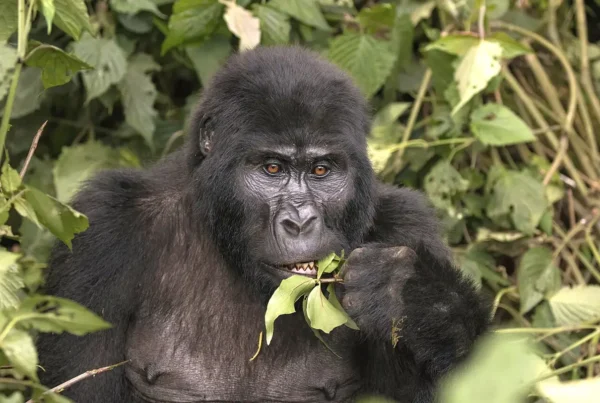
Do Gorillas Attack Humans in Uganda?. Mountain gorillas very rarely attack people, and serious injuries to tourists on gorilla treks are extremely rare. In more than 40 years of gorilla tourism in Uganda, Rwanda and Congo, we are not aware of any visitor being killed by a habituated mountain gorilla. Gorillas are peaceful plant-eaters that avoid conflict; when they do act aggressively, it is almost always a bluff charge by a silverback protecting his family, which ends a few metres short if people stay still.
That does not mean gorillas are harmless. An adult silverback weighs around 160–200 kg and is many times stronger than a person, which is why every trek follows strict rules and is led by an experienced ranger. Here is why gorillas are so rarely aggressive, what can trigger a reaction and how the rules keep you safe.
Do Gorillas Attack Humans in Uganda? Understanding Gorilla Behaviour and Safety
Why gorillas are rarely aggressive
Gorillas live in stable family groups and spend most of the day feeding on leaves, stems, shoots and fruit, then resting. They have no reason to hunt or compete with people, and their natural response to a threat is to warn it off or move away, not to fight. Much of their apparent aggression — chest-beating, hooting, slapping the ground — is display, designed to avoid real fights rather than start them.
The families you visit in Bwindi and Mgahinga are habituated, meaning trackers and researchers have spent two to three years or more getting them used to the quiet presence of people. Habituated gorillas treat a small group of calm visitors as part of their surroundings and carry on feeding, playing and grooming. Unhabituated, fully wild gorillas are more likely to charge because they see people as a threat, which is one reason tourists only visit habituated families. Learn more in how gorilla habituation works.
What can trigger a reaction
When a silverback does display or charge, there is usually a clear cause. The most common are people getting too close to an infant or its mother; a group spreading out so that the silverback has people on several sides; sudden movements or noise, such as someone falling, shouting or dropping a stick; and direct, prolonged eye contact, which a silverback may read as a challenge.
Young blackbacks, males not yet fully grown, sometimes charge simply to show off. Most of these triggers are avoided by keeping 7 m away, staying in a tight group behind the ranger and moving calmly.
What a charge looks like and what to do
A charge usually begins with warning signs: hooting, chest-beating, tearing vegetation or a stiff, sideways walk. The silverback then rushes forward, often stopping a few metres away before turning back. It lasts seconds. The right response is always the same: stop, crouch down slowly, look at the ground and stay still. Never run, as running is the one reaction that can turn a bluff into a real chase. The ranger will grunt softly to calm the silverback and tell you when to move. Our step-by-step guide to what to do if a gorilla charges covers this in detail.
The real risks on a gorilla trek
For visitors, the gorillas are not the main danger. Falls on steep, muddy slopes cause far more injuries than gorillas ever do, followed by stings from nettles and bites from safari ants. Good boots, gloves, long sleeves, a walking stick and a porter deal with most of this. For wider travel safety, see our honest Uganda safety guide. Forest elephants and buffalo also live in Bwindi, which is one reason armed rangers accompany every group, although encounters are uncommon.
The greater danger actually runs the other way: people are a risk to gorillas. Human respiratory infections can kill gorillas, and snares set for other animals injure them. That is why the health rules for trekkers — not trekking while ill, keeping 7 m away and wearing a mask if asked — are enforced so strictly. See our gorilla trekking rules.
How rangers keep you safe
Every group of up to eight visitors is led by a Uganda Wildlife Authority ranger guide who knows the family well — which silverback is relaxed, which mother is protective, which youngster likes to show off. Trackers stay with the family from early morning and keep the guide informed by radio. During your hour, the guide positions the group, watches the silverback constantly and moves people away if tension builds. Their calm experience is the main reason gorilla trekking has such a strong safety record.
Frequently asked questions
For visitors, no. Gorillas are generally calmer and rely on display. Chimpanzees can be more excitable, but both are safe to visit with rangers and rules.
Armed rangers accompany groups mainly because of forest elephants and buffalo. Guns are not used against gorillas.
Rarely, and usually only minor knocks or scratches when someone ran or got too close. Serious injuries to tourists are extremely rare.
To show strength and communicate, often to warn rivals or signal position. Young gorillas also chest-beat in play. It is display, not an attack.