Welcome to the ultimate guide to Uganda Gorilla Trekking where the untouched rainforests of East Africa echo with the ancient heartbeat of nature. Here in the misty highlands of Bwindi Impenetrable Forest and the volcanic slopes of Mgahinga Gorilla National Park, the endangered mountain gorilla roams freely — and you have a rare opportunity to walk beside them. Uganda is not just the best place in the world to see mountain gorillas, it’s also one of the most welcoming, secure, and conservation-forward destinations in Africa. Whether you dream of a quiet 3-day safari or a grand 14-day journey across Uganda’s national parks, this is your starting point — your gateway to a life-changing encounter with the wild.
Explore our Uganda gorilla trekking safaris for every traveler—solo, family, budget, or luxury. All tours include permits, transport, accommodation, meals, and park fees. Whether for a quick trip or a deeper adventure, we’ve got you covered.
With over half of the world’s remaining mountain gorillas, this UNESCO World Heritage site is the most popular and reliable gorilla trekking destination in Africa. The park has multiple sectors—Buhoma, Ruhija, Rushaga, and Nkuringo—each with habituated families ready for tracking.
Uganda Gorilla Trekking Guide to Permits & the Unforgettable Experience.
Gorilla trekking in Uganda offers one of the most unforgettable wildlife experiences in Africa, and at Uganda Gorilla Trekking, we specialize in making this dream accessible and seamless. Home to over half of the world’s mountain gorillas, Uganda’s Bwindi Impenetrable Forest and Mgahinga Gorilla National Park provide the perfect setting for close encounters with these incredible creatures. 経験豊富なガイドが素晴らしい熱帯雨林のトレイルを案内する中、シルバーバック、母親、こどもたちが自然の生息地で生活する姿を目の当たりにし、重要な自然保護活動を支援できます。弊社のツアーにはパーミットの予約と現地手配りが含まれ、安全で責任あるゴリラトレッキングの冒险を保証します。初めての訪問でも再訪でも、Uganda Gorilla Trekkingは人生を変える体験のための信頼できるパートナーです。
Uganda stands at the heart of one of the world’s most extraordinary conservation achievements. In the mist-covered highlands of southwestern Uganda, mountain gorillas survive in protected rainforest habitat that has become one of Africa’s most carefully managed wildlife ecosystems. For international travelers, gorilla trekking in Uganda is not simply a safari excursion. It is a regulated conservation experience that places visitors inside the living territory of one of the rarest primates on Earth.
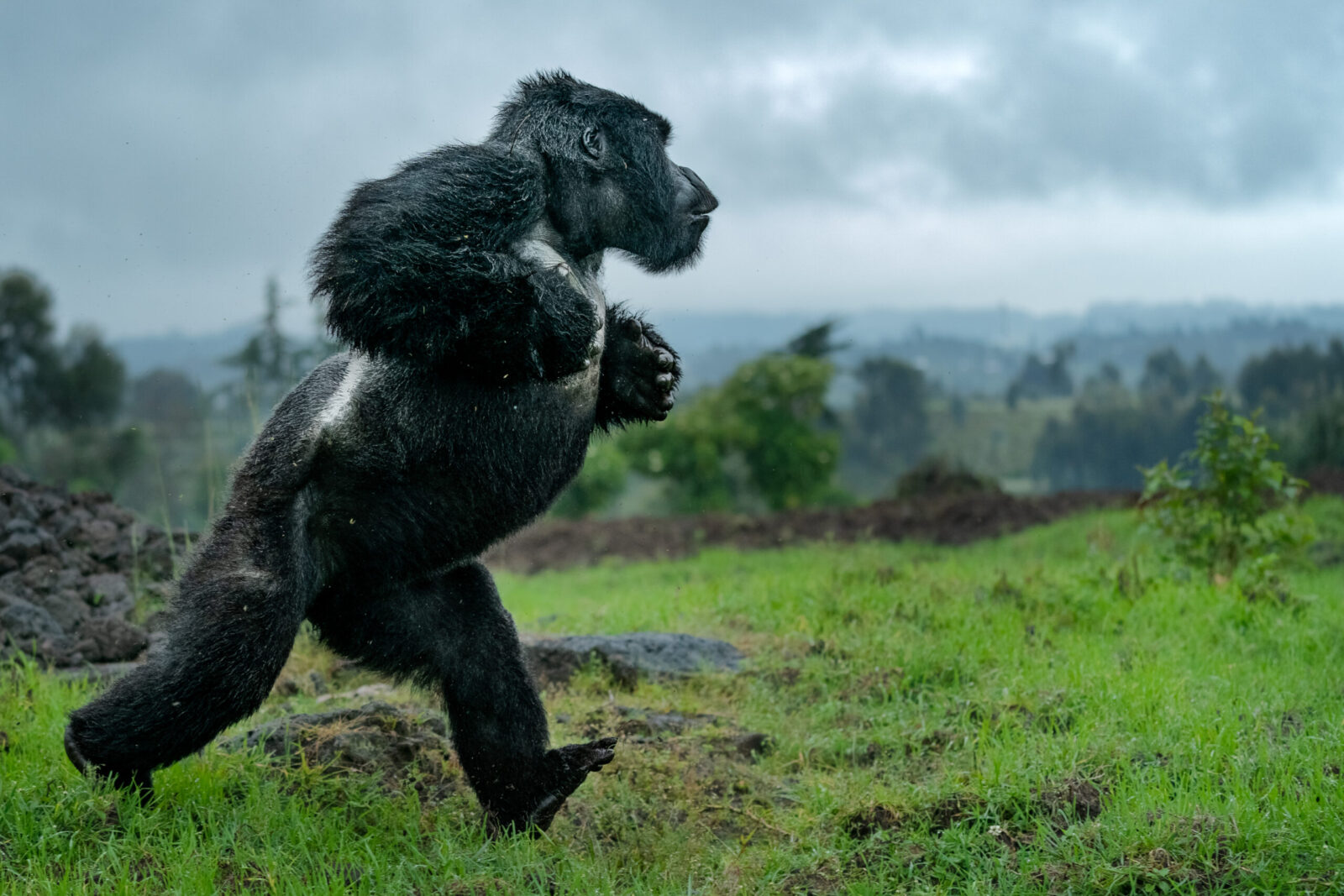
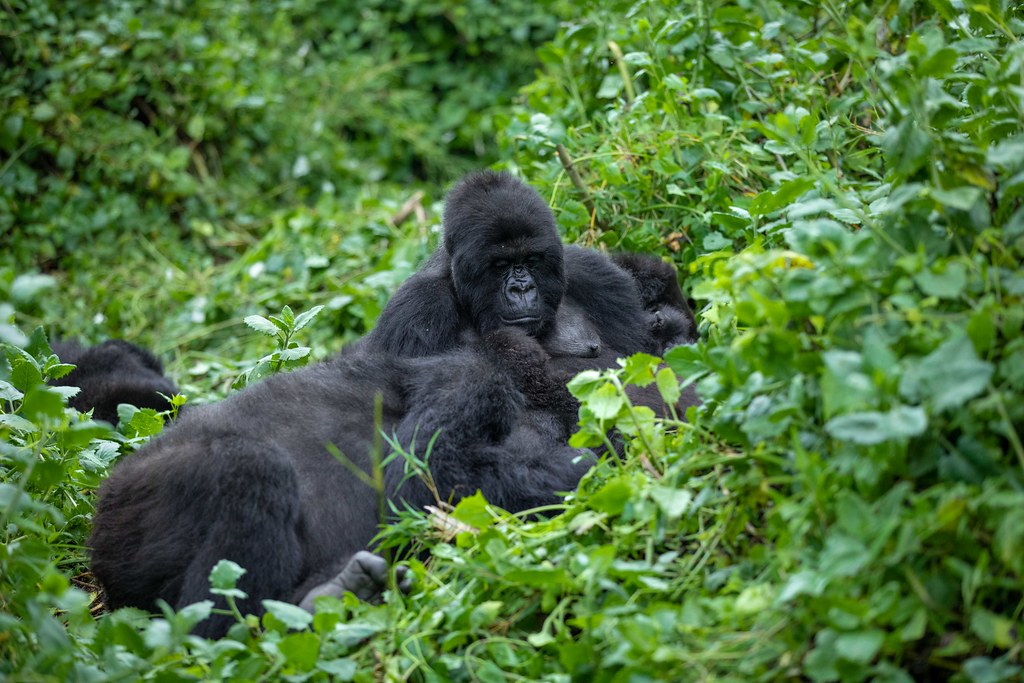
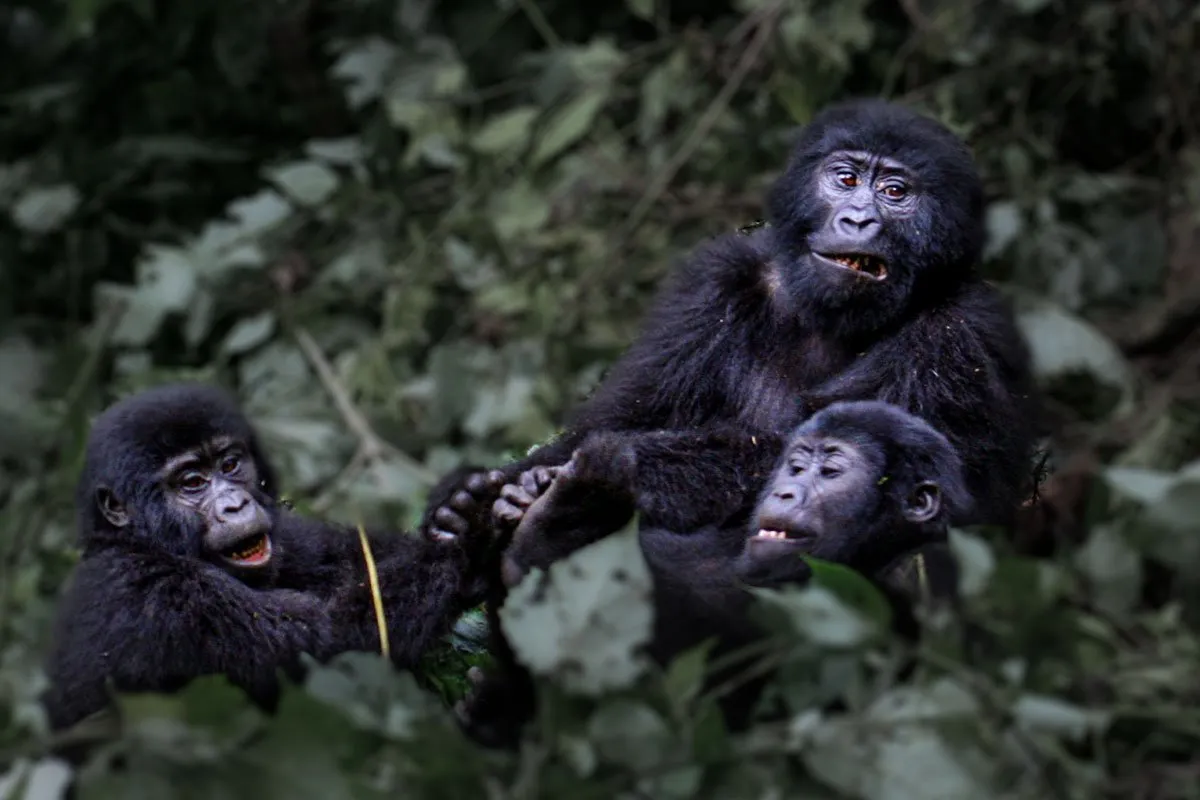
マウンテンゴリラは、支配的なオスのシルバーバックが率いる家族グループで生活しています。典型的なグループは、1頭のシルバーバック、数頭の成体メス、若個体、および乳幼児で構成されています。シルバーバックは保護者、意思決定者、仲裁者として機能します。 These family units move daily in search of vegetation, building fresh nests each evening for sleeping.
Unlike lowland gorillas, mountain gorillas inhabit cooler, high-altitude rainforest environments ranging between 1,200 and 2,600 meters above sea level. Their thick fur helps them survive the damp and misty conditions of Bwindi’s forest canopy.
Mgahinga’s terrain is mountainous and scenic, dominated by volcanic peaks and bamboo forest. While most travelers choose Bwindi due to larger permit availability, Mgahinga provides a more secluded alternative.
ゴリラ許可証の費用と保全への影響
The gorilla permit is the most important component of planning your trek. Uganda’s standard permit cost for international visitors is USD 800 per person. During designated low-season months, discounted permits may be available at USD 600.
This permit fee includes:
Park entry
Professional ranger guidance
Tracking services
One regulated hour with a habituated gorilla family
The trek begins through dense vegetation. Terrain may include steep climbs, muddy slopes, and uneven ground. Hiking duration varies depending on the gorillas’ location. It can take one hour or several hours to reach the family.
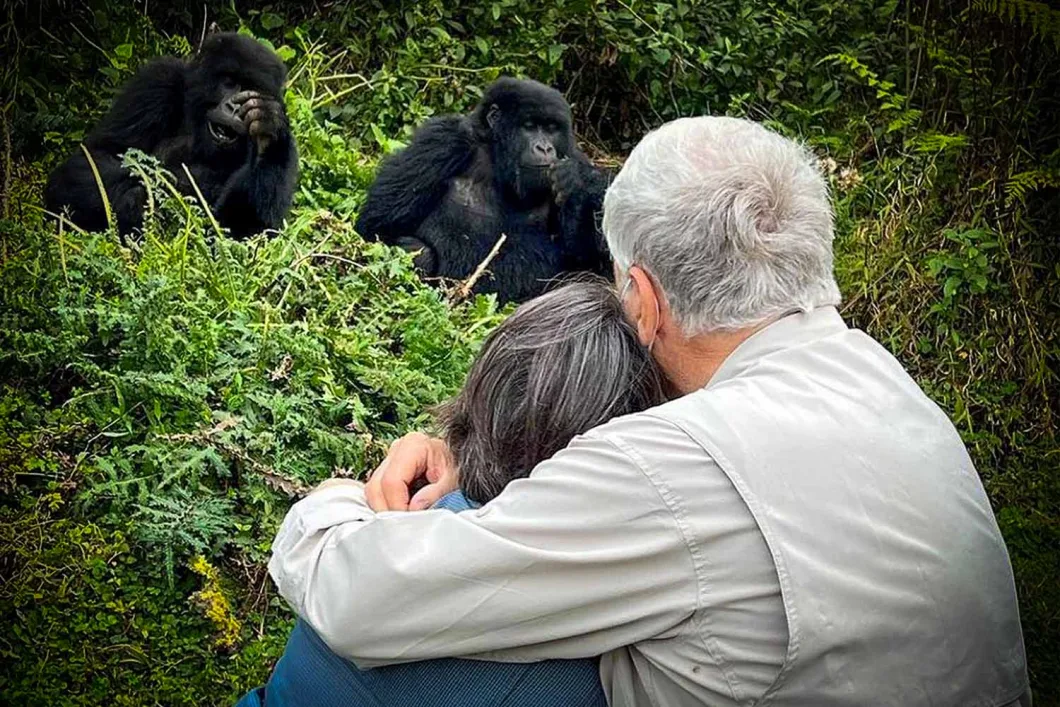
When the gorillas are located, visitors are instructed to leave bags behind and approach quietly. You will stand at a minimum regulated distance while observing the group’s natural behavior.
The one-hour viewing window begins once contact is made. During that time, you may observe feeding, grooming, resting, juvenile play, or the silverback’s watchful leadership.
多くの旅行者にとって、ウガンダのゴリラトレッキングは一生に一度の旅です。多くの場合、東アフリカへの初めての訪問、熱帯雨林でのハイキング初体験、そして至近距離での野生動物との初めての遭遇となります。 It is completely normal to feel a mix of excitement and uncertainty before arrival. Understanding what to expect transforms that uncertainty into confidence.
まず知っておくべきことは、ウガンダのゴリラトレッキングは高度に組織化されプロフェッショナルに管理されているということです。これは予測不能な荒野での賭けではありません。ウガンダ野生生物局は構造化されたシステムを運営しており、すべてのトレッキンググループは毎日ゴリラ家族を監視する訓練されたレンジャーによって案内されます。 The experience may feel wild and immersive, but it is carefully controlled behind the scenes.
初めての旅行者の多くは体力があるかどうかを心配します。地形が困難な場合もありますが、アスリートである必要はありません。トレッキングは期間と難易度が異なり、レンジャーチームはできる限り訪問者を適切なゴリラ家族と組み合わせようとします。体力がある旅行者にも、ポーターの雇用を強くお勧めします。 Porters assist with balance on steep or muddy slopes and make the trek significantly more comfortable.
Another common concern for first-time visitors is safety. Uganda’s gorilla trekking regions are secure and monitored. Rangers are armed for wildlife protection, and park authorities maintain consistent communication networks. Mountain gorillas themselves are generally calm and non-aggressive when approached under ranger supervision. As long as instructions are followed, the encounter remains peaceful and controlled.
健康上の考慮事項も重要です。ゴリラは人間のDNAの高い割合を共有しているため、病気の感染を防ぐための厳格な衛生プロトコルが存在します。インフルエンザのような症状を示す訪問者は動物の保護のためにトレッキングを制限される場合があります。 Maintaining distance, avoiding sudden movements, and following ranger instructions are all part of responsible participation.
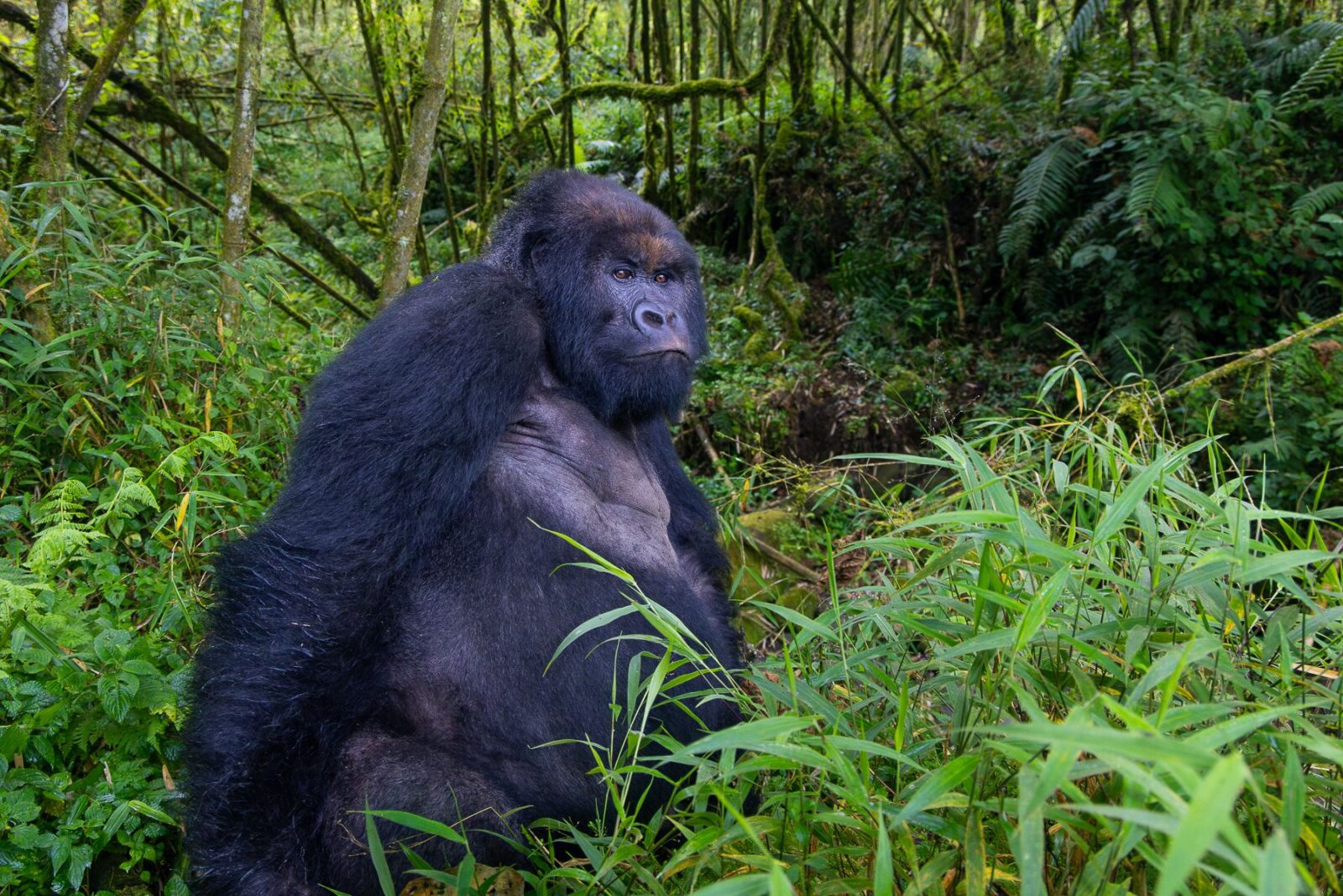
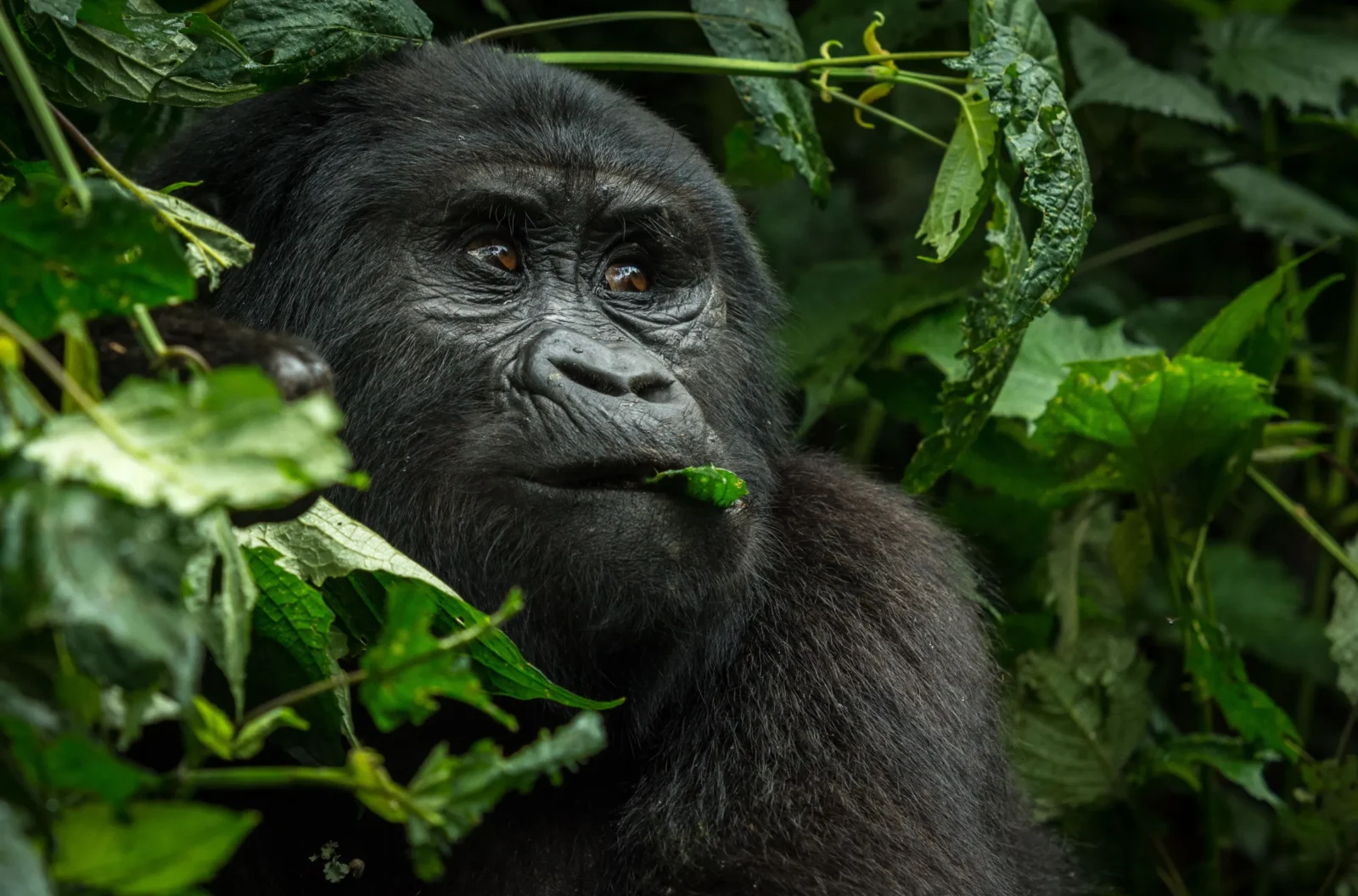
感情的には、初回トレッカーは出会いの影響を過小評価することがよくあります。シルバーバックが数メートル先で静かに座っているのを見たり、母親が乳児に授乳するのを観察したり、幼個体がつるを通り抜けるのを見たりすることで、強い結びつきの感覚が生まれます。 Many visitors describe the experience as humbling rather than thrilling. It is not loud or dramatic; it is intimate and reflective.
Logistically, preparation removes most stress. Secure your permit early. Confirm your lodge based on trekking sector. Pack appropriate footwear and rain protection. Allow an overnight rest stop before and after trekking if possible to manage travel fatigue. Once these elements are arranged, the experience unfolds naturally.
For first-time travelers, the most important mindset shift is this: gorilla trekking is not about rushing, conquering terrain, or ticking off a bucket list item. It is about stepping quietly into a functioning wildlife society and observing respectfully.
Uganda’s system is designed to protect both you and the gorillas. With proper planning and realistic expectations, first-time visitors consistently leave with one conclusion — the effort was absolutely worth it.
Uganda’s gorilla trekking regions are among the most closely monitored conservation areas in East Africa. Rangers conduct daily patrols, and veterinary teams remain on standby to address gorilla health concerns.
Uganda offers a deeply immersive rainforest environment combined with one of the world’s most successful conservation models. The density of Bwindi’s forest, the high-altitude mist, and the structured trekking system create an experience that feels both wild and responsibly managed.
Booking your gorilla trekking adventure in Uganda is a straightforward process when you know the steps, and planning ahead is key to securing your spot. The first and most important step is to obtain a gorilla trekking permit, which is required for every visitor. These permits are limited and in high demand, especially during peak seasons, so it’s highly recommended to book several months in advance to avoid disappointment.
You can book your permit directly through the Uganda Wildlife Authority (UWA) or through trusted tour operators who handle everything on your behalf—from securing permits to arranging guides, transportation, and accommodation. Many travelers prefer using reputable operators because they simplify the logistics, offer expert advice on the best trekking sectors, and provide valuable support throughout your journey.
To start, decide which national park you want to visit—Bwindi Impenetrable Forest or Mgahinga Gorilla National Park—as both offer incredible gorilla trekking experiences but differ slightly in scenery and trekking difficulty. Once you’ve chosen, contact your preferred tour operator or visit the official UWA booking portal to check permit availability for your desired dates.
After your permit is confirmed, your tour operator will assist with itinerary planning, including airport transfers, lodging options ranging from budget to luxury lodges, and any additional activities such as chimpanzee trekking or wildlife safaris. On the day of your trek, expert guides will lead you safely through the forest to encounter the gorilla families, ensuring a memorable and respectful experience.
Remember, securing your gorilla trekking permit early and booking with a reliable company is essential for a smooth, hassle-free adventure in Uganda.
なぜウガンダを選ぶのか?より多くのゴリラ、低コスト&より良い体験
ゴリラトレッキングにウガンダを選ぶ理由
ゲリラで稿を便り、優れた価値、ラグジュアリーオプション & 深い体験
Uganda stands as the heart of mountain gorilla conservation. Protecting nearly half of the world’s remaining mountain gorillas, it offers not only the highest concentration of these extraordinary primates, but also one of the most balanced, experience-rich safari environments in Africa. Choosing Uganda is not simply about affordability — it is about depth, diversity, and intelligent travel design.
Unlike destinations that offer only one primate highlight, Uganda uniquely combines three rare primate encounters within one itinerary: mountain gorillas in Bwindi Impenetrable Forest, chimpanzees in Kibale Forest, and golden monkeys in ムガヒンガ・ゴリラ国立公園。 Nowhere else in Africa allows you to experience this trio of endangered primates within a single journey.
But Uganda’s strength extends far beyond species diversity.
ゴリラの数が多く、許可証のř帯巻当も広がる
Uganda hosts the largest number of habituated gorilla families available for trekking. This translates into more daily permit allocations compared to neighboring destinations, increasing your chances of securing preferred travel dates and sectors.
More gorilla families also mean a wider range of trekking environments — from deep valley forests to high-altitude ridges — allowing visitors to choose experiences suited to their fitness level and preferences.
This diversity enhances flexibility without compromising exclusivity. Only eight visitors are permitted per gorilla family per day, preserving intimacy and conservation integrity.
ウガンダにおけるラグジュアリーゴリラトレッキング
Uganda is no longer positioned as a purely adventurous or mid-range destination. Over the past decade, high-end eco-luxury lodges have transformed the trekking landscape.
Travelers can now combine gorilla trekking with:
Private plunge-pool forest villas
Personal butler service
Helicopter or fly-in safari connections
Exclusive-use safari vehicles
Fine dining experiences overlooking the rainforest canopy
Luxury in Uganda does not dilute wilderness immersion. Instead, it enhances recovery and comfort after trekking through dense forest terrain.
For discerning travelers seeking both authenticity and refinement, Uganda delivers both without excessive permit pricing.
小グループ・プライベートサファの受ける
Uganda’s tourism model naturally favors small-group and private safari experiences. Gorilla trekking itself is limited to eight visitors per family, ensuring crowd control and intimate wildlife viewing.
Beyond trekking, many safari itineraries are customized for private groups, couples, or small family units. Unlike mass tourism circuits, Uganda operates with a boutique safari rhythm that prioritizes quality over volume.
This makes it ideal for honeymooners, private travelers, and photography-focused guests who prefer personalized pacing.
キガリからのゴリラトレッキング – 漨いアクセス、スマートなロジスティクス
One of Uganda’s strategic advantages is the option to access Bwindi Impenetrable Forest via Kigali International Airport in Rwanda. This route significantly reduces driving time compared to entering Uganda via Entebbe for certain trekking sectors.
Travelers can land in Kigali and reach southern Bwindi within approximately four to five hours by road, making Uganda gorilla trekking accessible even for shorter itineraries.
This cross-border flexibility allows visitors to combine logistical efficiency with Uganda’s more competitive permit pricing.
シニアによるゴリラトレッキング
Uganda is increasingly popular among senior travelers seeking meaningful wildlife experiences. While trekking requires moderate physical fitness, several factors make it accessible for older visitors.
Rangers assign trekking groups based on ability levels when possible. Porters are available to assist with balance and carrying daypacks. In certain sectors, sedan-chair services can be arranged for visitors with limited mobility, carried by trained teams.
Luxury lodges provide comfortable recovery environments with fireplaces, spa services, and attentive hospitality.
Age alone is not a barrier. Preparation and honest fitness assessment ensure a safe and rewarding experience.
野生物以上の麒り物ー多層的なサファの目的地
Uganda offers far more than gorillas. Visitors can combine trekking with classic savannah safaris in Queen Elizabeth National Park, boat cruises along the Kazinga Channel, tree-climbing lions in Ishasha, and scenic relaxation at Lake Bunyonyi.
The country’s biodiversity allows travelers to build comprehensive itineraries rather than single-activity trips.
This variety increases the value of long-haul travel, especially for international visitors from Europe, North America, and Australia.
休する、コミュニティ中心の 迷地的なエコツーリズム
Uganda’s conservation model is built on community integration. A percentage of gorilla permit revenue is shared with local communities surrounding the parks. This revenue supports schools, health centers, and infrastructure projects.
When communities benefit financially from wildlife tourism, habitat protection becomes a shared responsibility rather than a government-only initiative.
Visitors are not merely observing wildlife; they are directly supporting long-term conservation and rural livelihoods.
体験を�;惧にしない大きな価値
Uganda’s gorilla permit pricing remains more accessible than certain neighboring destinations. This allows travelers to allocate budget toward extended safari days, upgraded lodges, or additional primate tracking experiences.
Value in Uganda is not about cutting corners. It is about redistributing investment toward a fuller safari experience.
Travelers consistently report that Uganda delivers deeper immersion per dollar spent compared to single-destination gorilla trips.
安全 & 安定性
Uganda’s gorilla trekking regions are professionally monitored and operate under structured park authority oversight. Rangers are trained, armed for wildlife safety, and supported by consistent patrol systems.
For international visitors seeking both adventure and reassurance, Uganda balances wilderness immersion with operational stability.
感情的な違い
Ultimately, choosing Uganda is not only about logistics, pricing, or species count. It is about atmosphere.
Bwindi’s dense, ancient forest creates an environment that feels primeval and immersive. Mist clings to ridges. Bird calls echo through valleys. The encounter with a silverback often unfolds quietly, without theatrical framing.
ユニークな原奇性のある、本物の、深い個人的な体験です。
野生のマウンテンゴリラに近づく興奮、畏怖、そして驚きを感じてください。
Experience gorilla trekking in Bwindi Impenetrable National Park or Mgahinga Gorilla National Park, spend one unforgettable hour watching mountain gorillas up close and capturing the moment on video.
Watch some of the real-life gorilla encounters below.
At Int’l Ethical Gorilla Specialists, we don’t sell generic safaris—we evaluate and select only the finest gorilla trekking experiences in Africa, identifying high-performing, ethical operators in Uganda and Rwanda based on real standards such as guide expertise, safety, logistics, and overall guest experience; every recommendation meets strict conservation regulations set by UWA and RDB, ensuring your journey supports both wildlife protection an d local communities, so instead of navigating endless options, you gain access to a refined selection of trusted, high-end gorilla trekking experiences chosen for quality, integrity, and consistency.
How much does a Uganda gorilla trekking permit cost in 2026?
A Uganda gorilla trekking permit costs USD $800 per person for a one-hour session with a habituated gorilla family. The permit is issued by the Uganda Wildlife Authority and covers both Bwindi Impenetrable Forest and ムガヒンガ・ゴリラ国立公園。 The $800 fee includes your park entrance. At $800, Uganda offers the most affordable gorilla trekking permit in the world — Rwanda charges $1,500 per person for the same experience.
What is the best time of year for Uganda gorilla trekking?
The best months for Uganda gorilla trekking are June to September (long dry season) and December to February (short dry season). During these periods, forest trails are drier and easier to navigate, and skies are clearer for photography. Gorillas are present year-round, so the wet seasons (March–May and October–November) are still viable — they bring fewer tourists, lower accommodation rates, and lush green forest backdrops.
How difficult is gorilla trekking in Uganda physically?
Gorilla trekking difficulty varies by sector and by where the gorilla family has moved on any given day. Buhoma sector in Bwindi is generally the most accessible. Nkuringo and Rushaga sectors involve steeper, more demanding terrain. Treks can take anywhere from 30 minutes to 6 hours each way through dense rainforest. Most healthy adults in reasonable fitness can complete a trek. Porters are available for hire at all trailheads — they carry your pack and can assist you over difficult sections.
What is the difference between Bwindi Impenetrable Forest and Mgahinga for gorilla trekking?
Bwindi Impenetrable Forest hosts the majority of Uganda’s habituated gorilla families across four sectors — Buhoma, Ruhija, Rushaga, and Nkuringo — giving you more permit availability and a greater choice of trekking experience. Mgahinga Gorilla National Park hosts a single habituated family, the Nyakagezi group, set against the dramatic backdrop of the Virunga volcanoes. Mgahinga offers a more exclusive, remote experience with very few fellow trekkers.
How far in advance should I book Uganda gorilla permits?
For peak season travel (June–September), book your Uganda gorilla trekking permits 4–6 months in advance. December and January also fill up quickly — aim for 2–3 months ahead for these months. For the wet season (March–May, October–November), permits are more readily available, though 4–8 weeks notice is still recommended. Last-minute permits do occasionally become available through cancellations, but supply is unpredictable.
Can I combine Uganda gorilla trekking with other wildlife experiences?
Yes — Uganda is exceptional for combining multiple wildlife experiences in one trip. Popular additions to gorilla trekking include chimpanzee tracking in Kibale Forest National Park, game drives in Queen Elizabeth National Park (for lions, elephants, and hippos), Murchison Falls National Park (for large herds and the Nile), and Shoebill stork searches in Mabamba Swamp near Kampala. A 7–10 day Uganda safari comfortably covers gorillas, chimpanzees, and savannah game.
What should I pack for a Uganda gorilla trek?
Essential packing for Uganda gorilla trekking includes: sturdy waterproof hiking boots with ankle support, a waterproof rain jacket (even in dry season), long trousers and long-sleeved shirt (protects against nettles, insects, and sun), garden gloves, at least 2 litres of water per person, energy snacks, insect repellent, sunscreen, and a camera without flash. Cash (USD or UGX) for tips to your guide and optional porter hire. A light backpack works best — porters can carry heavier bags.
Do I need vaccinations to go gorilla trekking in Uganda?
Yellow fever vaccination is mandatory for entry into Uganda and you must carry your yellow card as proof. Recommended vaccinations include typhoid, hepatitis A and B, meningitis, and all routine vaccines. Malaria prophylaxis is strongly advised. Critically: all gorilla trekkers must be completely free of cold, flu, or any respiratory illness on the day of trekking. Mountain gorillas share 98% of human DNA and are highly susceptible to human diseases — trekkers with symptoms will be turned away at the trailhead.
Are Uganda gorilla permits cheaper than Rwanda gorilla permits?
Yes — significantly. Uganda gorilla trekking permits cost $800 per person. Rwanda gorilla permits cost $1,500 per person. Both countries share the same mountain gorilla population, which crosses between Bwindi Impenetrable Forest in Uganda and the Virunga volcanoes straddling Rwanda and the Democratic Republic of Congo. The gorilla experience itself is identical in quality. Uganda is the most affordable gorilla trekking destination in the world, making it the preferred choice for budget-conscious travellers and large groups.
What is the minimum age for gorilla trekking in Uganda?
The minimum age for gorilla trekking in Uganda is 15 years old, as set by the Uganda Wildlife Authority. This policy applies to all trekking sectors in both Bwindi Impenetrable Forest and ムガヒンガ・ゴリラ国立公園。 The rule exists to protect the gorillas and to ensure the safety of younger visitors on steep, unpredictable forest terrain. Teenagers aged 15 and above who are physically fit can fully participate in the experience.

 ウガンダのマウンテンゴリラを理解する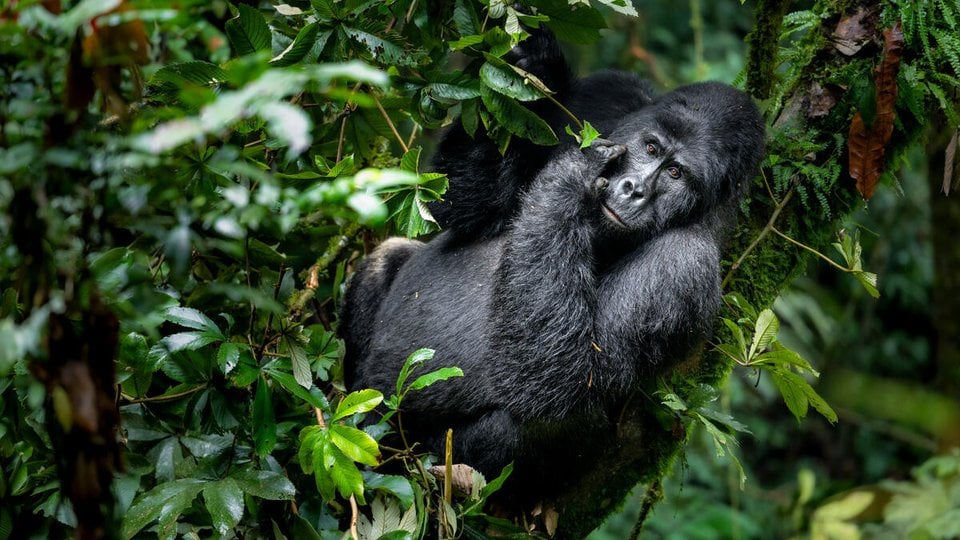


 初めてウガンダでゴリラトレッキング:出発前に知っておくべきこと