
Ebola Travel Advisory In Uganda
We run gorilla safaris in Uganda. We have done this for years. Our team is based here, our rangers are in Bwindi every morning, and our families live in this country. When Ebola news breaks — anywhere in Uganda — our phones ring within hours from worried visitors, travel agents, and people who have paid deposits and do not know what to do next. This page exists because the information most people find online is either too vague to be useful or too alarming to be accurate. We are going to give you the real picture, section by section, updated as the situation changes.
 Latest Updates
This section is updated whenever the situation materially changes. Read the most recent entry first.
August 2026 — Outbreak Declared Over
Uganda has been declared Ebola-free. On 28 July 2026, the Uganda Ministry of Health officially declared the end of the Bundibugyo strain Ebola outbreak that began 15 May 2026. The 42-day countdown (twice the maximum incubation period) ran from the discharge of the last confirmed patient on 16 July 2026, with no new cases recorded. The final tally: 20 confirmed cases, 2 deaths. Fifteen of those cases were imported from the Democratic Republic of the Congo; five were locally acquired in the initial contact cluster. All transmission chains were identified, traced, and contained within the response zone. Gorilla trekking at Bwindi and Mgahinga has operated continuously without interruption throughout the entire period — the outbreak never approached the southwestern gorilla trekking zone. Entebbe International Airport is operating fully normal scheduled service. Uganda Wildlife Authority has confirmed permit availability through the rest of 2026 and into 2027. We are continuing to monitor the situation in eastern DRC, where the Bundibugyo strain outbreak remains active, but the border surveillance and screening protocols Uganda introduced at the time of the outbreak declaration remain in place as an ongoing precaution.
June 2026
An Ebola outbreak is active in Uganda. The Uganda Ministry of Health has confirmed cases in districts located in a different region of the country from the gorilla trekking zone. Bwindi Impenetrable Forest, Mgahinga Gorilla National Park, and the surrounding Kigezi region in southwestern Uganda are not affected. Entebbe International Airport is open and all major airlines are operating normal scheduled service. Uganda Wildlife Authority has not suspended gorilla trekking. Gorilla permits are available. Our ground team at Bwindi reports normal operations.
We will add a new dated entry here each time the situation changes — whether it improves, worsens, or shifts geographically. If you are checking this page regularly, the most recent entry above tells you the current state.
Uganda and the Congo Are Not the Same Outbreak
This distinction matters more than almost anything else on this page, and it is the one most international media consistently fail to make clearly. Uganda and the Democratic Republic of Congo share a long border and share the same mountain gorilla range in the Virunga and Bwindi area. They do not share the same Ebola situation, and they have not for many years.
The DRC — particularly the North Kivu, South Kivu, and Ituri provinces in its eastern region — has experienced near-continuous Ebola activity since 2018. This is driven not only by the virus itself but by the ongoing armed conflict in those provinces, which prevents health workers from reaching affected communities, disrupts contact tracing, and makes containment extremely difficult. Virunga National Park in eastern DRC, where gorilla trekking was offered before security collapsed, is in this same zone. The eastern Congo Ebola situation is a product of prolonged conflict and collapsing health infrastructure in a war zone. It is a humanitarian crisis as much as a disease crisis.
Uganda’s situation is entirely different. Uganda’s Ebola outbreaks have been discrete, geographically contained events — a district identifies cases, the Ministry of Health deploys response teams, contact tracing begins within days, and the outbreak is declared over within weeks or months. Uganda’s health infrastructure, however imperfect by Western standards, has been built and tested through decades of disease response including HIV, Marburg, and multiple Ebola events. The country has international support, functioning district health teams, and a track record of actually ending outbreaks rather than managing indefinite transmission.
When you read a travel advisory that mentions both Uganda and the DRC in the same paragraph, or that references the “Great Lakes region” as a single concern, you are reading something that has compressed two very different situations into one warning for administrative convenience. The appropriate response is to look at each country’s specific situation independently. Uganda’s gorilla trekking zone — the Kigezi highlands in the far southwest, bordering Rwanda — has never been an Ebola-affected area in any outbreak Uganda has experienced, including those where cases crossed from the DRC border further north.
Who Gets Affected by Ebola in Uganda, and Why
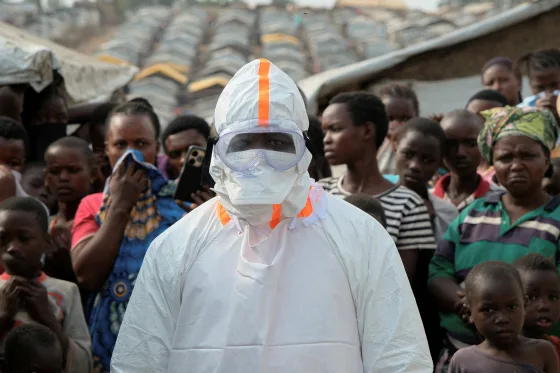
Ebola is not a disease that spreads through casual contact. It does not spread through the air, through water, through food, or through the kind of incidental proximity that characterises hotel stays, restaurant meals, or safari game drives. It spreads through direct contact with the blood, secretions, or bodily fluids of a person who is already showing symptoms — or through contact with the body of someone who has died from the disease. Understanding who actually gets infected in Uganda’s outbreaks tells you a great deal about your own risk as a visitor.
In every Ugandan Ebola outbreak on record, the people most severely affected have been healthcare workers who treated patients before the outbreak was identified and adequate protective equipment was in use, and family members who provided direct physical care to sick relatives at home. The second category reflects something specific to the affected communities — in parts of Uganda where trust in formal healthcare is limited and travel to a health centre is difficult, a family will care for a seriously ill person at home, which means direct contact with bodily fluids in a domestic setting. This is how household clusters form. It is also why outbreaks in Uganda have consistently remained localised: the transmission chains are direct, traceable, and containable once the outbreak is identified and response teams are deployed.
Traditional burial practices have also contributed to transmission in some outbreaks. Washing and preparing the body of someone who has died is a deeply important cultural practice in many Ugandan communities, and a body that has died from Ebola carries the highest viral load of any point in the disease’s progression. Response teams work with community and religious leaders to conduct safe and dignified burials, and this community engagement has been one of the most effective tools in Uganda’s containment approach.
A foreign visitor arriving at Entebbe, staying in hotels, driving through Uganda to Bwindi, and trekking with a habituated gorilla family has essentially no exposure pathway to Ebola in any of these transmission categories. You are not treating patients in an affected district. You are not caring for a sick family member in a rural household. You are not attending burials. Your risk profile as a safari visitor is categorically different from the risk profile of the communities where outbreaks occur, and conflating the two — as blanket country-level travel advisories implicitly do — produces fear without producing useful guidance.
Why the Gorilla Trekking Zone Has Never Been Affected
Uganda is not a small country. It covers an area roughly equivalent to the United Kingdom, and its geography is far more varied than its size suggests — from the northern semi-arid plains near Sudan to the equatorial forest zone in the west to the volcanic highlands of the southwest where gorilla trekking takes place. Bwindi Impenetrable Forest sits in Kanungu District, and Mgahinga Gorilla National Park sits in Kisoro District. These are the furthest southwestern corners of Uganda, on the borders with Rwanda and the DRC.
Every significant Ebola outbreak Uganda has experienced has occurred in districts far removed from this region. Gulu and Lira in the north. Mubende and Kyegegwa in the central and western belt. Kasese in western Uganda, which borders the DRC but sits north of the gorilla zone. The distances involved are not incidental — they range from 300 to over 600 kilometres from Bwindi. The affected communities are separated from the gorilla zone by different districts, different road networks, different health administrative zones, and in most cases the full width of Uganda’s national park system.
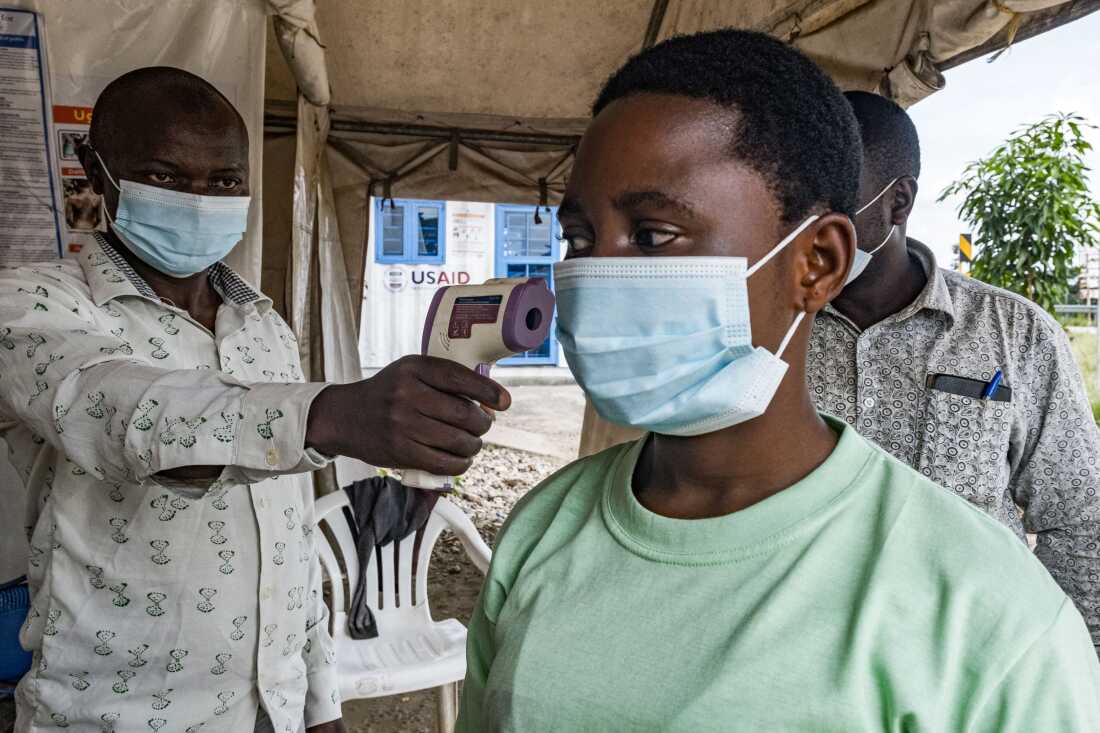
At Bwindi, Uganda Wildlife Authority rangers complete health checks at every sector gate before any visitor enters the forest. Temperature screening, a brief health questionnaire, and direct assessment by the ranger team are mandatory for all visitors on every trekking day. Anyone presenting with fever or illness is turned away and referred to the nearest health facility. These protocols have been in place since the COVID-19 period and have not been relaxed. The gorilla families themselves are monitored daily by the researcher and ranger teams who track their movements. Any sign of illness in the habituated families triggers an immediate call to the Gorilla Doctors veterinary programme, which has operated a permanent Uganda field team since 1986.
Uganda’s Record of Containing Ebola
Uganda first encountered Ebola in 2000, when a Sudan strain outbreak in Gulu District killed 224 people and infected more than 400 before it was brought under control. It was one of the largest Ebola outbreaks Africa had seen at that point, and Uganda contained it. In the years that followed, the country faced additional outbreaks — Bundibugyo strain in 2007 and 2008, Sudan strain again in 2012 in Kibaale District, single imported cases from the DRC in 2018 and 2019, and the 2022 Sudan strain outbreak in Mubende District that infected 142 people and was declared over in January 2023. In every instance, gorilla trekking in southwestern Uganda was unaffected and uninterrupted.
What this record demonstrates is not luck. It demonstrates that Uganda has developed functional outbreak response capacity over two decades of necessity. The Ministry of Health’s Emergency Operations Centre, the district health teams trained in rapid response, the community health workers who serve as the first alert system in rural areas, and the international partners including the WHO, CDC, and MSF who have maintained permanent Uganda presence — these form a response architecture that, while not perfect, has proven repeatedly capable of ending discrete outbreaks before they become endemic transmission.
The contrast with the DRC is instructive precisely because the two countries share a border and share the same virus. The DRC’s inability to end its eastern outbreak is not a failure of the Ugandan public health system — it reflects a situation of ongoing armed conflict, population displacement, and health system destruction that does not exist in Uganda. Uganda has problems. It is a developing country with limited resources and genuine health system gaps. But it has functional governance, functioning security forces in the affected areas, and the political will to cooperate with international health organisations. These are the conditions under which outbreaks end. They are present in Uganda. They are absent in eastern DRC.
If You Are Planning to Visit Uganda
The honest advice we give every visitor who contacts us during an active outbreak is this: look at where the outbreak is, not just that it exists. The Uganda Ministry of Health publishes district-level situation reports at health.go.ug. The affected district or districts will be named. Check whether those districts are in the southwestern Kigezi region — Kanungu, Kisoro, Kabale, Rubanda, Rukungiri — where gorilla trekking takes place. In every outbreak Uganda has experienced, the answer has been no.
Your government’s travel advisory is a useful starting point and not the final word. Most national advisories issue country-level warnings that do not specify districts, because the advisory systems are designed to protect governments from liability more than to give travellers geographic precision. Read the advisory, then check what it actually says — whether it is a blanket “Do Not Travel to Uganda” or a more nuanced “exercise increased caution, avoid affected districts.” If it is the latter, and the affected districts do not include the gorilla zone, you have more room for an informed decision than the headline suggests.
We will never tell you to travel if we believe it is genuinely unsafe. That is not a policy statement — it is a practical reality. Our business depends entirely on visitors who arrive, have a safe and extraordinary experience, and go home to tell other people. A visitor who was pressured to travel during an unsafe period and had a bad experience is the most damaging possible outcome for us. When we tell you the gorilla zone is safe, it is because we are standing in it, our team is in it, and we believe it.
If You Have Already Booked
The first thing to understand if you have a confirmed booking during an active outbreak is that your options depend on what the official situation is at your time of departure, not what it is today. Situations change — outbreaks end, advisories are lifted, new cases emerge in new districts. We monitor this continuously and contact booked clients proactively when anything changes that directly affects their travel dates.
If your government issues a formal Do Not Travel advisory for Uganda as a whole before your departure date, we offer a free date change to any available future date or a full credit held for up to 24 months. Gorilla permit fees follow Uganda Wildlife Authority’s policy at the time, which has historically allowed transfers rather than outright refunds — we handle this process on your behalf. If Uganda Wildlife Authority suspends gorilla trekking operations for any reason related to the outbreak, we notify you immediately and arrange whatever is possible under the circumstances, including refunds of permit fees where UWA policy permits.
If the advisory is advisory rather than prohibitive — exercise caution rather than do not travel — we will have a direct conversation with you about what we know from the ground at that point. We will not make that decision for you, but we will give you the information you need to make it yourself. If you simply decide you are not comfortable travelling, regardless of official guidance, we respect that fully and will work within our standard terms to accommodate a postponement. We have never disputed a cancellation with a visitor who was genuinely afraid. We never will.
Travel insurance matters here more than at any other point in your planning. If you have not yet purchased travel insurance for your Uganda trip, do it now. Look specifically for policies that cover epidemic and outbreak-related cancellation, or better still, a Cancel For Any Reason policy that gives you full discretion. Providers including Battleface, World Nomads, and Campbell Irvine offer policies designed for travel in complex destinations. Check the wording yourself — do not take a broker’s word that you are covered for this specific scenario.
If You Are Currently in Uganda
If you are already in Uganda — in Bwindi, on the road between parks, or in Kampala — and a new outbreak is announced or an existing one escalates, the first practical step is to establish clearly where the affected district is relative to where you are. Uganda’s road network means that a district in the north or centre of the country is genuinely remote from the southwestern gorilla zone, and the likelihood that the outbreak has any bearing on your immediate location is low unless the Ministry of Health specifically identifies southwestern districts.
Stay in contact with your guide or operator. We monitor the situation in real time and will reach out to clients who are currently in-country if we believe the situation warrants a change of plan. Avoid unnecessary travel to or through districts named in the Ministry of Health outbreak reports. Keep your government’s emergency contact number saved — your country’s embassy in Kampala is your formal point of contact for evacuation or consular assistance if the situation escalates to a level that requires it.
If you develop a fever or feel unwell while in Uganda, seek medical attention promptly and tell the medical staff where you have been, including which districts you passed through. Fever in Uganda is far more likely to be malaria than anything else, but early diagnosis of any illness matters and the medical team needs your travel history to assess correctly. The nearest hospital facilities to the Bwindi trekking sectors are Bwindi Community Hospital near Buhoma, Kabale Regional Referral Hospital approximately 90 minutes from Buhoma and 45 minutes from the southern sectors, and Kisoro District Hospital near Mgahinga. For serious conditions requiring specialist care, Kampala’s private hospitals — including International Hospital Kampala and The Surgery — are accessible by charter aircraft from Kihihi airstrip near Buhoma or Kisoro airstrip near Mgahinga, with flight times of under an hour.
When You Return Home
Ebola has an incubation period of two to twenty-one days. If you develop any symptoms within three weeks of returning from Uganda — fever, severe headache, muscle pain, fatigue, vomiting, or diarrhoea — contact a healthcare provider before going to an emergency room and tell them you have recently been in Uganda. This is not because your risk is high. For a visitor who has been in the gorilla zone and has not been in contact with sick individuals or known affected areas, the probability is extremely low. But disclosure is free, it is responsible, and it allows the medical team to rule out Ebola quickly rather than discovering your travel history retrospectively.
When you contact the healthcare provider, specify where in Uganda you were. “I was in Bwindi Impenetrable Forest in Kanungu District, southwestern Uganda — not in the affected districts” is more useful information for a clinician than “I was in Uganda.” Some countries have introduced health screening or declaration requirements for travellers arriving from Uganda during active outbreaks. Check your country’s public health authority before departure so you know what to expect on arrival — and carry a copy of your itinerary showing your specific route and dates, which we can provide as a formal letter on request.
What Happens to Local Communities When Visitors Stop Coming
There is a consequence to the drop in visitor numbers that does not make it into the Ebola coverage, and it matters to us because we see it directly. The communities that surround Bwindi Forest — the Batwa families who live on the forest margin, the women’s craft cooperatives in Buhoma and Rushaga, the porters who carry bags at the sector gates, the lodge kitchen and housekeeping staff, the community guides, the ranger families — all of them depend on gorilla tourism for income that has no meaningful alternative in this remote highland region.
Uganda Wildlife Authority’s community revenue sharing programme directs twenty percent of every gorilla permit fee to the communities adjacent to Bwindi and Mgahinga. That money funds school construction, borehole maintenance, community health worker salaries, and microfinance access in villages whose proximity to the forest has historically meant displacement rather than opportunity. When permit revenue drops because visitors are afraid to come to a region that is not affected by the outbreak, those community funds shrink. The rangers whose patrols protect the gorillas from poachers are paid partly from permit revenue. The habituation research teams who walk into the forest every morning work within a funding model that depends on the tourism the habituation programme supports.
We saw this clearly during COVID-19. Two years without visitors meant two years without community fund contributions, ranger budget pressure, lodge staff layoffs, and a documented increase in snare-setting in the Bwindi buffer zone by people who had lost the income alternatives that tourism had provided. The gorilla population survived. The conservation model came under real strain. Your decision to visit a safe region during a difficult period in another part of the country is not just a personal travel choice — it is a contribution to the specific economic conditions that make gorilla conservation work.
Useful Sources for Current Information
The Uganda Ministry of Health publishes situation reports at health.go.ug during active outbreaks. These reports name the specific affected districts and provide case counts, which is the information you need to assess geographic risk. The WHO Uganda office publishes international situation reports at afro.who.int. The US CDC maintains a Uganda travel health notice page that is updated during active outbreaks. The UK FCDO Uganda travel advice at gov.uk/foreign-travel-advice/uganda reflects British government assessment and is updated more frequently than most national advisory systems during active events.
None of these sources replace a direct conversation with someone on the ground. Message us on WhatsApp at +256 716 068 279 or email info@ugandagorillatrekking.org and ask us directly what the situation looks like from where we are standing. We respond. We will tell you the truth, including if the truth is that we think you should wait.
Plan Your Visit
If what you have read here has answered your questions and you are ready to look at options, the gorillas are waiting. Bwindi’s habituated families are in the forest this morning, the rangers are on patrol, and the sector gates are open. The same experience that has stopped visitors cold in their tracks — the silverback turning to look directly at the small group of humans standing in his forest, the infant chasing a sibling through the undergrowth, the sound of a family group settling in for the midday rest — is happening right now, every trekking day, regardless of what the news is saying about a district six hundred kilometres away.
Start with our 3-Day Bwindi Gorilla Trekking Safari if your time is limited. Look at the 14-Day Best of Uganda if you want the full country. Read about the Gorilla Habituation Experience if you want more than one hour. Check the permit guide for everything you need to know about the $800 Uganda permit and how to secure yours. And if you have a question this page has not answered, ask us directly — the contact details are above and we are here.