TALK TO AN EXPERT +256 716 068 279 WHATSAPP OPEN NOW.
History & Anthropology

The Bantu migrations: how Uganda’s tribal movements shaped the nation’s culture

Home / Travel News, Stories & Tips / Tales from the Mist / The Bantu migrations: how Uganda’s tribal movements shaped the nation’s culture

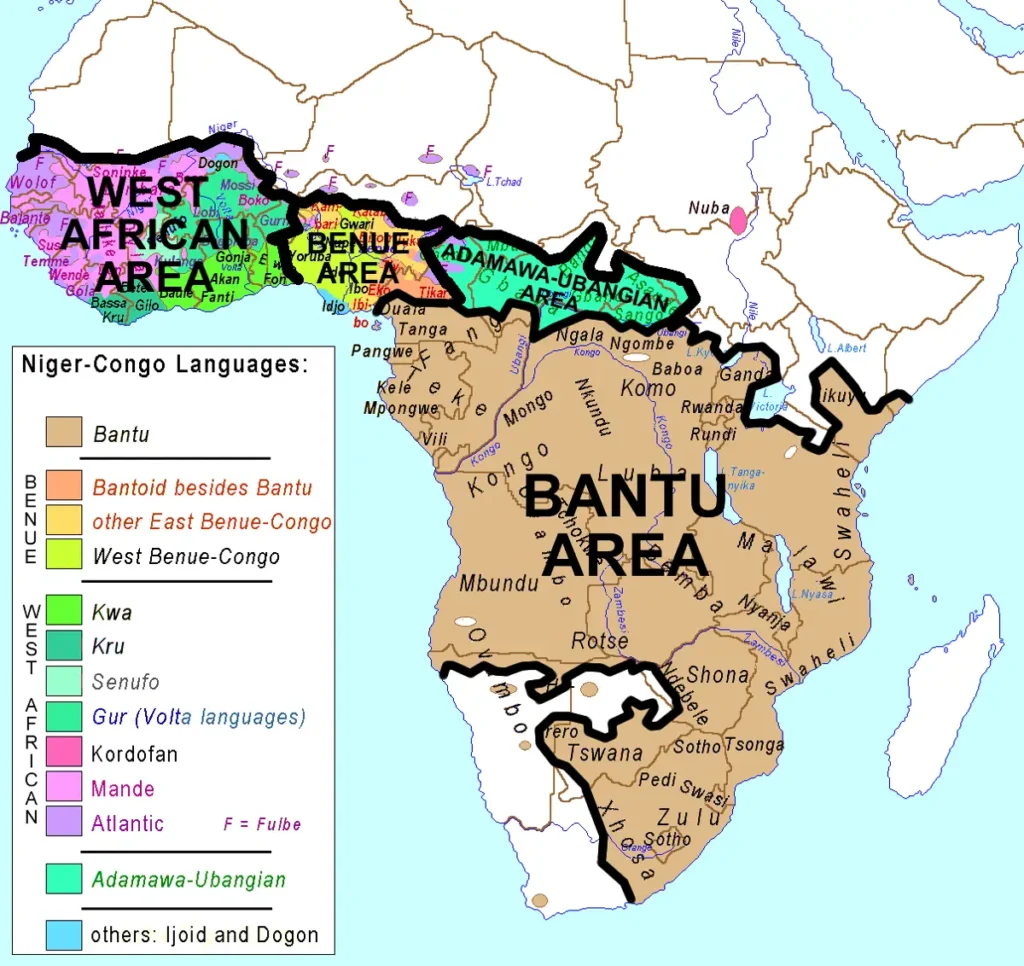
To understand Uganda—its languages, its kingdoms, its social structures, its conflicts—you have to go back two thousand years to one of the greatest population movements in human history. The Bantu migrations transformed sub-Saharan Africa, spreading a family of closely related languages from a probable origin in the Nigeria–Cameroon borderlands across nearly half the continent. When those migrations reached what is now Uganda, they shaped a world of kingdoms, clans, and cultures whose echoes resonate in every aspect of contemporary Ugandan life—including, in ways that are not always obvious, the story of gorilla conservation itself.

Who were the Bantu?

The Bantu are not a single ethnic group but a language family—a collection of around 500 languages that share common grammatical structures, vocabulary roots, and phonological patterns traced to a proto-Bantu ancestral tongue spoken in west-central Africa approximately 3,000 to 5,000 years ago. The expansion of Bantu-speaking peoples outward from this origin zone is thought to have been driven by the development of iron-smelting technology (enabling forest clearance and agricultural intensification), the spread of agriculture itself, and possibly climate shifts that opened migration corridors. Over approximately 2,000 years Bantu-speaking farmers spread east and south, displacing or absorbing earlier hunter-gatherer populations—including the ancestors of the Batwa—across a vast arc from East Africa to Southern Africa.

Arriving in Uganda: the eastern stream

Linguistic and archaeological evidence suggests Bantu-speaking populations entered what is now Uganda in at least two major streams. An eastern stream moved through the Great Lakes region—along the corridors between Lake Victoria, Lake Edward, and Lake Albert—bringing the ancestors of today’s Baganda, Basoga, and Bagwere peoples. A southern stream moved through the highland zone of what is now Rwanda, Burundi, and southwestern Uganda, becoming the ancestors of the Banyankole, Bakiga, Bafumbira, and Banyarwanda. These two streams met and mingled across the region over centuries, producing the complex ethnic and linguistic tapestry of modern Uganda.

The Baganda and the rise of Buganda Kingdom

The most powerful Bantu political formation in the Great Lakes region was Buganda—the kingdom centred on the northern shores of Lake Victoria whose capital, Kampala, is today Uganda’s largest city. The Buganda Kingdom is thought to have consolidated in the fourteenth century, growing into a highly centralised state with a king (Kabaka), a complex clan system, a professional army, and a sophisticated system of territorial administration. By the time Arab traders and European missionaries arrived in the nineteenth century, Buganda was one of the most powerful states in the Great Lakes region and had extended its influence through trade networks stretching east to the Swahili coast and west toward the Congo. The Baganda language, Luganda, became the dominant lingua franca of southern Uganda—and remains so today, spoken or understood by most Ugandans regardless of their ethnic background.

The Banyankole, Bakiga, and the highlands

Southwestern Uganda—the region that contains Bwindi—was shaped by a different set of Bantu-speaking peoples. The Banyankole are the dominant group of the Ankole region, historically pastoralists whose culture centred on the Ankole longhorn cattle. Cattle were not merely livestock but the measure of wealth, status, and social obligation: bride-wealth was paid in cattle, alliances were sealed with cattle, ritual and ceremony revolved around cattle. The Hima (pastoral) and Iru (agricultural) divisions within Banyankole society created a social hierarchy that persisted into the colonial period and left traces visible in contemporary southwestern Uganda.

Higher in the mountains, the Bakiga—a fiercely independent highland people—established themselves in the Kigezi region, the area that encompasses the Bwindi forest. The Bakiga were primarily farmers, cultivating the impossibly steep hillsides with extraordinary skill and creating the terraced agricultural landscapes that still dominate the region today. The Bakiga had no centralised king—their social organisation was based on lineage and clan rather than hierarchical statehood—and they resisted incorporation into both the Buganda sphere and later European colonial administration with notable tenacity. Their language, Rukiga, belongs to the same Bantu subfamily as Kinyarwanda and Kirundi, reflecting the southern Bantu migration stream that populated the highland zone.

The Batwa: before the Bantu

Before Bantu-speaking farmers arrived in the Great Lakes highlands, the forests were home to the Batwa—a hunter-gatherer people who are among the oldest human inhabitants of the region. The Batwa are not Bantu in origin; they are the remnant population of an earlier, forest-adapted human culture that was displaced and marginalized as Bantu agricultural expansion cleared the forests and established permanent settlements. The Batwa lived in and around what is now Bwindi for thousands of years, dependent on the forest for food, medicine, and spiritual meaning. When colonial-era forest reserves and, ultimately, the 1991 national park declaration removed them from the forest entirely, it ended a human relationship with that ecosystem stretching back to a time before the Bantu ever arrived in Uganda.

Kingdoms, colonialism, and modern Uganda

When Britain established the Uganda Protectorate in 1894, it did not administer the territory directly but worked through existing kingdoms—particularly Buganda, whose collaboration with the British gave the Baganda disproportionate influence over the emerging colonial state. The 1900 Buganda Agreement formalised this arrangement, giving Buganda internal autonomy, a written constitution, and land rights that the other kingdoms lacked. This structural inequality—Buganda privileged, other kingdoms subordinate—created tensions that persisted through independence in 1962 and exploded in the constitutional crisis of 1966 when Prime Minister Milton Obote abolished the kingdoms and forced Kabaka Mutesa II into exile. The kingdoms were only restored in 1993 under President Yoweri Museveni, this time in a ceremonial rather than political role.

Language as living heritage

Uganda has over 40 living languages, nearly all of them Bantu or Nilotic (the Nilotic-speaking peoples—Acholi, Langi, Teso, Karimojong—entered Uganda from a different direction and represent a completely separate linguistic migration). English is the official language of government and education, inherited from the colonial period. But the Bantu languages remain vigorously alive: Luganda in the south and central, Runyankole and Rukiga in the southwest, Lusoga in the east, Rutoro and Runyoro in the west. When your trekking guide greets you in Rukiga at the Bwindi park gate, or when a Batwa elder explains a plant’s name in a language that predates the Bantu arrival, you are touching the living sediment of human migrations that moved across this continent over thousands of years.

Cultural continuity and the gorilla trek

The gorilla trekking experience in Bwindi is embedded in this deep cultural context whether or not it is visible on the surface. The rangers who guide you carry Bakiga surnames and speak Rukiga at the park gate. The lodges are built on land the Bakiga farmed for generations. The community craft cooperatives selling baskets and carvings outside the park are rooted in Bantu artistic traditions—the weaving patterns, the materials, the colour choices—that extend centuries back. The Batwa guides who lead cultural walks carry knowledge of a pre-Bantu world, fragile and precious. And the mountain gorillas themselves—protected now because enough people valued them—have survived in large part because the communities descended from those ancient migrations chose, when given the tools to do so, to be their guardians.

Ready to experience Uganda’s mountain gorillas in 2026? Secure your gorilla permits early and let us craft a seamless safari tailored to your travel style, preferred trekking sector, and accommodation level. From luxury lodges to well-designed midrange journeys, every detail is handled for you. Every itinerary is carefully planned to maximize your time in the forest while ensuring comfort, safety, and unforgettable encounters.

Have questions about gorilla permits, travel dates, or the best itinerary for you? Speak with a safari expert and get clear, honest guidance to plan your trip with confidence.

When is the last time you had an adventure? African Gorillas!!! Up Close With Uganda’s Wild Gorillas Touched by a Wild Gorilla: An Unforgettable Encounter Inside Gorilla Families: Bonds, Hierarchies & Jungle Life Face to Face With a Silverback: The Wild Encounter You’ll Never Forget