Updated
The Batwa Trail is a cultural walk in Mgahinga Gorilla National Park, led by Batwa guides, that shows how the Batwa — the forest people of south-western Uganda — lived in the forest before they were moved out when the gorilla parks were created. The trail winds through the lower slopes of the Virunga volcanoes and ends in Garama Cave, once a refuge and meeting place for Batwa communities. Near Bwindi, the Batwa Experience at Buhoma offers a similar, community-run visit.
These experiences are not simply performances. They are one of the few ways Batwa families earn income from the forests that were once their home, and visiting thoughtfully helps. Here is the history, what the trail involves and how to take part responsibly.
Who the Batwa are
The Batwa are among the oldest inhabitants of the Great Lakes region, living for generations as hunter-gatherers in the forests that are now Bwindi Impenetrable and Mgahinga Gorilla National Parks. They hunted small animals, gathered honey, fruit and medicinal plants, and lived in temporary shelters, with a deep knowledge of the forest and its animals, including the gorillas.
In 1991, when Bwindi and Mgahinga became national parks to protect the mountain gorillas, the Batwa were moved out of the forests, largely without land or compensation. Many became landless, working on others’ farms and facing poverty, discrimination and poor health. In 2021, Uganda’s Constitutional Court ruled that the Batwa had been wrongly evicted and were entitled to redress, a decision welcomed by rights groups, though its implementation has been slow. This history is part of the gorilla conservation story and is worth understanding before you visit.
The Batwa Trail in Mgahinga
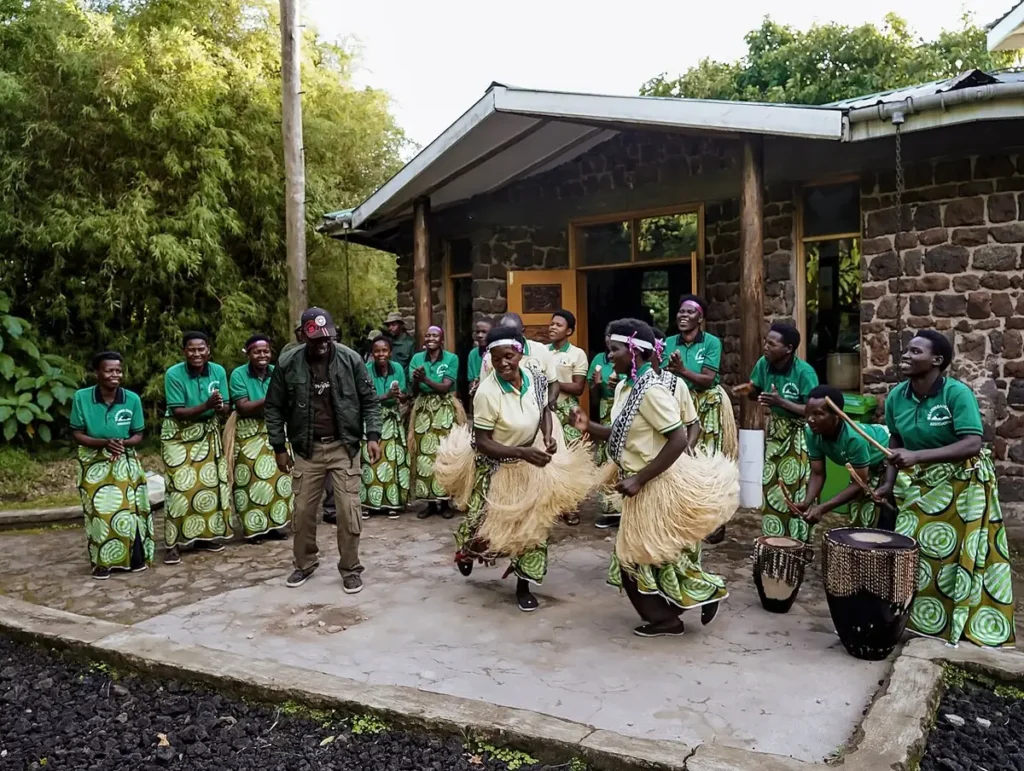
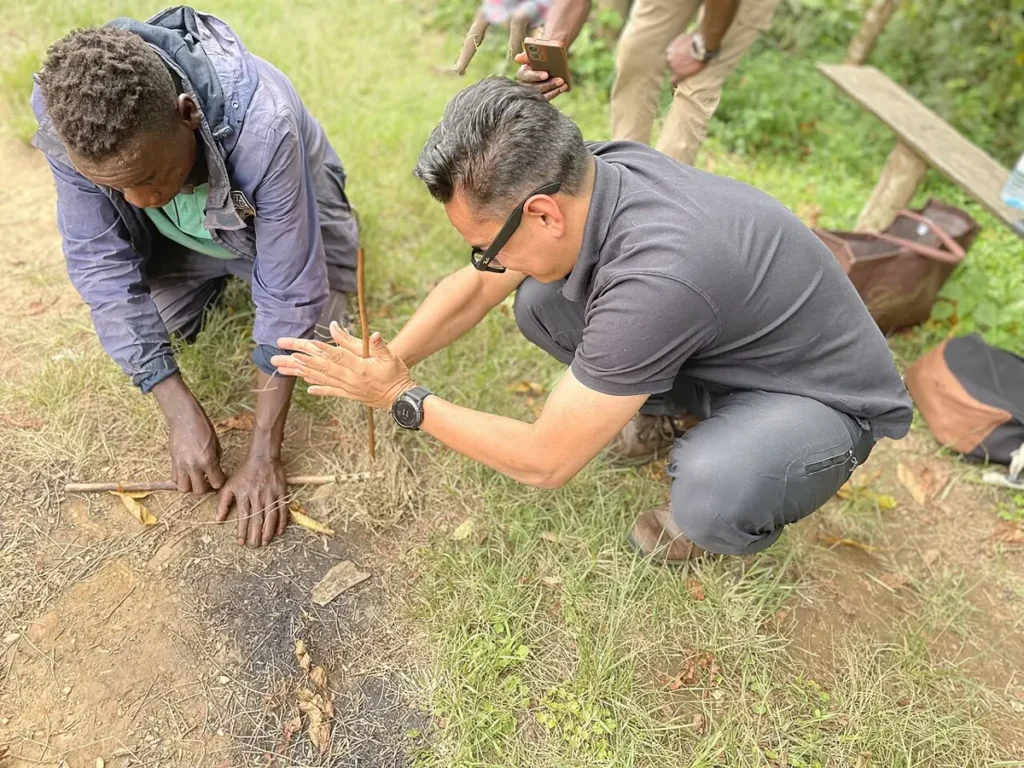
The Batwa Trail was launched in 2011 by Uganda Wildlife Authority with Batwa organisations and the local district, to let Batwa reconnect with the forest and earn income from tourism. The walk covers several kilometres on the lower slopes of the Mgahinga volcanoes, taking most of a morning or afternoon. Batwa guides lead the way, with a park ranger often translating. Along the route, they show how their ancestors hunted with bows and nets, gathered honey, found water and medicinal plants, and made fire, and they share songs, dances and stories.
The highlight is Garama Cave, a long lava-tube cave beneath the slopes that once served as a refuge, and, according to Batwa oral history, as a gathering place for their leaders. Inside, the guides often sing, the voices echoing in the dark. The walk is easier than a gorilla trek but involves some uphill walking at altitude and a slippery descent into the cave, so bring good shoes and a torch. See Mgahinga Gorilla National Park.
The Batwa Experience near Bwindi
If you are trekking in Bwindi’s northern Buhoma sector, the Batwa Experience offers a community-based visit on land outside the park, where Batwa demonstrate traditional skills, building, hunting techniques, medicine and music. Similar Batwa community visits are offered near the southern sectors. They make a good activity on the afternoon of your trek or on a rest day, and suit families with children who are too young to trek. See activities near Bwindi.
How to take part responsibly
Choose visits where Batwa communities are involved in running the experience and receive the income; ask your operator or lodge who organises the visit and where the money goes. Treat it as meeting people, not watching a show: ask questions, listen to their own account of their history and ask before taking photographs. If you want to give more, support organisations working on Batwa land, health and education rather than handing out money or gifts individually. Our guides to responsible tourism and the ethics of gorilla trekking discuss this further.
Frequently asked questions
It is possible after a short trek, but most people find it too much. A separate morning or afternoon is more enjoyable.
Generally not to live or hunt. The Batwa Trail is one of the few ways Batwa guides return to parts of their ancestral forest.
Yes, for children who can manage a few hours’ walk. The cave descent is slippery, so hold younger children’s hands.
No. Many Batwa find the term offensive. Use “Batwa”, the name they use for themselves.