Updated
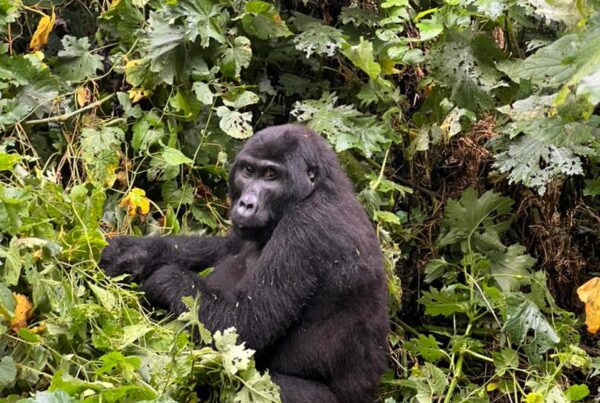
sounds Bwindi forest gorilla trek is one of Africa’s most extraordinary wildlife experiences, connecting travellers with mountain gorillas in their natural forest habitat. Most descriptions of gorilla trekking focus on what you will see — the silverback’s silver-streaked back, the liquid brown eyes of a juvenile, the maternal patience of a nursing female — but Bwindi Impenetrable National Park communicates as much through sound as through sight, and a visitor who pays attention to the forest’s acoustic dimension from the moment the briefing ends to the moment the gorilla family is found will experience the trek as a layered sensory journey rather than as a walk whose interest begins and ends at the gorilla encounter itself. Knowing what to listen for on a Bwindi gorilla trek transforms background noise into information — and information into a richer understanding of what Bwindi’s forest is. See Uganda safari packages.
- Gorilla vocalisations you will hear: belch rumble (contentment), bark (alert), pig grunt (mild annoyance), silverback chest beat (display) — each distinctly different
- How gorillas are found: trackers follow overnight nesting location from day before and listen for the family’s movement sounds; you hear the family before you see them
- Trail sounds: the forest progressively quiets as you descend into heavier canopy — then bird calls shift in species as habitat changes
- After the encounter: the forest sound continues; many visitors find the walk out more sonically aware than the walk in
Most descriptions of gorilla trekking focus on what you will see. The visual encounters are extraordinary: the silverback’s silver-streaked back, the liquid brown eyes of a juvenile, the maternal patience of a nursing female. But Bwindi Impenetrable National Park is equally remarkable as an acoustic environment, and the sounds you encounter — before, during, and after the gorilla sighting — compose an experience as memorable as any photograph. This guide attunes you to Bwindi’s sonic landscape so you arrive prepared to listen as deeply as you look.
The sounds of the Bwindi forest: a sensory guide to what you will hear
Before dawn: the forest awakening
The Bwindi forest never goes entirely silent. Even in the deepest night, the forest produces a continuous low-level soundscape of insect calls, occasional bird activity, and the creak and settle of trees responding to temperature and wind. But the transformation that occurs in the hour before dawn is one of the forest’s great acoustic events.
The first sounds are often the calls of the black-and-white casqued hornbills, whose hollow, clucking calls begin before there is sufficient light to navigate. These are joined almost immediately by the reeling songs of warblers — small, hyperactive birds whose complex, sustained calls seem disproportionate to their size. The dawn chorus in a tropical forest is acoustically different from its temperate equivalent: less of a unified swell and more a layered accumulation of independent voices, each species calling from its specific stratum of the forest canopy.
If you are staying at a lodge near the forest edge — particularly at Buhoma or Ruhija — the opportunity to sit on your veranda in the pre-dawn hour and simply listen is one of Bwindi’s quiet gifts. No guides, no group dynamics, no need to produce any response. Just the forest beginning its day.
The trail: what sound tells you before your eyes adjust
The gorilla trek begins in the briefing area and moves quickly into the forest. As you descend from the track into the trees, the acoustic environment changes immediately. Road noise, lodge sounds, and human conversation fade. The forest closes around you and you enter an acoustic world structured by distance, density, and direction in ways that open terrain does not offer.
Your ranger guide is listening constantly. Much of a guide’s ability to locate gorillas, anticipate encounters with forest buffalo, and read the forest’s emotional register comes from sound interpretation developed over years of daily experience. The crack of a branch 200 metres upslope is a possible gorilla. A sharp, metallic alarm call from a small bird indicates something large has disturbed the undergrowth. The cessation of all insect sound in a specific direction suggests a large animal has passed through.
Forest buffalo are one of the less discussed realities of trekking in Bwindi, and sound is your primary early-warning system for encounters. Buffalo are heavy, and their movement through dense vegetation produces distinctive crashing sounds. Guides respond to these sounds by pausing the group, assessing direction and movement, and adjusting the route if necessary. Paying attention to your guide’s response to forest sounds will teach you as much about forest ecology as any spoken explanation.
The gorilla encounter: a vocabulary of sound
Gorillas are not silent animals. The habituated families of Bwindi produce a range of vocalisations that your ranger guide will interpret as you observe the group. Understanding this vocabulary transforms the encounter from passive observation into something more like eavesdropping on a conversation.
Belch vocalisations — The most commonly heard gorilla sound is a deep, rumbling “mmm-mmm” that is called a belch vocalisation despite not being a belch in the normal sense. This sound signals contentment. Gorillas produce it while feeding, resting, and grooming. When the group is making belch vocalisations, they are relaxed and comfortable. The sound has a reassuring, almost meditative quality — a room full of large primates quietly expressing satisfaction.
Pig grunts — Shorter, rougher sounds used to communicate mild displeasure or to assert social position. A pig grunt from a silverback directed toward a juvenile is a mild correction. From a lower-ranking male toward a tourist who has moved too close, it is a clear signal to back away. Guides will have already told you to retreat when they observe this, but hearing it underlines why the instruction exists.
Screams and barks — Alarm vocalisations produced when the group is threatened or when inter-group tensions are high. In the habituated family context, genuine alarm calls are uncommon — the gorillas are accustomed to human presence. However, they can occur if tourists approach too quickly, if another gorilla group is nearby, or if a forest buffalo passes close. The sound is startling and unmistakable: loud, percussive, and clearly communicating agitation.
The chest beat — The silverback’s chest beat is primarily a visual and auditory display used to establish dominance, warn off rivals, and communicate his presence across distance. The sound carries remarkably far through the forest — a deep, rapid series of hollow thuds that can be heard hundreds of metres away. Hearing this sound close is physically arresting: the pressure wave is tangible even at safe observation distance. It is one of those sounds that produces a visceral response independent of any conscious interpretation.
After the encounter: the forest as you leave
The hour with the gorilla family ends and the walk out begins. Many trekkers describe this return walk as one of the most peaceful experiences of the trip — the encounter has produced a kind of emotional saturation that makes the forest sounds more vivid, not less. Bird calls that were background noise on the way in become foreground on the way out. The forest feels different when you are not focused on finding something within it.
Listen for the black-and-white colobus monkeys in the canopy — their deep, resonant croaking calls can stop you mid-stride. If you are lucky, you will hear the descending whistle of the Ross’s turaco or the rhythmic hammering of a woodpecker on a dead trunk somewhere above. The forest continues its business around you, indifferent to the significance of the encounter you just had.
Night sounds at Bwindi
Nights at forest-edge lodges in Bwindi produce an acoustic experience that surprises many visitors. The insect chorus begins at dusk and intensifies through the first hours of darkness — a continuous, layered wall of stridulation from crickets and katydids of different frequencies, rhythms, and tonal qualities. Within this insect foundation, other sounds emerge: the sharp bark of a tree hyrax, a small mammal whose territorial call sounds nothing like an animal of its size; the booming call of the Verreaux’s eagle-owl on a clear night; the distant sound of a waterfall in a valley invisible in the darkness.
Some visitors find the night sounds initially unnerving — the unfamiliarity of tropical insect noise can feel overwhelming before you learn to hear it as textured and interesting rather than simply loud. A few nights at Bwindi and the forest night sounds become one of the things you will miss most after returning home.
Listening as a practice
The acoustic richness of Bwindi is a reminder that wildlife experiences are multi-sensory, and that training attention on non-visual channels opens the natural world in additional dimensions. Sound tells you where animals are before you can see them. It conveys the emotional state of the animals you observe. It places you within an ecological web of relationships that visual information alone cannot fully communicate.
Before your trek, consider spending time with recordings of Bwindi’s birds and gorilla vocalisations — apps like Merlin (for birds) and recordings available through wildlife organisations will pre-load your auditory memory with reference points. When you hear an African green broadbill’s distinctive call in the canopy, having a prior recognition of it multiplies the pleasure of the moment. When a silverback begins to chest beat, knowing what you are hearing before you process what you are seeing is an experience worth preparing for.
The gorillas of Bwindi are extraordinary to watch. They are extraordinary to listen to. Come ready to hear them.
What vocalisations do mountain gorillas make and what do they mean?
Mountain gorillas have a repertoire of distinct vocalisations that the ranger-guide interprets in real time during the encounter. The belch rumble — a deep, low sound like a soft sustained grunt — is the most common sound you will hear during a relaxed encounter; it is a contentment vocalisation produced by gorillas when they are settled and comfortable, often while eating. Its presence is the best indicator that the family is relaxed with the group’s proximity. The pig grunt — a sharper, staccato series of grunts — signals mild annoyance or disturbance; if directed toward the visitor group, the guide moves everyone back. The bark is a loud, sharp single call — an alert signal indicating that a gorilla has registered something unexpected; it usually produces a momentary freeze in the family. The silverback chest beat — produced by striking the chest with cupped hands in rapid alternation — is the most dramatic vocalisation; it is a display of size, strength, and confidence, often accompanied by standing bipedally and crashing through vegetation. During a chest beat display, guides direct visitors to crouch, avoid eye contact, and remain completely still.
What sounds indicate you are getting close to the gorilla family on the trail?
The approach to a gorilla family produces a characteristic sequence of acoustic cues. First: the trackers who have been monitoring the family since dawn communicate by radio or whistle signal to the guide, who changes pace and begins moving more quietly. Then, often before any vocalisation, you hear the forest itself — the sound of large animals moving through dense vegetation, a heavy crashing that is qualitatively different from the lighter sounds of monkeys or small animals. This sound — large bodies pushing through Bwindi’s dense understory — carries 50-100 metres in the forest. Then, as distance closes, the belch rumbles become audible: the low, regular grunts of a settled family. At this point the guide slows the group, positions everyone, and moves in for the contact. The first visual is often a dark shape in the vegetation before the full family becomes visible. Visitors who have been listening throughout the approach consistently report that the acoustic contact — the moment the gorilla sounds become clearly audible — is as affecting as the visual contact that follows it.
What birds are typically heard on the gorilla trek trail at Bwindi?
Bwindi’s bird diversity (350+ species including 23 Albertine Rift endemics) means the birding soundscape on the trek trail is rich and changes with altitude and habitat. At the forest edge and in disturbed secondary forest near the briefing point: the African hill babbler’s chattering; the rattling of the black-and-white casqued hornbill (a large, loud bird unmissable on the wing); the rich descending song of the white-starred robin. As the trail enters primary forest: the African green broadbill’s buzzing trill (an Albertine Rift endemic found in the forest mid-storey); the complex cascading song of the Grauer’s rush warbler from the forest streams; the mellow, fluting calls of the African emerald cuckoo high in the canopy. Most gorilla trek visitors are not primarily birders, but the dawn chorus on the trail at 7-8am, when the forest is at its most acoustically active, is consistently one of the elements visitors mention when describing what surprised them about the experience beyond the gorilla encounter itself.
How does the sound of the forest change as you descend deeper into Bwindi?
The acoustic character of Bwindi changes progressively as a trek moves from the briefing point into the primary forest interior. The forest edge is relatively noisy: sunbirds and weavers in the canopy fringe, insect sound from the vegetation edge, sometimes sounds from nearby community farmland. As the trail drops into heavier primary forest, the canopy closes and the soundscape shifts: the high-frequency insect sounds that dominate open areas are replaced by deeper forest sounds — the resonant calls of forest hornbills, the dripping of water from high leaves, the intermittent falling of fruit from the canopy. Deep in the primary forest, the sound level drops markedly in the middle of the day — the forest has a characteristic midday quiet where bird activity decreases and the dominant sounds are structural: moving water, wind in the high canopy, the occasional crack of a dead branch. The forest also absorbs sound in a way that open environments do not; distant sounds are muffled and direction becomes difficult to determine. This acoustic environment is one of the reasons trackers rely on experience and local knowledge rather than purely on sound to locate gorilla families.
What sounds do you hear in the forest that are not wildlife — and what are they?
Bwindi’s forest produces a range of sounds that visitors initially cannot categorise. The sharp crack of dead wood falling from the high canopy — which sounds like a gunshot — is common and occasionally startles groups; the old-growth trees of Bwindi have very high canopy and dead branches fall with significant force. The sound of streams — Bwindi has numerous streams at all elevations — is present through most of the trek and can sound like sustained human movement. The forest’s own structural sounds: large trees creaking against each other in the wind at canopy level; the hollow drumming of a woodpecker on a resonant trunk; the vibration of a large insect colony in a dead tree. And the porters themselves — a group of eight visitors with guides and porters moving through forest produces a sound signature that the wildlife within hearing distance registers as a large-animal group, which is part of why gorilla families do not flee from trekking groups despite being able to hear their approach well in advance.
- The Last Wild Place on Earth: Why Bwindi Forest Will Break Your Heart
- Night sounds of Bwindi: what to listen for after dark in the gorilla forest
- Night sounds of Bwindi: what the forest says after dark
- Bwindi Impenetrable Forest – Gorilla Trekking in Uganda’s UNESCO Jungle
- Meet the conservationist protecting mountain gorillas in the heart of the impenetrable forest.
- Gorillas and Their Fascinating Social Structures: The Heartbeat of the Forest
- Chimpanzees Confirmed in Bwindi Forest
- Bwindi Forest: What Happened to the White-Bellied Duiker?
- Bwindi Forest Gorilla Trekking: An Unforgettable Journey
- Uganda Gorilla Trekking Bwindi Impenetrable Forest: The Complete Guide