Most Uganda gorilla trekking itineraries are designed for efficiency: airports, lodges, activities, and transfers connected along optimised routes that minimise transit time and maximise wildlife encounters per day, and this efficiency is genuinely valuable — Uganda has extraordinary things to see within a country that most visitors have limited days to explore. But the efficiency model also produces itineraries where every waking hour is scheduled, every transition is a transfer, and the experience of being at Bwindi reduces to a sequence of planned activities with little room for the unscheduled encounter, the slow morning, or the experience of simply existing in the forest without a programme. Building rest time into a Bwindi gorilla safari produces a different and often richer experience. See Uganda safari packages.
- Minimum nights at Bwindi for slow travel: 3-4 nights (1 trek day + 2-3 unscheduled or lightly scheduled days)
- What most itineraries provide: 1-2 nights at Bwindi (1 trek day + 1 travel day); adequate for the gorilla encounter but no time to absorb the place
- The lodge environment: good Bwindi lodges have forest-edge settings with bird activity from the veranda; the lodge itself is a wildlife experience
- Unplanned activities to discover: community visits on foot; Batwa Trail; guided birding; forest-edge sitting; conversation with lodge staff; village market day
Most Uganda gorilla trekking itineraries are efficient. They connect airports, parks, and lodges along optimised routes, minimising transit time and maximising wildlife encounters per day. This efficiency is valuable — Uganda has extraordinary things to see and limited time usually means hard choices. But efficiency can also be the enemy of the deeper kind of experience that travel in wild places offers. The unexpected encounter, the conversation that opens into something genuine, the morning spent watching from a lodge veranda as the forest wakes up — these require time that is not already fully committed. This is an argument for rest days, and for the particular kind of attention that slowing down makes possible.
What rest days actually provide
A rest day in the context of an intensive safari or wildlife trekking itinerary is not a day of doing nothing — it is a day without a pre-booked, time-committed activity. The distinction matters. A rest day at a Bwindi forest lodge means you are still in the forest: still waking to the dawn chorus, still watching birds from the veranda, still within range of guided walks, cultural visits, and spontaneous conversation with guides, community members, and other visitors. What you are not doing is competing for time with the fixed demands of a permit, a briefing time, a departure slot.
Rest days allow for recovery from the physical demands of trekking, particularly relevant for visitors who have done multiple days of demanding forest walking. A day when the body is not asked to perform allows the mind to process what has been seen and experienced — the emotional content of a gorilla encounter, for instance, often needs time to settle and be properly felt. Travellers who move continuously from experience to experience sometimes describe arriving home with an impression of blur rather than of vivid specific memory. Spaces between experiences allow each experience to be absorbed and remembered distinctly.
The value of early mornings at a forest lodge
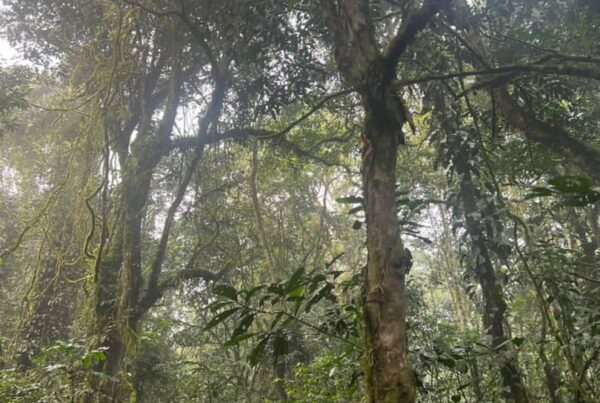
The hour between first light and the departure of the morning trek group is one of the most rewarding periods at a Bwindi or Kibale lodge for visitors who are awake to experience it. Birds are most active in the early morning and lodge gardens — particularly those at forest edges with fruiting trees and water features — attract species that spend the day deeper in the forest. The light before 7 am in the Bwindi forest zone has a quality that midday photography cannot replicate: soft, directional, with the mist still in the valley and the green of the vegetation at its most vivid.
Most lodges will arrange early morning tea and coffee before formal breakfast for guests who want to be outside at first light. A quiet cup of tea on the veranda as the forest begins its day, without any particular obligation or destination, produces a quality of attention that is different from and complementary to the structured, guided attention of the gorilla trek itself. You are not looking for anything; you are simply present. Things come to you rather than being sought.
Community visits and cultural time
Rest days provide the opportunity for the slower, less structured community engagement that time-pressured itineraries skip. Visiting a community craft cooperative — watching baskets being woven, cloth being dyed, pottery being made — is most rewarding when you have time to watch the process develop rather than looking at the finished goods in a shop. Talking with a community guide about their life near the park, their relationship with the gorillas and with the conservation restrictions that affect their farming — these conversations require unhurried time on both sides.
The communities surrounding Bwindi and other Ugandan parks contain people who have detailed, specific, and deeply interesting knowledge of the landscape, the animals, the plants, and the history that visitors are encountering. This knowledge is not available in briefings or guidebooks; it emerges through conversation, and conversation requires time. A lodge guide who has worked in the Buhoma area for twenty years has stories and observations that would enrich any wildlife enthusiast’s understanding of the ecosystem — but only if you create the conditions for them to emerge.
Afternoon walks and alternative activities
Most lodges near Uganda’s national parks offer guided walks that are not the main trekking activity but that explore the landscape in different ways: bird walks with specialist guides, forest edge walks, waterfall hikes, or simply walks through community agricultural land that explain the relationship between the park and the farming community around it. These activities, often not pre-booked and sometimes spontaneously arranged on the day, benefit from the time flexibility that a rest day provides.
At Bwindi specifically, afternoon walks near Buhoma offer birding opportunities that complement the morning gorilla trek perfectly — the forest is different in the afternoon light, different species are active, and the walk has a different character without the purpose-driven direction of tracking a specific gorilla family. Some of the most memorable wildlife encounters on any Uganda trip happen on these unstructured afternoon walks precisely because they were not anticipated.
The slow travel argument
There is a broader argument here beyond the practical value of rest days. The pace at which most modern travel is conducted — the compression of experiences into the smallest possible time, the optimisation of every day for maximum content — is antithetical to the kind of deep engagement that wild places, and particularly wild places with the ecological and cultural depth of Bwindi, actually offer.
A two-week Uganda trip with one day at each location produces a different Uganda from a ten-day trip with three days in two places. The longer stay in fewer places produces deeper familiarity with specific landscapes, specific guides, specific communities. The guide who leads your trek on the first morning knows more about the gorilla family’s current behaviour by the third morning, because you have been talking about it. The birding improves as you learn where specific species feed at specific times. The lodge begins to feel like a place you have stayed rather than a place you are passing through.
None of this is to say that comprehensive, multi-park itineraries are wrong — Uganda’s wildlife is extraordinary and seeing as much of it as possible in a limited time is a legitimate goal. But for those who have the flexibility, building rest days and slow time into the itinerary produces a different and arguably richer travel experience than maximum efficiency allows. The forest is not going anywhere. You can afford to sit in it for a while.
What actually happens when you slow down at Bwindi for an extra day?
An unscheduled morning at a forest-edge Bwindi lodge produces a set of experiences that an arrival-trek-departure schedule eliminates. The bird activity at a forest-boundary lodge in the first two hours after dawn is significant and often overlooked by visitors who leave the lodge for the trek briefing at 07:00 and return at 14:00 for lunch and a transfer: the African broadbill displaying in the garden tree, the Rwenzori turaco calling from the forest edge, the progression of sunbird species from the flowering shrubs through the morning. Sitting with this activity for two hours with binoculars and no time pressure is qualitatively different from glimpsing it between arrival and briefing. The community walk without a lodge programme attached: asking your ranger-guide or lodge manager to simply walk you into the adjacent village on an afternoon with no planned content produces encounters with daily life — the market stall, the schoolchildren walking home, the tea plantation, the smallholder farm at the forest edge — that a structured “community visit” activity cannot replicate. The conversation: lodge staff and ranger-guides who know you will be staying have time to talk about their lives, their families, their relationship to the forest, and what they think about the conservation situation in ways that a single efficient day does not permit.
Is it worth booking a second gorilla trek permit for an extra day at Bwindi?
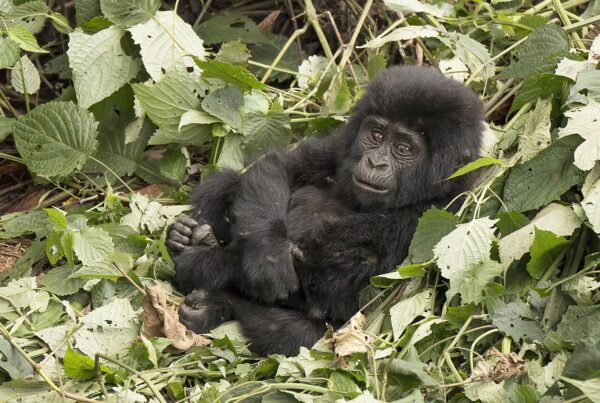
A second gorilla permit on a separate day at Bwindi is worth considering for specific reasons, and the decision depends on your budget and what you found most valuable in the first encounter. The case for a second permit: the gorilla encounter is not identical on different days — a different family has different members, different behaviour patterns, and different forest location; different weather conditions (mist versus sun) produce dramatically different photographic and experiential quality; a second day means you have absorbed the first encounter before the second, producing a more aware and present observer. Many visitors who do a second trek report that it is meaningfully different from the first, not a repetition. The case against: at USD 800 per permit, a second trek adds significantly to the budget; a well-structured first trek with good guide, good weather, and good gorilla behaviour may already be complete as an experience; and the alternative activities available on a rest day at Bwindi (Batwa Trail, birding, community walks) are not trivial substitutes but genuinely valuable in their own right. The compromise: one gorilla permit, one Batwa Trail day, and one unscheduled morning for forest and lodge activity across three nights at Bwindi.
What specific unstructured activities are available at Bwindi?
Bwindi’s unstructured and lightly structured activities extend well beyond the gorilla trek. The Batwa Cultural Trail (Buhoma sector): 2-3 hours guided by Batwa community members covering traditional forest knowledge, demonstrating hunting and gathering practices, Batwa music and dance, and the story of the Batwa relationship with the forest before 1991. Available without advance booking (turn up at the Buhoma community centre morning of). UWA nature walks: 2-4 hour guided forest walks available at all Bwindi sectors, focused on plants, birds, small mammals, and forest ecology; different routes from the gorilla trek trails. Lodge-based birding: most Bwindi lodges have a resident or on-call birding guide; a 2-3 hour morning session from the lodge garden and adjacent forest edge typically produces 40-60 species in exceptional diversity. Village market walk: market days at Buhoma and other nearby towns are weekly; ask your lodge what day and arrange an informal walk rather than a structured visit. Community craft workshop: the Buhoma Community Women’s Craft Group and similar initiatives sell basketry, textiles, and crafts from a community centre accessible on foot from Buhoma village. Forest-edge sitting: simply placing a chair at the forest boundary at your lodge and sitting quietly for an hour.
How does the pace of a safari affect the experience of seeing wildlife?
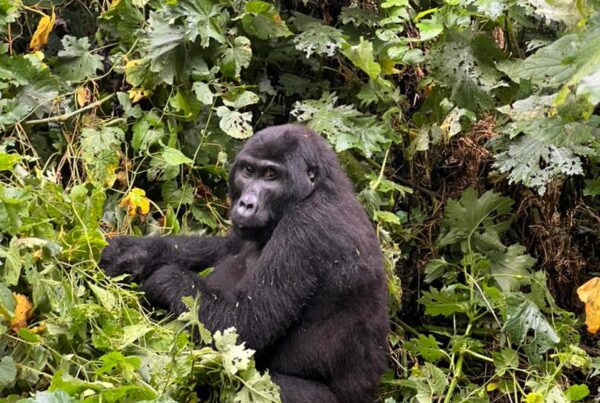
The relationship between safari pace and wildlife experience quality is well-documented in visitor satisfaction research and in the account literature of experienced Africa travellers. Slower pace consistently produces better wildlife experience quality for three reasons. Attentional availability: a visitor who arrived yesterday and is leaving tomorrow is still transitioning — mentally in departure mode while physically present. A visitor in the middle of a multi-day stay is present in a different way. The gorilla encounter on day two of a three-day Bwindi stay is typically reported as more absorbed than the same encounter on the only day of a one-night stay. Incidental wildlife: the wildlife encounters that happen between planned activities — the red colobus troop crossing the road, the mountain bongo glimpsed at the forest edge, the African broadbill seen while having breakfast — require time at a place rather than transit through it. Quality of attention: the difference between looking at a gorilla while thinking about the transfer to the airport and looking at a gorilla with nowhere to be for two more days is measurable in retrospective accounts of what visitors say they actually noticed during the encounter hour.
What makes a good Bwindi lodge for a slow travel stay?
A lodge suited to slow travel at Bwindi has specific qualities that differ from a lodge optimised purely for efficient guest throughput. Forest edge positioning: a lodge on or immediately adjacent to the forest boundary rather than in a cleared development area brings the forest into the lodge environment; bird activity, sound, and light from the forest is available from the lodge itself. Quality of common space: lodges with well-designed verandas, gardens, and common areas invite sitting and observation rather than retreating to the room between activities. Staff knowledge: lodges where staff have been there long enough to know the local bird list, the forest seasonal patterns, and the community context provide the ambient information that makes a place feel understood rather than visited. Activity flexibility: lodges that can organise unplanned activities on request — a morning birding session, an informal community walk, a visit to a local market — are more valuable for slow travel than lodges with fixed programme boards. In the Buhoma area: Mahogany Springs, Bwindi Lodge, and Gorilla Forest Camp all have forest-boundary positions and high staff-to-guest ratios that support this kind of stay.
- Mindful travel in Uganda: slowing down to fully experience the gorilla forest
- Why Savvy Travellers Are Ditching Middle East Holidays for Uganda Safaris in 2026
- A Gorilla Group Travels Up to 5km a Day: Mapping Their Forest Routes
- Your Next Chapter Starts in Bwindi Forest: A Travel Motivation Guide
- Travelling to Uganda with dietary restrictions: vegan, vegetarian, gluten-free
- Travelling to Uganda with dietary restrictions: vegan, vegetarian, gluten-free
- Travelling to Uganda with dietary restrictions: vegan, vegetarian, gluten-free
- Mindfulness and presence in the forest: the art of the slow gorilla trek
- Bwindi Impenetrable Forest – Gorilla Trekking in Uganda’s UNESCO Jungle
- Meet the conservationist protecting mountain gorillas in the heart of the impenetrable forest.