Updated
cost of Uganda gorilla trekking trip budget is one of Africa’s most extraordinary wildlife experiences, connecting travellers with mountain gorillas in their natural forest habitat. The sticker price of a Uganda gorilla trekking trip—when you add up flights, permit, accommodation, and ground logistics—surprises many travellers who have not researched it carefully. The permit alone is $800. Premium lodges run $400 to $1,800 per person per night. International flights from Europe or North America add $800 to $2,000. A full seven-night Uganda trip for a couple can cost $8,000 to $20,000 depending on the level of accommodation and the extent of the itinerary. Understanding where those costs come from, and where there is genuine flexibility, allows you to plan a trip that matches your budget without compromising on the elements that determine whether the experience is extraordinary or merely expensive.
The true cost of a Uganda gorilla trekking trip: a complete budget breakdown
The gorilla permit: the non-negotiable cost
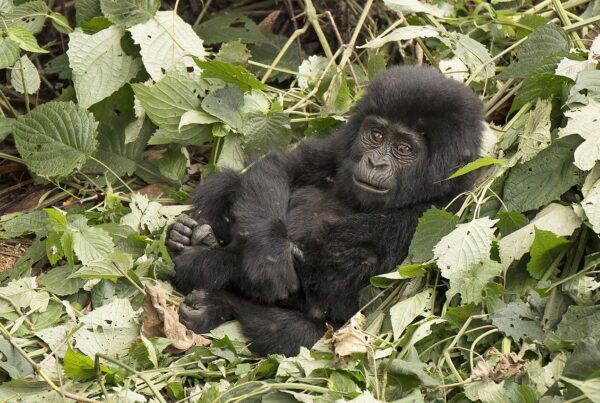
Every person who treks gorillas in Uganda must purchase a permit from Uganda Wildlife Authority at the fixed price of $800 per person (2025 rate). There are no discounts, no negotiation, no bundle pricing. The permit entitles one person to one gorilla trek with one specific habituated gorilla family in one sector of the park on one specified date. If you want to trek a second time—which many visitors do, finding the experience so compelling that one hour is insufficient—you pay another $800. Children under 15 are not permitted to trek gorillas regardless of permit availability. The permit is the single largest cost component of the trip for most travellers and the one over which there is no flexibility. Budget it first and build everything else around it.
Flights: the biggest variable
International flights to Entebbe International Airport vary enormously by departure point, booking lead time, and carrier. From the UK, return flights cost £600–1,400 (economy class) with Rwandair, Ethiopian Airlines, Kenya Airways, or Turkish Airlines as the most common routing options. From the US East Coast, expect $1,200–2,200 return. From Australia, $2,000–3,500. Business class prices are roughly two to three times economy. Booking three to six months in advance reliably produces better prices than last-minute booking; October and November travel typically offers better airfare pricing than the peak June–August window. If your itinerary combines Uganda with Kenya or Rwanda (common pairings), routing through Nairobi or Kigali rather than London can reduce total flight cost.
Accommodation: the widest price range
Accommodation near Bwindi spans the widest price range of any trip component. At the budget end, community guesthouses and simple bandas near the park gate cost $30–80 per person per night—basic but functional, and increasingly popular with budget-conscious travellers who want to spend their money on permits rather than lodge ambience. Mid-range lodges—the reliable tier of the market—cost $150–350 per person per night inclusive of meals: places like Gorilla Safari Lodge at Nkuringo, Bwindi Jungle Lodge, and several well-run family lodges near Rushaga. Premium lodges—Bwindi Lodge, Mahogany Springs, Gorilla Forest Camp, Clouds Mountain Gorilla Lodge—run $400–900 per person per night all-inclusive. Ultra-luxury properties like Sanctuary Gorilla Forest Camp can reach $1,200–1,500 per person per night in peak season. The accommodation choice is where the biggest budget decision lies: a couple that moves from budget to premium accommodation increases their trip cost by $3,000–6,000 for a five-night Bwindi stay without changing a single element of the wildlife experience.
Ground transportation
Road transfer from Kampala to Bwindi and back, with a private vehicle and driver, costs approximately $300–500 per vehicle one way—or $600–1,000 for a round trip. For a couple sharing a vehicle, this is $300–500 per person total. Domestic flights (Entebbe to Kihihi or Kisoro) cost $250–400 per person one way on Aerolink scheduled services, making the flight option more expensive for solo travellers and cost-comparable for couples who would otherwise share a vehicle. Safari operators typically include ground transportation in their package quotes; independent travellers must budget for it separately. Factor in fuel stops, park entry fees (separate from the gorilla permit—Bwindi national park entry is approximately $40 per person per day), and any additional game drives or boat trips in other parks.
Additional park fees and activities
Beyond the gorilla permit and Bwindi national park entry, common additional costs include: gorilla habituation experience permit ($1,800 per person, for a four-hour encounter rather than one hour—a premium but extraordinary option); chimpanzee trekking permit in Kibale ($400 per person); golden monkey trekking permit in Mgahinga ($100 per person); Batwa Trail cultural experience ($70–80 per person); Buhoma community walk ($15–30 per person); gorilla trekking porter hire ($15–20 per trek); and any specialist activities at other parks visited (boat cruises at Queen Elizabeth, game drives at Murchison Falls, etc.). A comprehensive Uganda itinerary combining gorilla and chimpanzee trekking with community and cultural activities can add $600–1,000 per person in activity costs beyond the core gorilla permit.
Visas and travel documentation
A Uganda Tourist Visa costs $50 for a single-entry visa valid 90 days, or $100 for a multi-entry East African Tourist Visa covering Uganda, Kenya, and Rwanda. Both are available online in advance through the Uganda e-visa portal. Yellow fever vaccination is required for entry and must be documented on an International Certificate of Vaccination. Travel insurance (see our detailed guide) should budget $100–300 per person for comprehensive cover appropriate for an active wildlife trip. Some travellers choose to add AMREF Flying Doctors emergency evacuation membership ($25–30 per year) as additional medical evacuation cover. Total documentation and insurance costs typically run $200–500 per person.
Tips, crafts, and discretionary spending
The on-the-ground discretionary budget that many trip planners underestimate: tips for rangers ($10–20 each), guides ($10–20 each), porters ($15–20), and lodge staff ($3–5 per day per guest); craft purchases from community cooperatives ($50–150 per person for quality items); community programme donations; and local restaurant meals when not eating at the lodge. Budget $200–400 per person for this category and you will have enough for generous tipping and meaningful craft purchases without financial stress. Larger-than-anticipated craft shopping is the most common cause of discretionary budget overrun—the quality and beauty of Bwindi area crafts consistently surprises visitors who had mentally allocated $50 and end up spending $200.
Sample total budgets
For a seven-night Uganda trip (two nights Kampala, five nights Bwindi), single gorilla trek, overland transfer, per person estimates: Budget tier (guesthouse/simple lodge, economy flights, no extras): $2,000–2,800. Mid-range (mid-tier lodge, economy flights, one chimpanzee trek added): $3,500–5,000. Premium (premium lodge, economy flights, two gorilla permits): $6,000–9,000. Ultra-luxury (top-tier lodge, business class flights, multiple permits): $12,000–20,000. These are per person estimates for a solo traveller; couples sharing accommodation and transfers will find the per-person cost drops at most tiers. The $800 gorilla permit is fixed regardless of tier; everything else—lodge quality, flight class, activity scope—is a trade-off decision that should be made consciously based on what matters most to you.
- Gorilla Trekking Cost in Uganda – 2025 Permit, Safari & Budget Breakdown
- How Much Does a Uganda Gorilla Safari Cost? Complete Budget Breakdown
- Understanding the Cost of Gorilla Trekking: Complete Budget Breakdown
- Uganda Gorilla Trekking Cost: Complete Budget Breakdown
- Fuel Costs Driving to Bwindi: How to Budget for a Self-Drive Trip 2027
- What gorilla trekking costs in 2025: a complete budget breakdown
- Uganda Gorilla Trekking on a Budget: The Real Minimum Cost 2026
- Budget Gorilla Trekking Uganda: The Lowest Honest Cost in 2027
- The Hidden Costs of Gorilla Trekking Uganda: Budget for These 5 Things
- How much does gorilla trekking cost in 2025? A complete price breakdown