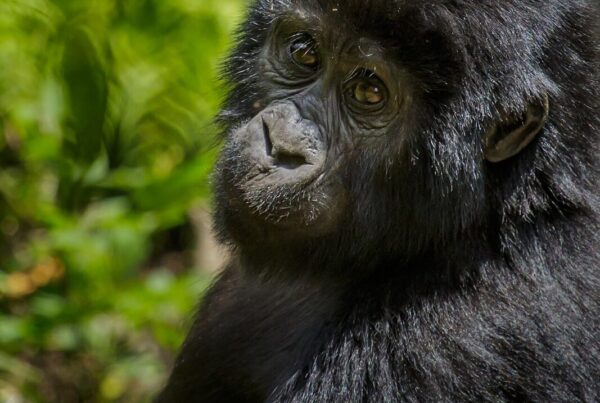
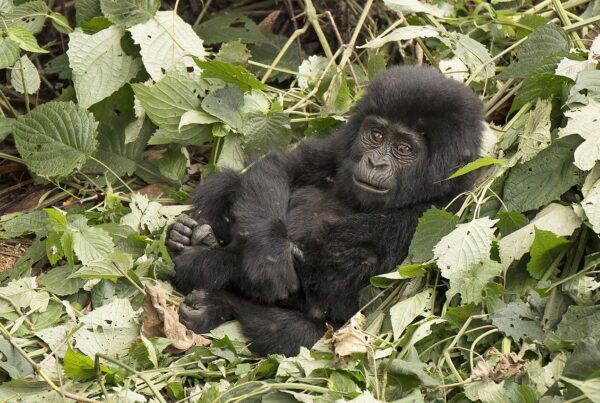
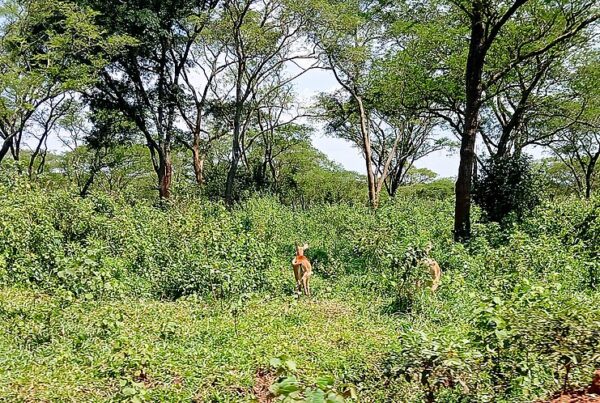
The guide who leads your gorilla trek is not simply a navigator pointing at trees — in the dense, disorienting forest of Bwindi Impenetrable National Park, where paths disappear into undergrowth and the distance to the gorilla group can be anywhere from a twenty-minute walk to a four-hour push through terrain that has no legible trail, the ranger-guide is simultaneously the person who keeps you physically safe, interprets everything you see and hear in the forest and at the gorilla encounter, manages the gorilla family’s response to your group’s presence in real time, and carries the accumulated knowledge of years of daily interaction with a specific gorilla family whose individual members they know by name and behavioural signature. The quality of the guide is the largest single variable in gorilla encounter quality after the gorillas themselves. See Bwindi gorilla trekking and Uganda safari packages.
- Who they are: Uganda Wildlife Authority ranger-guides; trained and certified by UWA; carry firearms for safety
- What they know: individual gorilla family members by name and personality; forest ecology; bird identification; safety protocols
- Languages: UWA guides speak English; ask your operator about French or other language options if needed
- Tipping: customary; USD 10-20 for a standard trek; more for an exceptional guide on a difficult long day
- Getting the most: ask questions before, during, and after the encounter; guides with long family assignments have deep specific knowledge
The guide who leads your gorilla trek is not simply a navigator. In the dense, disorienting forest of Bwindi Impenetrable National Park, where paths disappear into undergrowth and the distance to the gorilla group can be anywhere from a twenty-minute walk to a four-hour scramble, the guide is simultaneously field biologist, safety officer, cultural interpreter, storyteller, and the human bridge between a group of international visitors and one of the rarest and most closely monitored wildlife populations on earth. The quality of the guiding fundamentally shapes the quality of the experience, and understanding what guides know, how they learned it, and what they are managing throughout the trek helps trekkers engage with them as the professionals they are rather than treating them as a service commodity.
Training and certification: becoming a Bwindi guide
Uganda Wildlife Authority guides working with gorilla trekking groups complete a multi-stage training and certification programme that covers gorilla biology and behaviour, forest ecology, first aid and emergency procedures, gorilla encounter protocols, and visitor management. The training combines classroom learning with extended periods of supervised field work, during which trainee guides accompany experienced rangers on gorilla tracking and monitoring expeditions before managing groups independently.
The gorilla behaviour component of guide training is particularly intensive. Guides must be able to read individual gorillas’ postures, facial expressions, and vocalisations and interpret these accurately enough to make instant decisions about visitor positioning during the encounter. A silverback displaying low-level discomfort requires different management than one that is actively feeding and relaxed, and the difference between these states requires trained observation to detect. Guides who misread behavioural cues and allow visitors to remain too close or too active during a tension moment can trigger a charge response that is distressing for visitors and potentially harmful to the long-term tolerance that habituated gorillas maintain for human presence.
Guides also receive training in the health protocols that govern human-gorilla contact, including the seven-metre minimum approach distance, the prohibition on eating or drinking in the gorillas’ presence, and the requirement for hand washing or sanitising before approach. These protocols exist because gorillas are highly susceptible to human respiratory diseases, and trained guides enforce them consistently regardless of how close an individual visitor might attempt to move or how many photographs they are trying to take.
The tracker team: the invisible skill behind every sighting
What most visitors do not fully appreciate is that the guide who accompanies their group on the trail is working in real-time communication with a separate team of experienced trackers who have been in the forest since before dawn locating the gorilla group. These trackers follow the group from their overnight sleeping nests, monitoring their direction of travel, feeding activity, and location throughout the morning so that the tourist group can be directed efficiently once they enter the forest.
Trackers are typically among the most experienced field operators in the Bwindi ecosystem, with years of daily contact with specific gorilla groups. They know individual gorillas by sight, understand the personality differences between silverbacks in different groups, and can predict with reasonable accuracy how a group will respond to various environmental and social stimuli. Their radio communications with the tourist guide are the logistical backbone of every successful trek, reducing the time visitors spend searching for the group and maximising the quality time available for observation once contact is made.
Tipping the tracker team, if you can locate them at the trek’s end, is a gesture that acknowledges work that is often invisible to visitors but is essential to the experience. Many lodges can facilitate tracker tips through the guide, ensuring they reach the right people even when visitors leave the forest before trackers emerge from their monitoring duties.
What guides narrate during the hour with gorillas
During the one-hour encounter with the gorilla family, the guide’s commentary balances information sharing with the preservation of the quiet atmosphere that both gorilla welfare and visitor experience require. Skilled guides narrate in a low, controlled voice, identifying individual gorillas by name, explaining their relationship to each other, and contextualising behaviours as they occur — pointing out when a juvenile is play-fighting with an older sibling, when a female is grooming a silverback in a display of social bonding, or when an infant is experimenting with foods that it has observed adults eating.
This real-time narration transforms what might otherwise be a passive observation into an interpretive experience. Visitors who understand that the silverback’s apparent indifference to their presence is the result of months or years of habituation, or that the vocalisation they just heard is a contentment grunt rather than a warning, engage with the encounter at a depth that pure observation cannot produce. The guide’s knowledge is the lens through which the hour’s experience is focused.
Guides also manage the practical logistics of the hour: positioning the group to maintain seven-metre distances as the gorillas move, moving visitors quickly when a gorilla begins walking in their direction, calling time at the end of the hour, and facilitating a clean exit from the area that does not disturb the family group’s subsequent movements. These management actions are performed so smoothly by experienced guides that visitors rarely notice them as the active safety management they represent.
Forest knowledge beyond gorillas
The hours on the trail before and after the gorilla encounter represent a significant portion of the total trek time, and experienced guides use this time to share knowledge of the forest ecosystem that extends well beyond the target species. Plant identifications, bird calls, invertebrate signs, and ecological relationships between species are the ongoing commentary that transforms a walk-to-the-gorillas into a full forest immersion experience. Guides who know Bwindi’s plants can identify the medicinal species used by local communities, explain the food preferences of different animals, and connect the forest’s visual details to a coherent ecological narrative.
The best guides are natural teachers whose enthusiasm for the forest is evident and contagious. They answer questions with depth drawn from years of daily observation rather than rote answers from a training manual, and they notice details — an unusual mushroom, an army ant column, a bird’s nest visible in a fork — that untrained observers walk past without seeing. Engaging actively with guide commentary during the trek, asking questions, and expressing genuine curiosity produces a richer experience than passive following and encourages the deeper explanations that guides are often holding in reserve for interested visitors.
Tipping culture and guide recognition
Tipping guides is standard practice on Uganda gorilla treks and is an important component of guide income, supplementing base salaries that do not always reflect the skill and knowledge that senior guides bring to their work. USD 10 to USD 20 per person for a satisfactory guide experience is a common benchmark, with USD 30 to USD 50 appropriate for an exceptional guide who has significantly enriched the experience through their knowledge, commentary, and management of the encounter.
Beyond tips, written reviews on TripAdvisor, Google, and tour operator platforms that name specific guides by name provide career-building recognition that money alone cannot substitute for. In an industry where guide reputation directly affects booking preferences and lodge relationships, a detailed positive review describing a specific guide’s knowledge and approach has tangible long-term professional value. Taking a few minutes after the trek to write this recognition is a form of appreciation that guides value highly and that costs the visitor nothing beyond the time to write it.
The relationship between guide and visitor during a gorilla trek is one of the most compressed and intense professional interactions in tourism. In a few hours, a good guide must assess the group’s fitness level, manage diverse expectations, deliver complex scientific content accessibly, maintain wildlife protocols under pressure from excited visitors, and create an atmosphere in which the gorilla encounter can unfold on its own terms. The guides who do this consistently, day after day, in all weather and for visitors of all backgrounds, are among the most capable wildlife professionals working anywhere in Africa today.
What training and qualifications does a Uganda gorilla trek guide have?
Uganda Wildlife Authority ranger-guides who lead gorilla treks complete UWA’s ranger training programme, which covers: wildlife ecology and identification; safety and first aid in the field; gorilla behaviour and encounter management protocols; firearms use and safety (rangers carry firearms during treks for wildlife emergencies); community relations; and tourism interpretation skills. Rangers assigned to gorilla trek guiding work through a progression from tracker to guide over time, accumulating direct experience with specific gorilla families. The most experienced guides at Bwindi have spent years working with the same habituated families — they know individual gorillas by name, can predict movement patterns, and understand each family member’s specific personality and behavioural tendencies. This accumulated specific knowledge is not something that can be taught in a training programme; it develops through thousands of hours in the field with a specific group of animals.
How does the guide manage the gorilla encounter in real time?
During the encounter hour, the guide performs a continuous assessment of the gorilla family’s state and adjusts group positioning accordingly. This involves: reading the silverback’s posture and movement (standing silverback means heightened alertness — guide moves group back; feeding silverback means relaxed state — group can maintain close distance); managing the 7-metre minimum distance rule by directing group members to step back when a gorilla approaches; signalling when to photograph versus when to be still (during a silverback display, guides often stop photography to eliminate flash risk and movement); monitoring the whole group’s behaviour simultaneously while also watching the gorillas; and deciding when the family has moved to a better position and the group should follow versus when staying still allows the family to come to the group. This real-time management is what allows 8 visitors of widely varying wildlife experience levels to spend an hour with a wild silverback gorilla without incident.
What can I learn from my guide about specific gorilla individuals?
Each habituated gorilla family has named individuals whose histories, personalities, and current social status are tracked by UWA monitoring staff. Your guide can tell you: the silverback’s name and approximate age; his family history (which group he was born in, when he established this family); which females are his and whether they were born in the group or transferred from other groups; the ages and relationships of the juveniles you’re watching play; which individual gorillas have had medical interventions from the Gorilla Doctors programme; and specific personality observations — the particularly curious juvenile, the old female who stays at the edge of the group. This individual-level knowledge transforms the encounter from watching “gorillas” to watching specific named individuals with knowable histories. Ask your guide to identify individuals as the family settles — this is the quickest way to deepen the encounter beyond the generic wildlife observation level.
Should I tip my gorilla trek guide?
Tipping gorilla trek guides is customary and expected. The standard range is USD 10-20 for a normal trek; USD 20-30 for a particularly demanding long trek or exceptional guiding quality. Tipping the lead ranger-guide and any additional assistant rangers separately is appropriate on treks where multiple rangers are present. Tips should be given directly and personally at the end of the trek — not via an intermediary. If your guide has been exceptional: pointing out forest species you’d have missed, providing running interpretation throughout the encounter, and demonstrating specific knowledge about the gorilla individuals you visited — acknowledging this in the tip amount is the most direct way to communicate value and reward service quality. Guide tipping is separate from porter tipping; if you hired a porter, tip them separately at the same time. The combined guide tip plus porter tip represents excellent value relative to the service and the total safari investment.
How can I get the most out of my time with the guide before and after the trek?
The briefing (30-45 minutes before departure) is the best opportunity to ask questions that will enrich the encounter: What is the name of the silverback we are visiting? How old is the family? Are there any infants or new members? What has the family’s behaviour been like this week? Has anything unusual happened recently? Guides who receive substantive questions before a trek typically provide more interpretive information throughout the day because they understand that the visitor group is genuinely interested rather than passively complying with the tourism format. After the trek, at the de-briefing or while waiting for transport: follow up on anything you didn’t understand during the encounter; ask about the guide’s own experience of the gorilla families over the years; ask what the most memorable encounter they’ve guided was. Rangers with years of daily contact with gorilla families have observations and stories that rarely appear in any written source and that add depth to your understanding of what you witnessed.
- The role of local guides in Uganda gorilla trekking: knowledge, culture, and connection
- The role of local guides in Uganda gorilla trekking: knowledge, culture, and connection
- Why Local Ugandan Guides Give Better Gorilla Treks Than Foreign Ones
- Ugandan street food beyond the rolex: what to eat at market stalls near Bwindi
- What a 3-Day Uganda Wildlife and Cycling Safari Did to My Family Was Beyond Anything We Expected
- The Unmatched Strength of a Silverback Gorilla: Power Beyond Muscle
- Safaris That Offer Unique Wildlife Experiences in Uganda: Beyond the Ordinary
- Cultural Etiquette in Uganda: How to Respect Local Customs
- Gorilla Trekking Safety: What Your Guides Keep Watch For
- Impact of Gorilla Tourism on Local Communities in Uganda