TALK TO AN EXPERT +256 716 068 279 WHATSAPP OPEN NOW.
Economics & Impact Tourism

The economics of gorilla habituation: why a four-year investment changes everything

Home / Travel News, Stories & Tips / Economics & Impact Tourism / The economics of gorilla habituation: why a four-year investment changes everything

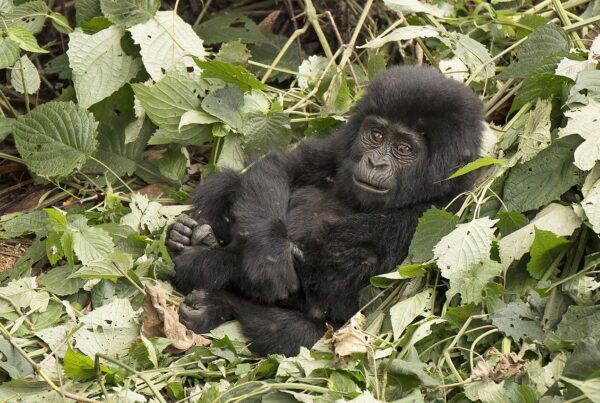
Every gorilla trekking permit sold in Uganda is underlain by a four-year investment that most visitors never consider. The process of habituating a wild gorilla group — transforming a family that flees from human contact to one that tolerates human presence within seven metres — requires sustained field work, specialist expertise and significant financial commitment before a single paying visitor can be admitted. Understanding this investment explains both why so few gorilla families are habituated relative to the total population, and why the permit price reflects value that extends far beyond the sixty-minute encounter itself.

What habituation involves: the four-year process

Habituation begins with a gorilla group that has never had positive contact with humans — whose flight response to human proximity is strong and immediate. A team of experienced trackers and researchers begins daily contact with the group, approaching to the distance at which the gorillas tolerate presence without moving away, and holding that position for periods that gradually extend over weeks and months. The approach distance decreases incrementally as the gorillas’ flight threshold reduces. Specific vocalisations — contact rumbles, “hm hm” sounds — are used to signal non-threatening intent. The process requires daily consistency; gaps in contact can reset progress and in some cases the group must be relocated from scratch after disturbance events. The typical timeline from initial contact to tourism-ready is two to four years.

The staffing and financial costs

A habituation team typically consists of three to five trackers working daily with the target group, supervised by a senior researcher familiar with the group’s individual members and social dynamics. The daily field cost — salaries, equipment, field supplies, veterinary monitoring — accumulates to a substantial sum over a three-to-four-year habituation period. Uganda Wildlife Authority and its research partners have invested this cost for each of Bwindi’s habituated families; the investment is recovered through permit revenue over the family’s tourism lifespan, which may extend to decades. A family habituated in 2010 that has been hosting eight visitors per day for fifteen years has generated a very large return on the original habituation investment — the economics of the system work powerfully in the long run.

Not all gorilla groups can be habituated

Habituation does not succeed with every target group. Some groups have silverbacks with particularly strong flight responses that resist the gradual approach process; others occupy terrain that makes daily tracking impractical; others disperse or fission during the habituation period in ways that restart the process. There is also a conscious policy decision about how many gorilla families should be habituated relative to the total Bwindi population. Conservation managers have generally maintained the position that some proportion of the population should remain unhabituated — maintaining natural behaviour patterns, not subject to daily human exposure and functioning as a genetic resource outside the managed tourism system. This means the number of habituated families is a deliberate policy choice, not simply a reflection of how many could theoretically be habituated.

Disease risk and the habituation decision

Every habituated gorilla family lives under elevated disease transmission risk compared to unhabituated gorillas. Daily contact with human observers — however careful the respiratory distance rules and however conscientious the health screening of visitors — creates transmission pathways for respiratory pathogens that do not exist for gorillas with no human contact. This risk is monitored through daily health observation by trackers and periodic veterinary examination by Gorilla Doctors. The trade-off is explicit: habituation enables the tourism revenue that funds conservation, at the cost of elevated disease exposure for the habituated individuals. The management system attempts to minimise the disease risk through visitor health rules, mask requirements during respiratory illness seasons and rapid veterinary response to illness signs — but cannot eliminate it entirely.

The habituation experience as a commercial product

The gorilla habituation experience — a full day spent with a group in the active process of being habituated, available at a premium price above the standard trekking permit — is itself a product of the habituation system. Visitors pay $1,500 in Uganda (as of current pricing) for a day-long encounter with a partially habituated family, accepting more physical risk and less guaranteed close encounter in exchange for the different quality of observing a group that is still negotiating its relationship with human presence. The revenue from habituation experience permits directly funds the ongoing habituation work. It is, in conservation economics terms, an elegantly self-funding system — visitors pay for the process of creating the product they are being given access to.

Ready to experience Uganda’s mountain gorillas in 2026? Secure your gorilla permits early and let us craft a seamless safari tailored to your travel style, preferred trekking sector, and accommodation level. From luxury lodges to well-designed midrange journeys, every detail is handled for you. Every itinerary is carefully planned to maximize your time in the forest while ensuring comfort, safety, and unforgettable encounters.

Have questions about gorilla permits, travel dates, or the best itinerary for you? Speak with a safari expert and get clear, honest guidance to plan your trip with confidence.

When is the last time you had an adventure? African Gorillas!!! Up Close With Uganda’s Wild Gorillas Touched by a Wild Gorilla: An Unforgettable Encounter Inside Gorilla Families: Bonds, Hierarchies & Jungle Life Face to Face With a Silverback: The Wild Encounter You’ll Never Forget