TALK TO AN EXPERT +256 716 068 279 WHATSAPP OPEN NOW.
Famous People & Pop Culture

Gorillas in the Mist: the film, the facts, and the legacy in Uganda

Home / Travel News, Stories & Tips / Tales from the Mist / Gorillas in the Mist: the film, the facts, and the legacy in Uganda

Gorillas in the Mist, released in 1988 and starring Sigourney Weaver as Dian Fossey, is one of the most influential wildlife conservation films ever made. Based on Fossey’s 1983 memoir of the same name, the film introduced mountain gorillas to a global cinema audience that extended far beyond the readership of either scientific publications or popular natural history books, creating a wave of public interest and emotional engagement with the species that directly influenced conservation funding and political attention for years afterward. For anyone visiting Uganda’s gorilla forests today, understanding the film’s connection to the reality of mountain gorilla conservation — what it got right, where it dramatised for effect, and what legacy it left — provides essential context for the experience they are about to have.

The film: story and impact

Gorillas in the Mist follows Dian Fossey’s arrival in the Virunga Mountains in 1967, her establishment of the Karisoke Research Centre, her years of research on gorilla families including the Digit group, her increasingly confrontational anti-poaching work, and her murder in December 1985. The film was shot partly on location in Rwanda’s Volcanoes National Park with real gorillas in some sequences, giving it a visual authenticity that studio filming could not have achieved, and Weaver’s performance as the complex, driven, and ultimately tragic Fossey was widely praised and earned her an Academy Award nomination.

The film’s conservation impact was immediate and substantial. Donations to mountain gorilla conservation organisations increased dramatically in the weeks and months following its release. Rwanda’s gorilla tourism programme, still nascent in 1988, received a boost in international visitor interest that helped establish the model that has since generated hundreds of millions of dollars in conservation revenue. Political attention to poaching and habitat loss in the Virunga region increased in ways that the academic publication of Fossey’s research alone could not have achieved. The film demonstrated, as few conservation communications have before or since, the power of narrative cinema to move public audiences to emotional engagement and action.

What the film got right

The film’s most accurate element is its depiction of the emotional reality of the human-gorilla relationship that years of habituation and research create. Fossey’s evident love for specific gorillas — particularly Digit, whose killing by poachers she responded to with devastating grief — is portrayed with sensitivity and authenticity that anyone who has spoken with long-term gorilla researchers recognises as true to their experience. The gorillas shown in the film are real animals behaving naturally, not trained animals performing, and their interactions with Fossey sequences convey the quality of the habituated relationship that the film’s narrative depends on being credible.

The film also accurately represents the basic ecology of mountain gorilla life: the family group structure dominated by a silverback, the feeding behaviour in herbaceous vegetation, the altitudinal forest environment, the susceptibility to human respiratory disease. These background details are handled with the care of a production that had access to good scientific consultation, and viewers who come to the film with prior gorilla knowledge will find its natural history component largely reliable as a general introduction to the species.

Where the film dramatised

Gorillas in the Mist necessarily compresses, simplifies, and dramatises the eighteen years of Fossey’s career into a two-hour narrative, and this compression produces some significant distortions. Fossey’s relationship with local communities is presented in the film in a way that most contemporary conservation practitioners find troubling: her approach to anti-poaching was confrontational and sometimes abusive toward local herders and poachers, reflecting attitudes toward African communities that were not unusual in conservation circles of the 1970s but that contemporary community-based conservation has explicitly rejected as both ethically problematic and practically counterproductive.

The film’s portrayal of Fossey as the lone champion of gorilla conservation against indifferent or hostile institutional forces also obscures the substantial collaborative scientific and conservation work that was underway simultaneously, including the contributions of Ugandan, Rwandan, and Congolese researchers and government officials whose roles receive little screen time. Conservation is almost always a collective enterprise, and the lone hero narrative that made Gorillas in the Mist cinematically compelling is a significant simplification of the social and institutional reality that makes conservation work.

The circumstances of Fossey’s murder remain officially unsolved, and the film’s implication that local poachers were responsible is one interpretation of an incident that has been explained in multiple conflicting ways by different investigators, colleagues, and journalists over the decades since her death. The true story is likely considerably more complex than the narrative the film presents, though the dramatic requirements of a cinematic biography necessitated a cleaner narrative resolution than the historical record provides.

The Karisoke legacy: from Fossey to the Dian Fossey Gorilla Fund

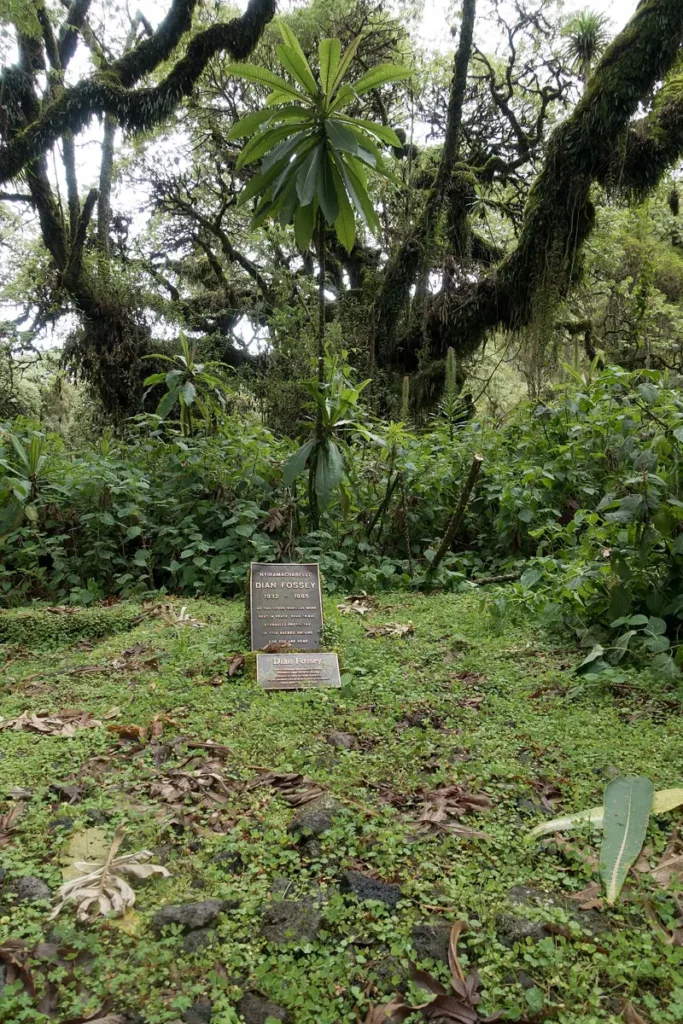
The Karisoke Research Centre that Fossey established in 1967 was destroyed during the Rwandan genocide in 1994 but has been re-established and continues to operate as one of the world’s longest-running great ape research programmes. The Dian Fossey Gorilla Fund International, established in 1978 during Fossey’s lifetime to fund Karisoke, has grown into one of the world’s most effective gorilla conservation organisations, funding research, anti-poaching work, community engagement, and veterinary support across the Virunga and Bwindi ecosystems.

The organisation’s work has contributed directly to the gorilla population recovery that is now celebrated as one of conservation’s major successes, and the data streams from Karisoke’s continuous monitoring programme have been fundamental to understanding gorilla demography, health, and behaviour in ways that inform management decisions across both gorilla populations. Fossey’s methodological legacy — individual-based, long-term, behaviourally detailed field research — remains the foundation of the research enterprise she initiated, even as the technology, personnel, and institutional frameworks have transformed over the decades since her death.

The film’s relevance for Uganda visitors

Gorillas in the Mist is set in Rwanda’s Virunga Mountains rather than Uganda’s Bwindi, and the gorilla families it depicts are Virunga families rather than Bwindi families. The Bwindi population was not extensively researched or habituated for tourism when the film was made, and the species’ public profile was largely defined by the Virunga work that Fossey and her colleagues conducted. For visitors to Uganda rather than Rwanda, the film’s specific geographic setting is secondary to its role as the foundational popular narrative about mountain gorilla conservation — the story that most visitors will have encountered in some form before their trip.

Watching or rewatching Gorillas in the Mist as preparation for a Bwindi gorilla trek is worthwhile despite its geographic mismatch. The emotional preparation it provides — the felt sense of the gorillas’ individual personalities, the understood significance of habituation, the awareness of the conservation work that makes the tourist encounter possible — is as relevant to Bwindi as to the Virungas. And the film’s most enduring contribution, which is not to scientific understanding but to public emotional connection with a species that was on the brink of extinction, remains the foundation of the global constituency that has funded the recovery that every gorilla trekker in Uganda is benefiting from.

Ready to experience Uganda’s mountain gorillas in 2026? Secure your gorilla permits early and let us craft a seamless safari tailored to your travel style, preferred trekking sector, and accommodation level. From luxury lodges to well-designed midrange journeys, every detail is handled for you. Every itinerary is carefully planned to maximize your time in the forest while ensuring comfort, safety, and unforgettable encounters.

Have questions about gorilla permits, travel dates, or the best itinerary for you? Speak with a safari expert and get clear, honest guidance to plan your trip with confidence.

When is the last time you had an adventure? African Gorillas!!! Up Close With Uganda’s Wild Gorillas Touched by a Wild Gorilla: An Unforgettable Encounter Inside Gorilla Families: Bonds, Hierarchies & Jungle Life Face to Face With a Silverback: The Wild Encounter You’ll Never Forget