Updated
The best time to climb or trek in the Rwenzori Mountains is during the drier months, roughly December to February and June to August, when trails are slightly less muddy, river crossings are easier and the summits are clear more often.
Even then, expect rain on most days: the Rwenzoris are one of the wettest mountain ranges in Africa. The wettest months, around March to May and September to November, make the bogs deeper and the rock and ice more dangerous, and summit attempts on Margherita Peak (5,109 m) are harder. Shorter treks and day hikes are possible all year.
The drier months
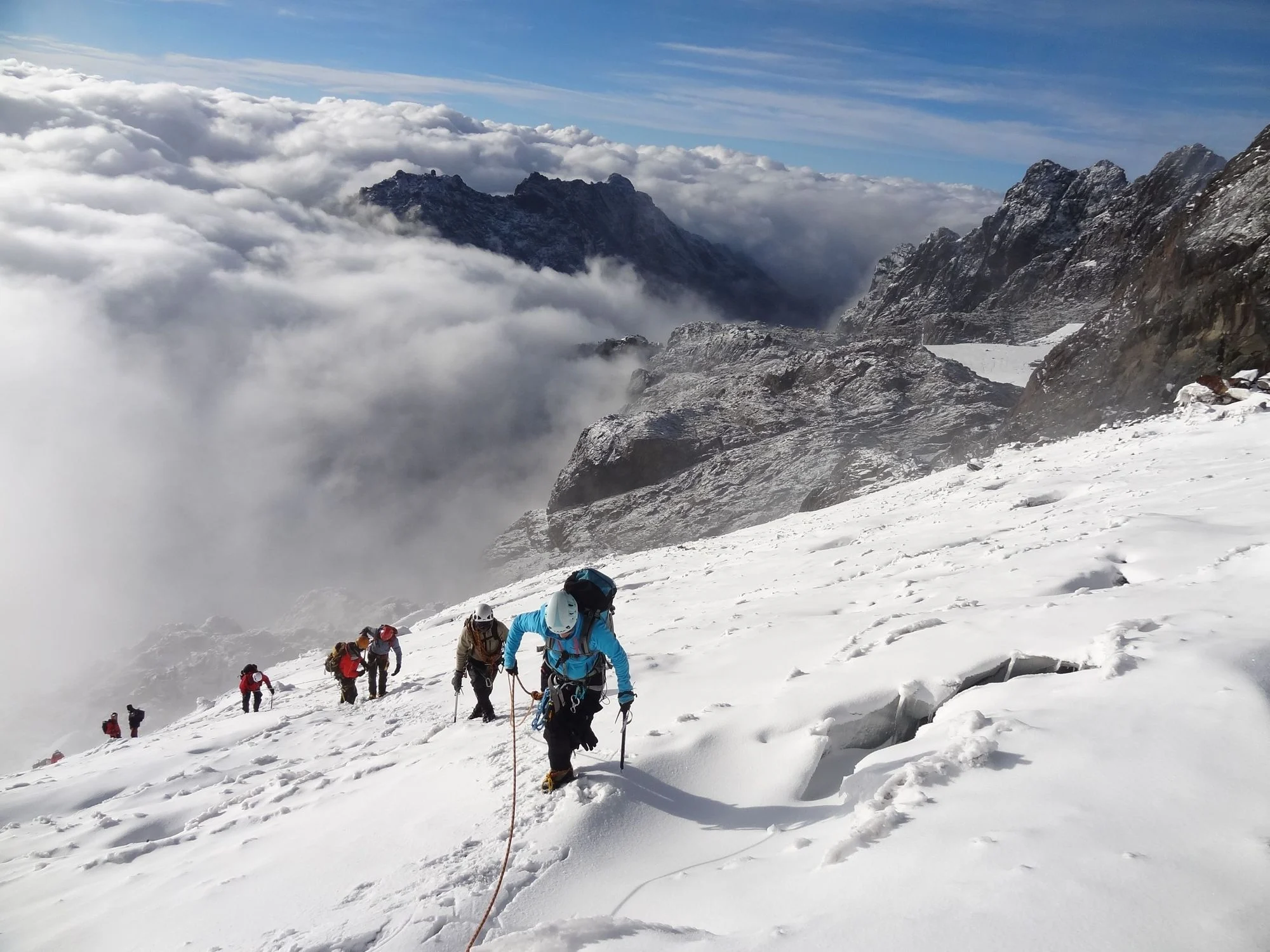
From December to February and June to August, rain usually falls in shorter showers, and there are more clear mornings when the glaciers and peaks of Mount Stanley, Mount Speke and Mount Baker are visible. Climbers aiming for Margherita Peak on the Congo border, a true climb on glacier and rock with crampons and a harness, generally choose these months. December to February is often considered the best window of all. The drier months are also busier, so book guides and huts in advance.
The wetter months
In the long rains of March to May and the shorter rains of September to November, the lower trails turn into deep mud and the bogs in the Bigo and Kitandara areas can be thigh-deep. Rivers rise, rock is slippery and summits are often in cloud.
Treks still run, and experienced hikers who like solitude and mist sometimes prefer these months, but progress is slower and the chance of reaching the summit is lower. The upside is lush vegetation, few other trekkers and, in April, May and November, cheaper gorilla permits if you combine the trip with Bwindi.
Weather on the mountain
Conditions change with altitude rather than season alone. The foothills are warm and humid, the bamboo and heather zones are cool and wet, and the high alpine zone, with its giant groundsels and lobelias, can drop below freezing at night, with snow and hail possible at any time of year. Mist can roll in within minutes. Pack for all conditions: waterproofs, warm layers, gloves and a hat, and the rubber boots (gumboots) that local guides recommend for the bogs.
Routes and how long you need
The Central Circuit, run from Nyakalengija near Kasese, is a loop of about seven days, with extra days to climb Margherita Peak. The Kilembe route, on the southern side, also takes around a week or more for summit climbs. Both operators offer shorter treks of two to four days and day hikes in the foothills, which are a good taste of the range if you do not have a week. All treks in Rwenzori Mountains National Park require park fees and licensed guides. See our guide to the Rwenzori Mountains.
Shrinking glaciers
The Rwenzori glaciers have shrunk dramatically over the past century as temperatures have risen, and scientists expect them to disappear in the coming decades. For climbers, this means routes on the ice change from year to year, and guides adjust accordingly. For many visitors, the chance to see equatorial glaciers while they remain is part of the appeal. Read about climate change in the region.
Combining the Rwenzoris with gorillas
Kasese, the gateway town, lies close to Queen Elizabeth National Park and Kibale, so a Rwenzori trek fits well before or after chimps and a gorilla trek in Bwindi. Do the mountain trek first if you can, as a gorilla trek on tired legs is harder, and allow a rest day between them. See our guides to the best time for gorilla trekking and fitness for trekking.
Frequently asked questions
The drier months, roughly December to February and June to August.
Yes, but trails are muddier, rivers higher and summits more often in cloud.
Usually seven to nine days on the Central Circuit or Kilembe route, including the summit day.
The final climb uses crampons and a harness on glacier and rock. Guides teach the basics, but good fitness and some experience help.