Rabies Vaccination for Uganda: Should Gorilla Trekkers Get Immunised Before Their Safari?
Rabies is a viral disease that attacks the central nervous system and is almost invariably fatal once clinical symptoms appear. Transmitted through the saliva of infected mammals, usually via bites but occasionally through scratches or licks on broken skin, rabies is present in Uganda’s domestic dog, bat, and wildlife populations. For most travellers to Uganda, the statistical risk of rabies exposure is low. However, gorilla trekkers face a slightly elevated risk compared to typical tourists due to their close proximity to wild animals in remote areas where immediate medical care is not readily available. This comprehensive guide examines whether rabies vaccination is necessary for your Ugandan safari, explains what the pre-exposure vaccine involves, details the dramatic difference in post-exposure treatment between vaccinated and unvaccinated individuals, and provides practical guidance on how to manage an animal exposure if it occurs.
Understanding Rabies Risk in Uganda
Uganda is classified by the World Health Organization as a high-risk country for rabies. Stray dogs in both urban centres and rural villages are the primary source of human rabies infections throughout the country. However, wildlife reservoirs exist in virtually every region of Uganda. Fruit bats and insectivorous bats carry rabies-related lyssaviruses, while terrestrial wildlife including jackals, foxes, and mongooses can transmit classical rabies.
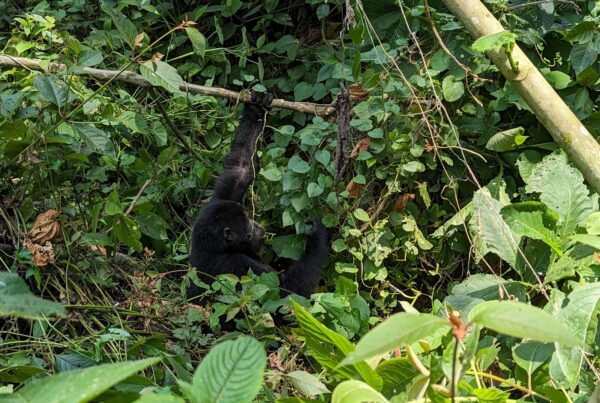
For gorilla trekkers specifically, the theoretical risk exists through bites or scratches from the gorillas themselves, though documented cases of rabies transmission from great apes to humans are vanishingly rare. More practically and significantly, the risk from stray dogs in communities near national park lodges and along rural roads is higher than the theoretical risk from primates. Dogs in these areas may not be vaccinated and can become aggressive, particularly if they feel threatened by unfamiliar visitors.
Pre-Exposure Rabies Vaccination Explained
The pre-exposure rabies vaccine consists of three intramuscular injections administered over a standard schedule of 21 to 28 days. An accelerated schedule completed over seven days is also available for travellers with limited time before departure. The vaccine stimulates the production of protective antibodies that provide a degree of baseline immunity against the rabies virus.
Crucially, pre-exposure vaccination dramatically simplifies post-exposure treatment if an exposure occurs. For travellers who have received the full pre-exposure course, post-exposure treatment requires only two booster doses of vaccine administered on days 0 and 3 after the exposure. Without pre-exposure vaccination, post-exposure treatment requires rabies immunoglobulin infiltrated directly into and around the wound, plus a full five-dose vaccine course administered over 28 days. Rabies immunoglobulin is frequently unavailable in Uganda, particularly outside Kampala.
Who Should Consider Rabies Vaccination?
Rabies vaccination is strongly recommended for travellers who will spend extended periods in remote areas with limited access to medical care, those whose activities involve working closely with animals, families travelling with young children who may not understand how to behave around unfamiliar dogs, and adventure travellers engaging in activities with elevated animal contact risk such as caving with bats or extended camping.
For the typical gorilla trekker on a standard safari of one to two weeks, rabies vaccination is recommended but not absolutely essential. The risk is genuinely low for travellers who take sensible precautions: avoiding contact with stray dogs, not approaching wild animals, and supervising children carefully. However, the peace of mind and simplified emergency treatment that vaccination provides is valuable.
Immediate Response to Animal Exposure
If you are bitten, scratched, or licked on broken skin by any mammal in Uganda, immediate action is critical. Wash the wound thoroughly with soap and running water for at least 15 minutes. This simple step, if done promptly and thoroughly, significantly reduces viral load and infection risk. Apply iodine, alcohol, or another antiseptic if available. Seek medical attention immediately, ideally within 24 hours. Even if the animal appears healthy, rabies cannot be ruled out without laboratory testing, and post-exposure treatment should never be delayed.
Availability of Treatment in Uganda
Post-exposure rabies vaccine is available at major hospitals in Kampala, including International Hospital Kampala and Mulago National Referral Hospital. However, rabies immunoglobulin, which is essential for treating non-vaccinated individuals, is frequently unavailable even in Kampala and virtually impossible to obtain in rural areas or near national parks. This is precisely why pre-exposure vaccination is so valuable for travellers visiting Bwindi, Kidepo, or other remote parks. In remote areas, treatment options may be limited to basic wound cleaning and an urgent evacuation to Kampala.
Cost and Practical Considerations
Pre-exposure rabies vaccination typically costs $150 to $300 for the three-dose course, depending on your location, healthcare provider, and whether your travel insurance covers travel vaccinations. This is a modest investment for the peace of mind it provides, particularly if you are spending extended time in Uganda or visiting multiple remote locations. The vaccine is extremely safe, with minimal and mild side effects in the vast majority of recipients.
Final Thoughts
Rabies vaccination for Uganda is ultimately a personal decision based on your individual risk tolerance, specific itinerary, travel duration, and budget. For most gorilla trekkers on standard itineraries, the risk is low enough that vaccination is genuinely optional. For extended stays, travellers with children, those visiting particularly remote areas, or anyone who simply wants the security of simplified emergency treatment, vaccination is a sensible and prudent precaution. Whatever you decide, the most important protection is awareness and avoidance: stay away from stray dogs, do not handle unfamiliar animals, and seek immediate medical care if any exposure occurs.