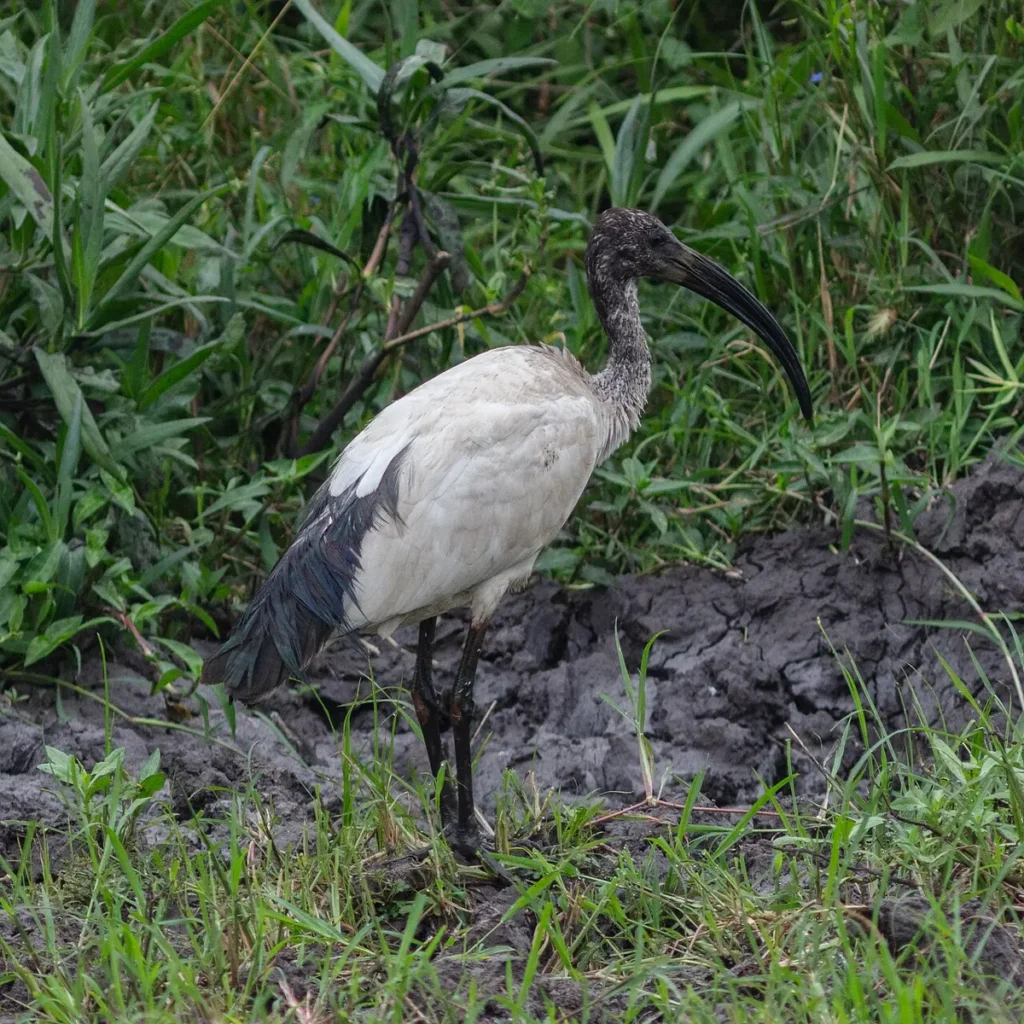
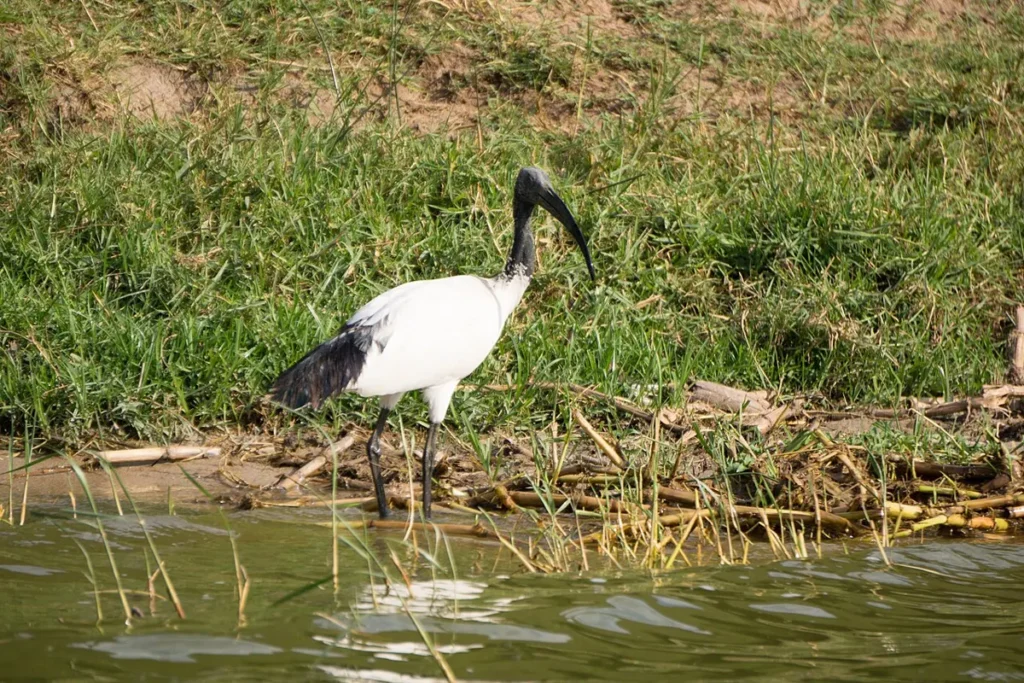
The African sacred ibis is one of Uganda’s most recognisable wetland birds. With its striking white plumage, bare black head, and curved black bill, this large wading bird stands out wherever it appears. You will find it stalking the shallows of lakes, swamps, and river margins across the country, and it is a common sight on safari in 2027.
Uganda’s wetlands provide ideal habitat for this species. Lake Victoria, Lake Mburo, the Kazinga Channel, and the Murchison Falls floodplains all support healthy populations. The African sacred ibis feeds on fish, frogs, insects, and carrion, using its long curved bill to probe mud and shallow water.
Identification and Appearance
Adult sacred ibis are unmistakable. The body plumage is pure white, contrasting sharply with the bare black skin of the head and neck and the black wingtip feathers. The bill is long, heavy, and strongly curved downward. Legs are grey-black. In flight the birds look striking with their white wings and black extremities.
Juveniles have a feathered neck with grey-brown streaking before the bare black skin develops. The species reaches about 65 to 75 centimetres in length with a wingspan of roughly 112 to 124 centimetres. Both sexes look identical in plumage.
Where to See Sacred Ibis in Uganda
The best places to observe African sacred ibis in Uganda include the shores of Lake Victoria near Entebbe, the Kazinga Channel in Queen Elizabeth National Park, and the wetland edges of Lake Mburo National Park. Murchison Falls National Park also has good populations along the Victoria Nile delta and Albert Nile shores.
Sacred ibis are often seen in mixed flocks with other waterbirds such as yellow-billed storks, open-billed storks, and egrets. They roost communally in trees near water, sometimes in large numbers. Early morning visits to lakeshores give the best views as birds move between roost and feeding areas.
Feeding Behaviour and Diet
The African sacred ibis is an opportunistic feeder. It probes soft mud and shallow water with its curved bill, detecting prey by touch. The diet includes fish, frogs, aquatic insects, molluscs, earthworms, and carrion. Around cattle and other large animals it will also catch insects disturbed by their movement.
Foraging birds walk slowly and deliberately, often wading belly-deep. Groups sometimes feed cooperatively, driving fish into shallower water. At Murchison Falls the birds gather where hippopotamus herds disturb the river bottom, creating feeding opportunities. They are equally at home on dry grassland when invertebrates are abundant after rain.
Breeding and Nesting
Sacred ibis breed colonially, often alongside other waterbirds such as herons, egrets, and cormorants. Nests are platform structures of sticks built in trees or reed beds near water. Both parents incubate the two to three eggs for about 28 days. Chicks are fed by regurgitation and fledge after five to six weeks.
Breeding colonies in Uganda are often found on islands in Lake Victoria and along the shores of other major wetlands. The birds are noisy at the colony, producing harsh grunting calls. Outside the breeding season they are relatively quiet. They form loose flocks when moving between wetlands.
Cultural and Historical Significance
Book Your Safari
Ready to experience Uganda’s mountain gorillas in 2026? Secure your gorilla permits early and let us craft a seamless safari tailored to your travel style, preferred trekking sector, and accommodation level. From luxury lodges to well-designed midrange journeys, every detail is handled for you. Every itinerary is carefully planned to maximize your time in the forest while ensuring comfort, safety, and unforgettable encounters.
Contact Us
Have questions about gorilla permits, travel dates, or the best itinerary for you? Speak with a safari expert and get clear, honest guidance to plan your trip with confidence.