TALK TO AN EXPERT +256 716 068 279 WHATSAPP OPEN NOW.
Wildlife Beyond Gorillas

What do gorillas eat? The complete diet of Bwindi’s mountain gorillas

Home / Travel News, Stories & Tips / Tales from the Mist / What do gorillas eat? The complete diet of Bwindi’s mountain gorillas

Mountain gorillas are specialist herbivores, and their diet is one of the most studied aspects of their biology because it directly determines where groups range, how long they spend in specific areas, and what forest resources the protection of viable gorilla habitat must preserve. Understanding what gorillas eat transforms the observation of feeding behaviour during a trek encounter from a passive spectacle into an informed engagement with the ecological relationships that sustain the population. The gorilla’s diet is also a window into the extraordinary nutritional complexity of Bwindi’s forest, where hundreds of plant species contribute different macro- and micronutrients to a menu that gorillas navigate with remarkable sophistication.

The staples: stems, leaves, and pith

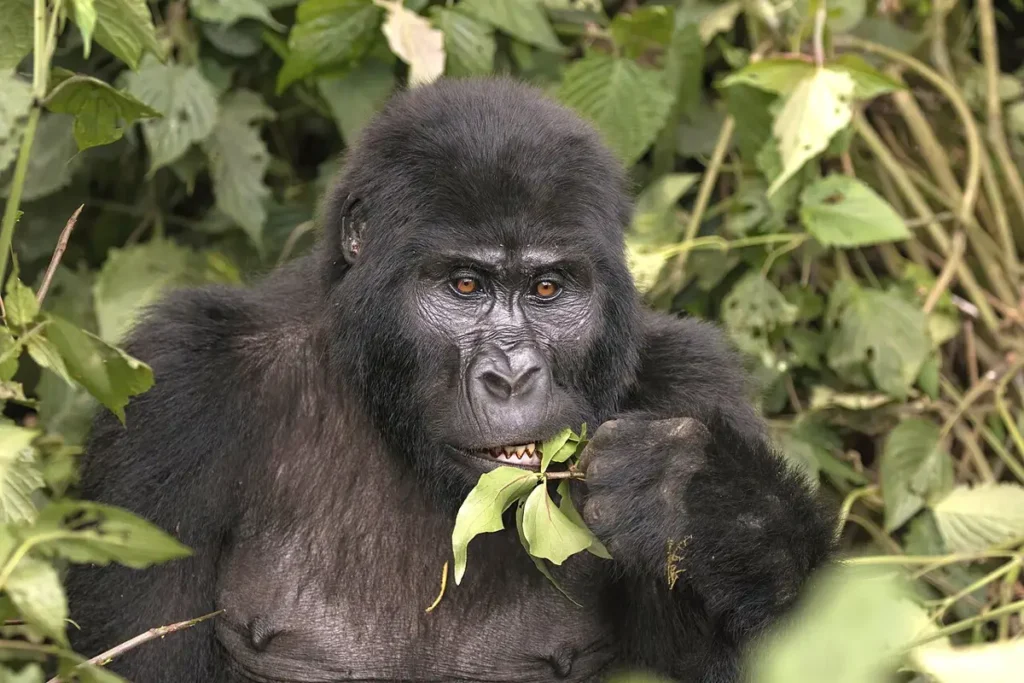
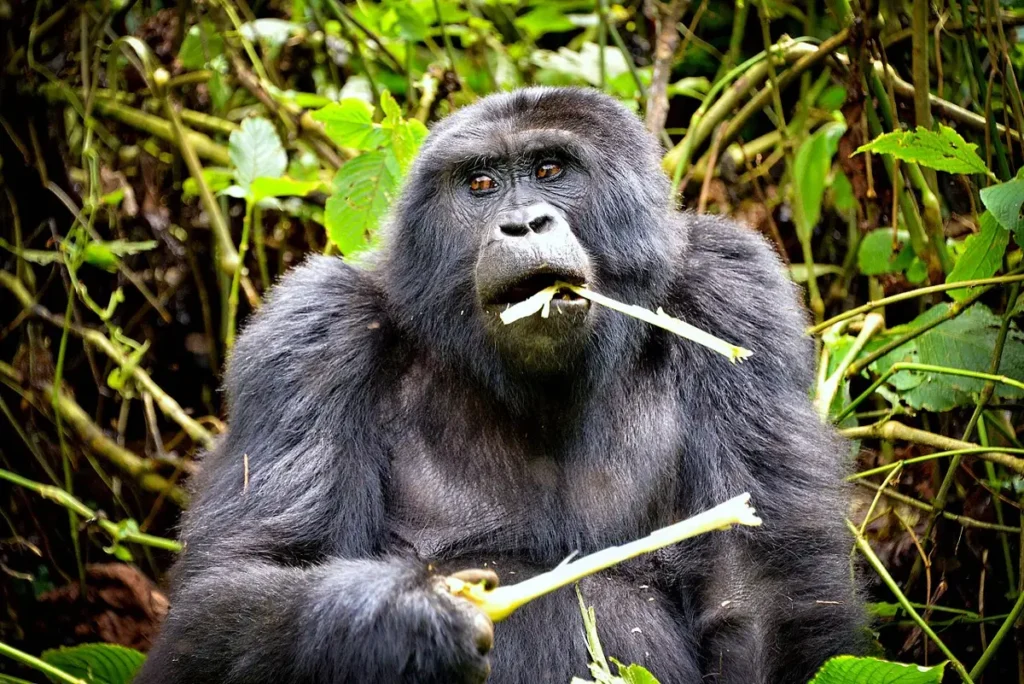
The bulk of a mountain gorilla’s daily diet consists of the stems, leaves, and pith — the soft inner tissue — of herbaceous plants. In Bwindi’s forest, several plant species dominate gorilla diets across most of the year. Galium species — the small climbing plants with sticky seed pods that cling to clothing during a trek — provide one of the most reliable food sources, with gorillas consuming vast quantities of these plants by stripping them through their hands. Urera hypselodendron, a stinging nettle relative that causes significant discomfort to human skin, is consumed with apparent relish by gorillas, whose skin is apparently insensitive to its sting. Various species of wild celery, thistles, and other herbaceous plants complete the core diet.

Gorillas’ preference for plant stems and pith reflects both nutritional need and practical food acquisition strategy. Stems and pith are relatively high in carbohydrates and water, easy to harvest in large quantities, and available throughout the year without the seasonal variation that constrains fruit consumption. A gorilla consuming stems and pith is eating a voluminous, low-density food that requires considerable digestive processing but provides reliable caloric maintenance with minimal foraging effort. Silverbacks, whose daily food intake can reach 35 kilograms of fresh plant material, spend most of their waking hours eating — a reflection of both the volume required and the low energy density of their primary food sources.

Fruit: the preferred food when available

Mountain gorillas consume fruit whenever it is available, and their behaviour changes noticeably during fruit availability peaks. Groups that normally maintain stable core range areas may travel considerably further and faster when a fruiting fig tree or other productive fruit source is located, sometimes moving several kilometres in a day — far more than the typically short daily range of stem-feeding groups. The nutritional value of ripe fruit — high in simple sugars, easily digestible, calorie-dense — makes it the most energetically valuable food that gorillas consume, and competition for access to productive fruit trees can drive social interactions including between-group encounters.

The fig trees (Ficus species) of Bwindi’s forest are particularly important gorilla food plants because they produce large crops of fruit that are accessible to gorillas even when fig fruits are small and hard — gorillas consume unripe figs that other frugivores cannot digest, giving them access to fig crops before other consumers. Ficus trees also tend to produce fruit asynchronously, with different individuals in different parts of the forest fruiting at different times, providing a relatively continuous supply of fig fruits across the year rather than the concentrated seasonal pulses that some other tree species produce.

The proportion of fruit in gorilla diets varies significantly between populations and between seasons. Bwindi’s gorilla population appears to consume more fruit than Virunga mountain gorillas, reflecting the greater availability of fruiting trees in Bwindi’s lower-altitude, more diverse forest compared to the Virungas’ higher-altitude, more bamboo-dominated forest. This dietary difference between the two mountain gorilla populations has interesting implications for understanding how dietary flexibility might help gorilla populations adapt to the forest changes that climate change is driving.

Bark, roots, and unusual food items

Mountain gorillas supplement their herbaceous plant diet with bark, roots, and occasionally insects. Bark consumption appears to serve specific nutritional functions rather than representing a fallback food during scarcity — gorillas have been observed consuming bark of specific tree species repeatedly in ways that suggest active nutritional selection rather than opportunistic foraging. Some bark species consumed by gorillas have documented antimicrobial or antiparasitic properties, suggesting that bark consumption may have a medicinal as well as nutritional function, consistent with observations of medicinal plant use in other great ape populations.

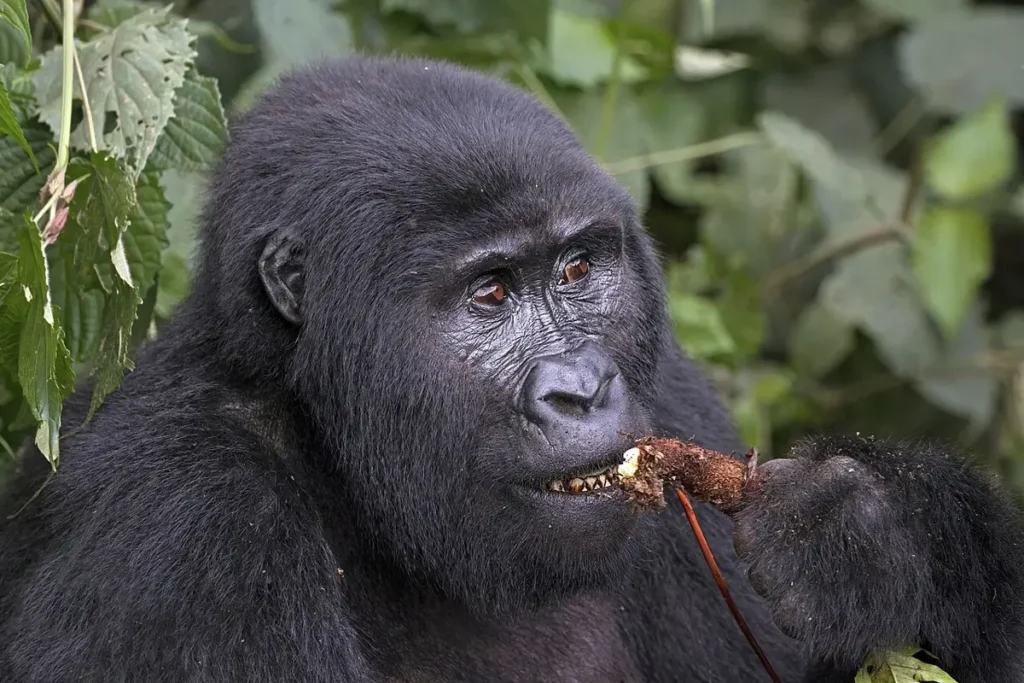
Root consumption is less common than stem or leaf consumption but occurs regularly, with gorillas using their powerful hands to excavate roots and tubers from forest soil. This excavation behaviour disturbs soil and leaf litter in ways that create microhabitats for invertebrates and fungi, making gorillas minor but consistent engineers of the forest floor ecosystem through their foraging activity. The scale of this engineering is small relative to the impact of large herbivores like elephants, but it represents a non-trivial contribution to the forest’s small-scale habitat heterogeneity.

Insects are consumed opportunistically rather than as a significant dietary component. Ants and termites encountered during foraging or travel are eaten when easily accessible, providing a protein supplement to an otherwise plant-dominated diet. The protein content of mountain gorilla diets has been a subject of research interest because gorillas are large-bodied animals that need significant protein for muscle maintenance and growth despite consuming primarily plant material — a need apparently met by the protein content of young leaves and growing plant tissue rather than by animal protein sources.

Bamboo: the seasonal delicacy

Mountain gorillas at the Virunga volcanoes, where bamboo forests cover significant areas of mid-altitude slopes, consume bamboo shoots during the brief flush period when new shoots are emerging from the ground each year. These succulent, nutrient-rich shoots are among the most energetically valuable food sources that the Virunga gorillas have access to, and their availability triggers notable changes in group behaviour including increased ranging to reach bamboo zones and temporary tolerance of proximity between normally antagonistic groups at productive bamboo areas.

Bwindi’s bamboo coverage is more limited than the Virungas’, and bamboo consumption is correspondingly less prominent in Bwindi gorilla diets. When bamboo shoots are available in Bwindi’s small bamboo zones, however, gorilla groups exploit them with similar intensity to Virunga populations, spending extended periods in the bamboo area and showing the increased activity and social interaction that abundant, high-quality food typically produces. Visitors who trek to gorilla groups in or near Bwindi’s bamboo belt during the shoot flush season may observe the distinctive foraging behaviour that bamboo consumption produces, including the rapid and methodical harvest of shoots that contrasts with the slower, more deliberate consumption of herbaceous stems.

Water: drinking and moisture sources

Mountain gorillas rarely drink standing water, obtaining most of their daily moisture requirement from the high water content of the fresh plant material they consume. The stems, leaves, and fruit that constitute most of their diet have water contents typically exceeding 80 percent, providing adequate hydration even in conditions where surface water is limited. This dietary moisture dependency means that gorillas need to consume large volumes of food not only for caloric needs but also for hydration, explaining part of the reason that eating occupies such a large proportion of their daily time budget.

In rain, gorillas sometimes collect water from leaf surfaces using their hands, and have been observed drinking from tree hollows and rock crevices when surface water is accessible. These observations suggest that gorillas are not entirely indifferent to drinking free water when it is available but that their diet provides sufficient moisture under normal conditions that drinking is supplementary rather than essential. This moisture independence from surface water is a significant ecological flexibility in an environment where water availability varies seasonally and spatially.

Dietary variation between individuals and groups

Dietary research on habituated gorilla groups has revealed significant individual variation in food preferences within the same group, as well as group-level dietary traditions that persist across generations in ways that suggest social learning rather than purely individual food choice. Some individuals consistently prefer specific food plants, approach novel food items more readily than others, or show age-related changes in diet that reflect changes in dentition, digestive capacity, or social access to preferred food patches as dominance status evolves.

The dietary traditions of different gorilla groups, even within the same forest area, can differ detectably in the relative proportions of different plant species consumed and in the degree of dietary conservatism or adventurousness shown toward new food sources. These group dietary traditions, transmitted from mothers to offspring and from dominant individuals to group members through observational learning, represent a form of cultural variation in gorillas that parallels the behavioural traditions — tool use, greeting rituals, social displays — documented in chimpanzees and are part of the growing evidence for primate cultural diversity that has reshaped understanding of the cognitive sophistication of our closest relatives.

Ready to experience Uganda’s mountain gorillas in 2026? Secure your gorilla permits early and let us craft a seamless safari tailored to your travel style, preferred trekking sector, and accommodation level. From luxury lodges to well-designed midrange journeys, every detail is handled for you. Every itinerary is carefully planned to maximize your time in the forest while ensuring comfort, safety, and unforgettable encounters.

Have questions about gorilla permits, travel dates, or the best itinerary for you? Speak with a safari expert and get clear, honest guidance to plan your trip with confidence.

When is the last time you had an adventure? African Gorillas!!! Up Close With Uganda’s Wild Gorillas Touched by a Wild Gorilla: An Unforgettable Encounter Inside Gorilla Families: Bonds, Hierarchies & Jungle Life Face to Face With a Silverback: The Wild Encounter You’ll Never Forget