

Updated
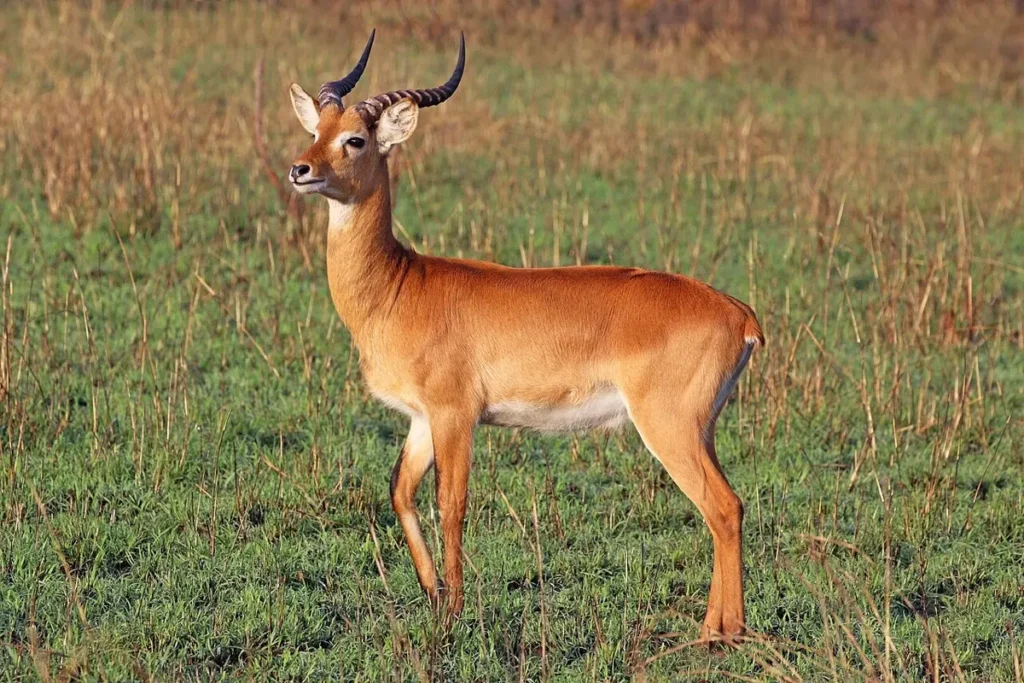
The Uganda kob is a stocky, golden-brown antelope with a white throat patch, black on the front of its legs, and, in males, thick lyre-shaped horns. It appears on Uganda’s coat of arms alongside the crested crane, and it is the most common antelope in many of the country’s savannah parks. You will see it in large numbers in Queen Elizabeth, Murchison Falls and on the plains of Semuliki.
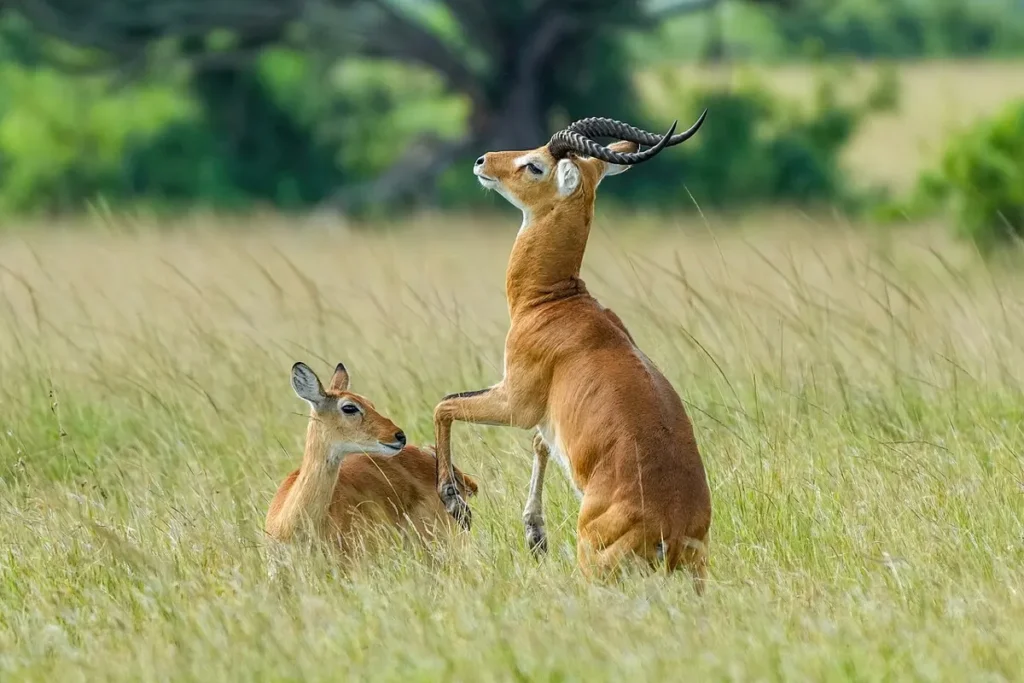
Leks
Uganda kob are known for their leks, small breeding grounds where males hold tiny territories packed close together. Females visit the lek and prefer males at the centre, so competition for those spots is intense, with sparring and displays. Males can only hold a central spot for a short time before they become exhausted and are replaced. The Kasenyi plains in Queen Elizabeth have well-known kob leks.
Habits and predators
Kob graze on short, green grass near water and live in herds of females and young, while males not on leks gather in bachelor groups. They are a main prey of lions in Queen Elizabeth and Murchison, and also taken by leopards and hyenas, so watching a kob herd on alert is often the best way to find a predator.
Where to see it
Morning drives on the Kasenyi plains and in Buligi in Murchison give the biggest herds. The gorilla permit costs US$800, or US$600 in April, May and November. See our guides to the Uganda kob as a national symbol, lions in Uganda, Queen Elizabeth and Uganda’s national symbols.
Frequently asked questions
It represents the country’s wildlife, alongside the crested crane for birds.
A breeding ground where males hold small, crowded territories and females choose mates.
In Queen Elizabeth, Murchison Falls and Semuliki.
No, only males have horns.










