Updated
Uganda’s lakes and rivers hold several hundred fish species, and Lake Victoria alone once had more than 500 kinds of small cichlid fish, most found nowhere else. Many of those cichlids disappeared after Nile perch were introduced in the 1950s, but the lake still supports a huge fishery. The fish you are most likely to meet as a visitor are Nile perch and tilapia on the menu, silver mukene drying on lakeshores, and lungfish in the swamps where shoebills hunt.
Lake Victoria’s cichlids
Lake Victoria’s haplochromine cichlids are a famous example of rapid evolution. The lake largely dried out near the end of the last ice age, and hundreds of species evolved in the roughly 15,000 years since, each specialised for a different food: algae scrapers, snail crushers, insect eaters, fish hunters and even scale eaters. Many are brightly coloured, and females of some species pick mates by colour, which helped species split apart.
The Nile perch story
Nile perch, native to Lake Albert and the Nile below Murchison Falls, were introduced to Lake Victoria and Lake Kyoga in the 1950s and 1960s to create a large food fish. By the 1980s they had boomed, and an estimated 200 or more cichlid species are thought to have been lost, alongside pollution and algal growth. Nile perch can exceed 100 kg and are processed for export at factories around Entebbe and Jinja.
Some cichlids have since recovered as Nile perch were heavily fished, and scientists study how the surviving species have adapted. The fishery is now managed with gear rules and size limits, though illegal fishing of young perch remains a problem.
Tilapia, mukene and lungfish
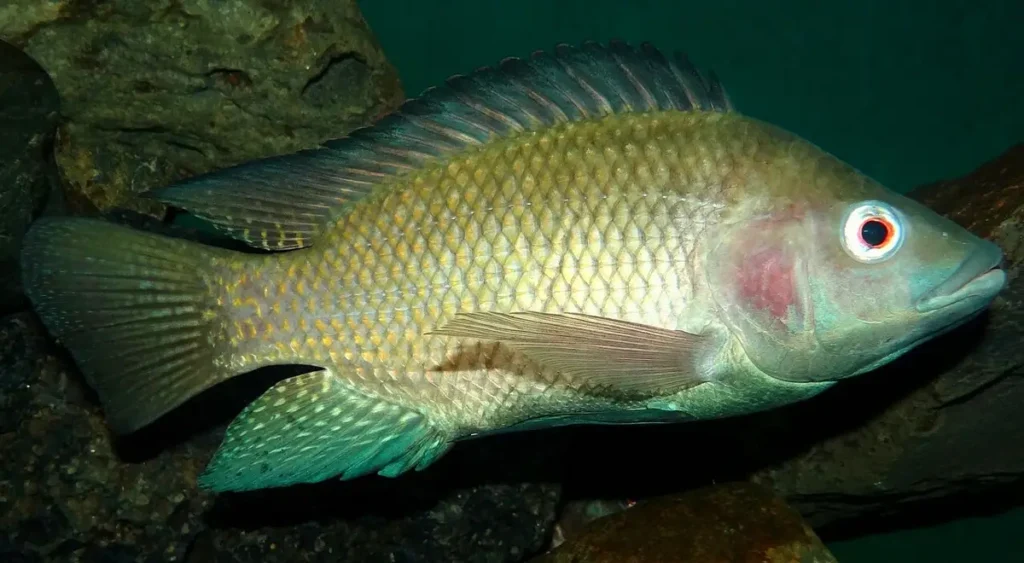
Nile tilapia is the most popular eating fish in Uganda, served fried or stewed at lakeside restaurants. Mukene, a tiny silver fish caught at night with lamps, is now the largest catch by weight and is sun-dried on beaches for food and animal feed. The marbled lungfish lives in swamps and breathes air. Read our guides to Nile tilapia, Nile perch on the menu and the African lungfish.
Other lakes and rivers
Lake Albert has its own fish community, including native Nile perch and the tigerfish. Lakes Edward and George, linked by the Kazinga Channel, have their own cichlids and no Nile perch, and their fishing villages inside Queen Elizabeth National Park live from tilapia and catfish. Many smaller crater lakes in the west hold just a few species.
Fishing in Uganda
Sport fishing for Nile perch and tigerfish below Murchison Falls is the best-known option and needs a Uganda Wildlife Authority fishing permit. Lake Mburo also allows fishing at a set site, and boat trips on Lake Victoria from Entebbe or the Ssese Islands can include fishing. See our Lake Victoria guide. The gorilla permit costs US$800, or US$600 in April, May and November.
Frequently asked questions
Over 500 evolved there, though many were lost after the Nile perch was introduced.
No. It was introduced in the 1950s and 1960s; it is native to Lake Albert and the Nile.
A small silver fish, now Lake Victoria’s largest catch by weight, usually sun-dried.
Yes, notably for Nile perch below Murchison Falls with a park fishing permit.