Every morning before dawn, teams of Uganda Wildlife Authority rangers enter Bwindi Impenetrable National Park with a specific mission: locate each habituated gorilla group and radio their position back to the briefing stations before the trekking parties set out. This daily tracking operation is the operational foundation on which the entire gorilla trekking experience rests. Without it, eight visitors and a guide would spend the day searching blind through steep, dense forest with no certainty of finding the gorillas at all. Understanding how the tracking system works illuminates both the extraordinary logistical complexity of gorilla tourism and the skill of the people who make it function.
Habituation and why it changes everything
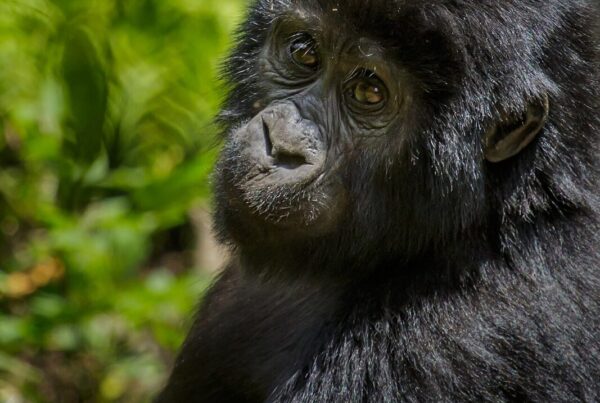
To understand gorilla tracking, you first need to understand habituation. Mountain gorillas in their natural state treat humans as predators — they will flee from or charge at human observers who approach their groups. Habituation is the multi-year process through which a wild gorilla group is gradually accustomed to the presence of humans, until they are sufficiently desensitised to human proximity that they behave normally even when researchers or visitors are nearby.
Habituation requires teams of researchers and rangers to follow a target group daily for two to four years, maintaining a respectful, non-threatening presence at gradually decreasing distances. The gorillas come to recognise individual trackers by sight and smell, and over time they cease to register them as threats. This process is painstaking, expensive, and occasionally dangerous — silverbacks testing boundaries is an occupational reality for habituation teams. But once complete, it creates the conditions for both scientific research and the carefully managed tourism that now generates millions of dollars annually for Uganda’s conservation economy.
Bwindi Impenetrable National Park currently has over twenty habituated gorilla groups. Each group is assigned a dedicated team of rangers and trackers who are responsible for that group’s daily monitoring, protection, and the logistics of tourism visits. This assignment is intentional — familiar faces reduce stress responses in the gorillas and build the specific knowledge of individual animals’ personalities, behaviours, and ranges that makes effective tracking possible.
The evening nest: where tracking begins
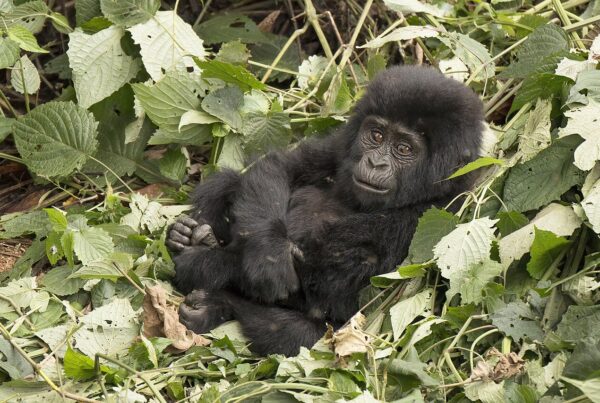
Gorillas do not sleep on the ground. Each evening, every individual in the group constructs a nest from bent branches and folded vegetation in which to sleep for the night. Infants sleep with their mothers, while adults and subadults make their own nests nearby. The entire group typically nests in the same general area — a loose cluster of nests within fifty to a hundred metres of one another, usually in a location the silverback has selected for visibility, protection from wind, or proximity to food sources.
These night nests are the starting point for each morning’s tracking. The afternoon tracking team from the previous day notes the location of the evening nesting site before leaving the gorillas for the night. Rangers record GPS coordinates, describe the vegetation type, and note the direction in which the group had been moving in the late afternoon — all information that helps predict where the group will be when morning tracking begins.
The morning tracking team sets out before dawn, often between 5:00 and 6:00 a.m., heading directly for the previous evening’s nesting location. They typically arrive at the nest site around the same time the gorillas are waking and beginning to move. At this early hour, the gorillas’ activity is slow — they stretch, groom one another, nurse infants, and begin the morning feeding period with whatever vegetation surrounds the nest site. The trackers can close the distance to the nest site quietly and efficiently because they know exactly where to go.
Reading signs: what trackers follow
Once at or near the nest site, the tracking team follows the gorillas by reading the signs they leave as they move and feed. Mountain gorillas are large animals — an adult silverback weighs 180 to 220 kilograms — and they move through dense vegetation with a physical impact that creates a readable trail for trained trackers.
Feeding remains are the most abundant sign. Mountain gorillas spend six to eight hours a day feeding, consuming enormous quantities of leaves, stems, shoots, bark, wild celery, thistles, and occasionally fruit. As they feed, they tear apart plants, drop chewed fibres, strip bark from trunks, and leave a distinctive debris field of partially consumed vegetation. Experienced trackers can determine from feeding remains not only which direction the group moved but approximately when they were in that location based on how wilted the plant material is — a skill that requires years of close observation to develop.
Dung is another critical tracking sign. Gorilla dung is large, distinctive, and full of plant fibre that provides information about what the group has been eating. Fresh dung is still warm; day-old dung is cool but moist; older dung is dry and begins to break apart. Trackers assess dung freshness as a key indicator of how close they are to the gorillas. The quantity of dung in a location also indicates how long the group rested there — a resting site used for several hours may contain multiple dung deposits from multiple animals.
Tracks — actual footprints — are visible in soft soil after rain or near water sources where the ground retains impressions. A silverback’s handprint is unmistakable: roughly the size of a human hand but with much wider, shorter fingers and a distinctive knuckle-walking impression that no other animal in Bwindi replicates. Juvenile gorillas leave smaller prints but with the same characteristic knuckle shape. Trackers examine not just the presence of tracks but their depth, edge sharpness, and any moisture content in the impression to assess recency.
Smell is also a tracking tool that experienced rangers describe without self-consciousness. Gorillas have a distinctive musky odour — a complex scent that intensifies when a silverback is stressed or displaying — that carries in the still morning air of the forest. A tracker who cannot yet see or hear the gorillas may smell them before any visual or acoustic sign is available, particularly in the quiet of early morning before wind has begun to move through the forest.
Acoustic tracking
Gorillas are vocal animals. They communicate through a repertoire of calls, grunts, screams, belch vocalisations, and the famous chest-beating display of the silverback. The morning hours in particular produce regular vocal communication as the group coordinates movement and individuals maintain contact over distances. Experienced trackers use these sounds to refine their sense of the group’s location as they approach.
The double-bark alarm call — a sharp, deep exhalation repeated twice — indicates that the gorillas have noticed something unexpected. Trackers who hear this call know immediately that the gorillas are aware of their approach and will adjust their pace and direction accordingly, often pausing to allow the gorillas to settle before closing the distance further. Rushing toward alarmed gorillas is counterproductive — it can trigger the group to move rapidly away, extending the morning tracking time and potentially bringing the silverback into a confrontation mode that makes the visitor visit more difficult.
Once the trackers have located the group and confirmed their current position, they radio the information to the briefing station. This transmission — typically happening around 7:00 to 8:00 a.m. — provides the guide and visiting trekking party with a starting direction, an estimated distance, and a rough terrain assessment. This information directly informs the pre-trek briefing that visitors receive before setting out.
The lead tracker’s role during the visit
When the trekking party arrives at the gorilla group’s location, two or three trackers typically remain with the group throughout the one-hour visitor period. They serve multiple functions simultaneously: monitoring the silverback’s mood and body language, watching for signs that any individual gorilla is becoming stressed by the visitor presence, maintaining the spatial boundary between visitors and animals, and gently redirecting visitors who inadvertently move too close or behave in ways that could provoke a reaction.
The lead tracker also manages the group’s position relative to the gorillas — gently steering visitors around the group so that everyone gets clear sightlines while also ensuring no individual visitor ends up positioned in a way that blocks a gorilla’s natural movement path. This is a real-time spatial coordination challenge in dense vegetation where ten to fifteen people (eight visitors, a guide, two or three trackers) need to be positioned for both visibility and safety.
Trackers carry machetes for vegetation clearance and, in some cases, are equipped to respond to a silverback charge — an event that is rare but does occur. A silverback charge is typically a bluff display, a warning rather than an actual attack, and the correct response is to crouch, avoid direct eye contact, and remain still. Trackers who are immediately present when a charge happens can use their knowledge of that specific silverback’s personality to de-escalate, sometimes by making submissive gorilla vocalisations that experienced trackers learn to produce convincingly.
Afternoon monitoring and health checks
After the visitor hour ends, the tracking team does not immediately leave the gorillas. Afternoon monitoring continues until the group’s evening nesting begins. This afternoon period is when rangers conduct health checks — observing each individual for signs of illness, injury, or abnormal behaviour. Cuts, limps, respiratory symptoms, and abnormal dung consistency are all recorded in daily monitoring logs that feed into the mountain gorilla health database maintained by Uganda Wildlife Authority and the Gorilla Doctors programme.
Gorilla Doctors — a veterinary programme operated by the Mountain Gorilla Veterinary Project — respond to health observations from ranger teams when intervention is deemed necessary. In practice, most injuries and illnesses are monitored conservatively without direct intervention, since the stress of veterinary capture can itself cause harm. But for snare injuries, where a poacher’s wire trap has caught an animal’s limb, intervention is frequently necessary and the ranger team’s early detection through afternoon monitoring is what makes rescue possible.
The human skills behind gorilla trekking
The tracking skill that makes gorilla trekking possible is not produced overnight. Uganda Wildlife Authority ranger-trackers typically complete formal training programs at the UWA Law Enforcement Academy before beginning field training specific to gorilla work. Field competence develops over years of daily immersion in the forest with experienced colleagues. The trackers who work with Bwindi’s habituated groups often develop deep individual knowledge of every animal in their assigned group — they know each gorilla’s personality, feeding preferences, social relationships, and typical movement patterns over the course of a year.
When visitors tip their trackers and guides at the end of a successful trek, they are acknowledging expertise that has been built over years and that forms the invisible foundation of the entire experience. The mountain gorillas are the draw, but the trackers and rangers are the reason each visit works. Their daily labour — pre-dawn starts, full-day forest immersion in all weather, careful observation and documentation — is what keeps the habituated groups accessible, healthy, and safe for both the gorillas and the visitors who travel from around the world to spend a single extraordinary hour with them.