TALK TO AN EXPERT +256 716 068 279 WHATSAPP OPEN NOW.
Wildlife Beyond Gorillas

The silverback’s role: leadership, protection, and the burden of alpha status

Home / Travel News, Stories & Tips / Wildlife Beyond Gorillas / The silverback’s role: leadership, protection, and the burden of alpha status

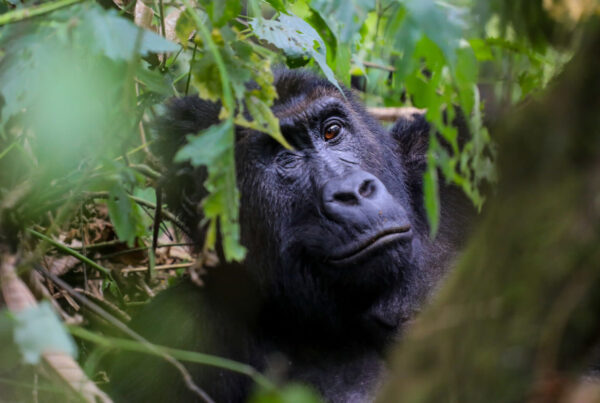
In every habituated gorilla family you will visit in Bwindi or Mgahinga, there is one animal whose presence organises everything else: the silverback. He is the largest individual in the group, the one whose position in the clearing defines where the others sit, whose vocalisation determines when the group moves, whose intervention resolves conflicts, whose threat display sets the boundary between tolerance and alarm. For visitors seeing a silverback up close for the first time, the impression is immediate and total: this is an animal born to lead, and the weight of that role is written in his posture, his stillness, and the constant attentive monitoring of everything around him.

How a silverback earns his status

Male gorillas are not born silverbacks; they earn the status through a developmental process that takes approximately 12 to 15 years. Infant males go through the same development as females for the first few years of life, distinguishable from females primarily by their slightly larger build. At approximately 8 years, young males begin to diverge from females in size and behaviour, becoming what researchers call blackbacks — adolescent males whose backs have not yet developed the silver colouration that marks full maturity.

The silver saddle that gives silverbacks their name is a patch of grey-white hair that develops on the back of mature males at around 12–15 years of age, triggered by hormonal changes associated with full sexual maturity. It is not simply a cosmetic feature: it is a visual signal of status that other gorillas and visiting researchers can read from a distance. When a silverback moves through the forest, the silver of his back is visible through vegetation, marking his position to the group and to any neighbouring group members or observers.

The path to silverback status in a group with an established dominant male is typically one of two routes: remaining as a subordinate in the natal group, accepting the dominant male’s authority while building body mass and social experience over years, then eventually succeeding him when he ages or dies; or dispersing from the natal group and establishing a new group, either by attracting unattached females or by taking females from an existing group through competition. Both paths are slow, uncertain, and physiologically costly.

What a silverback actually does

The silverback’s responsibilities are extensive and unceasing. He is responsible for navigating the group’s daily movement — deciding where to forage, when to rest, when to move on, how to respond to threats from other gorilla groups, predators, or humans. These decisions are not made from a position of comfort: the silverback typically moves at the front or periphery of the group, first to encounter any hazards and first to respond.

Predator defence is among the most physically demanding of the silverback’s roles. While adult gorillas have no significant natural predators at Bwindi’s elevations, the threat from leopards — particularly for juveniles — is real in lower-elevation forest zones. When a threat is detected, the silverback interposes himself between the threat and the group, producing the dramatic threat display — standing bipedally, tearing vegetation, producing a series of vocalisation types culminating in the chest beat — that is designed to intimidate rivals or predators through demonstration of size, strength, and confidence rather than actual physical combat.

The silverback also manages social tensions within the group. Disputes between adult females, conflicts over food, aggression by older males toward juveniles — all of these are mediated by the silverback’s authority. His intervention takes the form of a pig grunt or short charge in the direction of the offending individual, usually sufficient to restore order. Gorilla groups with effective silverbacks are notably calmer and more stable than those with weak or absent leaders — a relationship documented in multiple long-term gorilla studies.

The silverback’s relationship with females

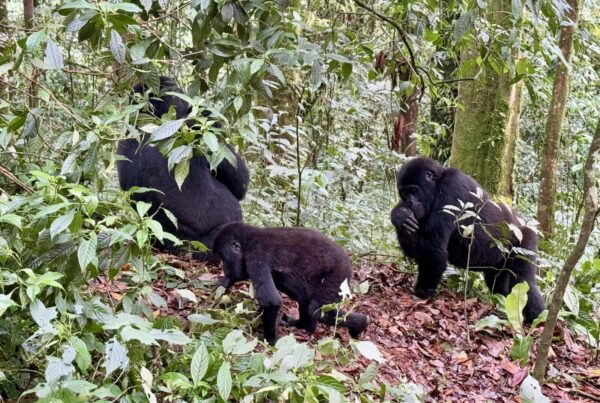
The silverback is not simply the dominant male; he is the central social relationship for adult females in the group. Females in multi-male gorilla groups typically prefer proximity to the dominant silverback, seek his protection during infant-carrying periods, and support his authority in group conflicts. This preference for the dominant male is not simply about reproductive access — females also benefit from the silverback’s protection of their offspring and his mediation of social conflicts that could otherwise destabilise the group.

The relationship between a silverback and the females in his group develops over years and has qualitative depth. Silverbacks engage in extended grooming sessions with favoured females, play with young offspring, and in documented cases intervene to protect specific females from harassment by subordinate males in ways that go beyond generic group management. Whether these preferential relationships constitute something recognisable as affection is debated, but behavioural evidence suggests that at minimum, specific bonds influence the silverback’s behaviour in ways that mere dominance hierarchy does not fully explain.

The cost of alpha status

Leading a gorilla group is physiologically expensive. Dominant silverbacks have higher average cortisol levels than subordinate males and females in the same group — a consequence of the constant vigilance, conflict mediation, and threat response that leadership requires. Higher cortisol is associated with accelerated cellular ageing, suppressed immune function, and reduced reproductive success in primates, including humans. The silverback’s extraordinary physical power is paired with a physiological stress load that may shorten his productive years relative to what equivalent caloric intake and body condition would produce in a lower-stress role.

The social disruption that follows a dominant silverback’s death or incapacitation illustrates how central his role is to group stability. When the dominant male dies, the group may fragment — females dispersing to other groups, juveniles becoming vulnerable to infanticide from unrelated males seeking to mate with newly available females. Groups that maintain a stable succession — a son or trusted subordinate male who can assume leadership without the group fragmenting — fare better than those where leadership is contested or where no successor is available.

Meeting a silverback

Visitors on gorilla treks will inevitably fix their attention on the silverback. This is natural — he is the largest and most visually commanding presence in the group, and his attention to the human visitors is often the most direct and sustained awareness the group displays. Maintaining eye contact with a silverback for more than a moment is not recommended; in gorilla social communication, a sustained stare is a challenge, and while habituated silverbacks typically respond to this with mild displays rather than aggression, the instinct to hold a silverback’s gaze should be gently suppressed.

What the silverback communicates in those moments of awareness — the calm, evaluating gaze, the slight shift of posture as he assesses the human group — is one of the most powerful aspects of the gorilla encounter. He is not simply an animal being observed; he is a leader conducting his own assessment of whether the visitors pose any threat to the family in his care. Sitting quietly, making oneself small, following the ranger’s instructions precisely — these behaviours communicate, in the gorilla’s own social vocabulary, that the visitors are not a threat. The silverback returns to his business. The encounter continues. And that assessment, conducted between two species of great ape across seven metres of mountain forest, is one of the things that makes gorilla trekking unlike any other experience in the world.

Ready to experience Uganda’s mountain gorillas in 2026? Secure your gorilla permits early and let us craft a seamless safari tailored to your travel style, preferred trekking sector, and accommodation level. From luxury lodges to well-designed midrange journeys, every detail is handled for you. Every itinerary is carefully planned to maximize your time in the forest while ensuring comfort, safety, and unforgettable encounters.

Have questions about gorilla permits, travel dates, or the best itinerary for you? Speak with a safari expert and get clear, honest guidance to plan your trip with confidence.

When is the last time you had an adventure? African Gorillas!!! Up Close With Uganda’s Wild Gorillas Touched by a Wild Gorilla: An Unforgettable Encounter Inside Gorilla Families: Bonds, Hierarchies & Jungle Life Face to Face With a Silverback: The Wild Encounter You’ll Never Forget