Updated
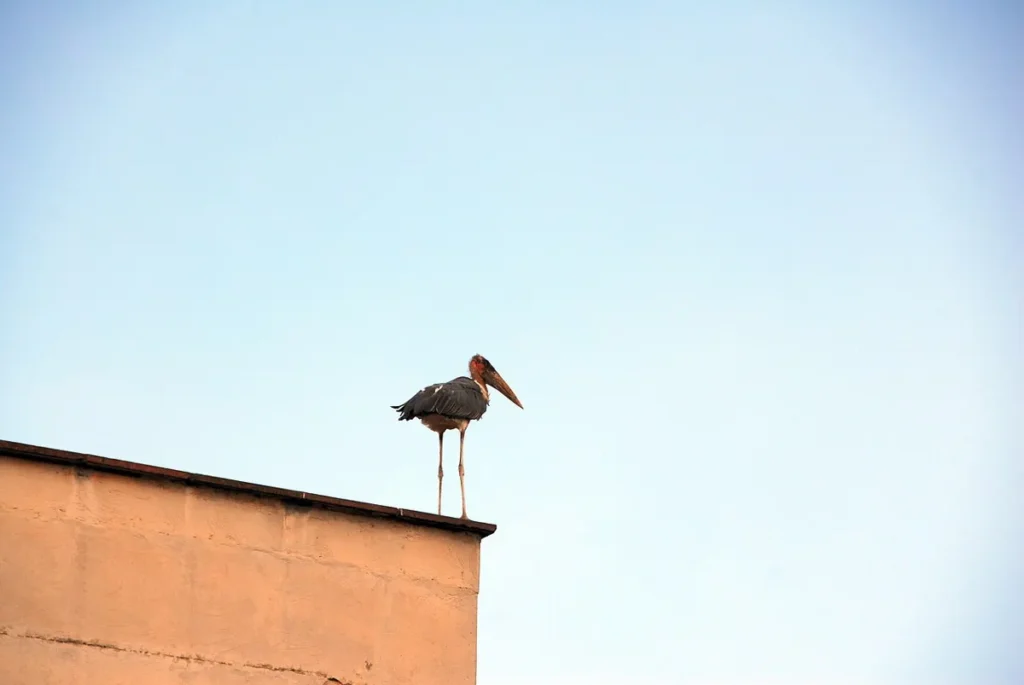
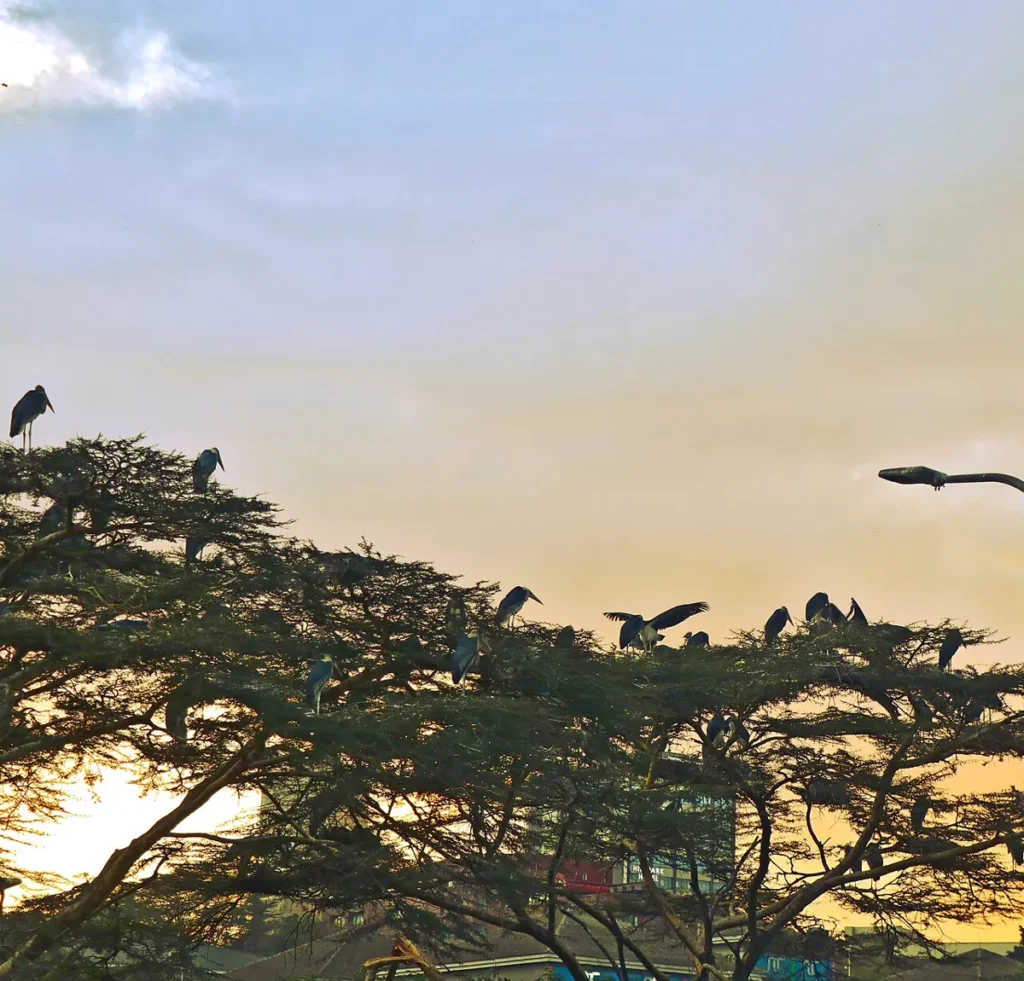
The marabou stork is one of Africa’s largest flying birds, standing up to about 1.5 metres with a wingspan that can approach 3 metres. Its bald pink head, huge bill, hunched posture and a bare, dangling throat pouch give it its “undertaker bird” nickname. In Uganda it is famous as a city bird: hundreds nest in tall trees in Kampala and scavenge around markets and rubbish dumps, while others live in the national parks.
Habits
Marabous are scavengers and opportunistic hunters, feeding on carrion, waste, fish, frogs, rodents and even other birds. Their bald heads stay cleaner when feeding on carcasses. In the wild they gather at kills with vultures, and in towns they have adapted to urban waste. They nest in colonies in tall trees, and the inflatable throat pouch is used in display. Their droppings and scavenging make them unpopular with some city residents.
Where to see it
You will likely see marabous on your first day in Kampala, perched on rooftops and trees in the city centre, and around fish landing sites on Lake Victoria. In the parks, look near carcasses and around fishing villages in Queen Elizabeth. The gorilla permit costs US$800, or US$600 in April, May and November. See our guides to the sacred ibis, the saddle-billed stork, the shoebill and Uganda birding.
Frequently asked questions
They feed on waste and nest in the city’s tall trees.
Up to about 1.5 m tall, with a wingspan near 3 m.
For its dark cloak-like wings and hunched posture.
Carrion, waste, fish, frogs and small animals.