

Updated
Uganda grows black tea on the cool, wet hills of the west and south-west, mainly around Fort Portal and Kyenjojo, in Bushenyi near Queen Elizabeth National Park, and at Kayonza right next to Bwindi. Most is processed as CTC tea and sold at the Mombasa auction for blending abroad, but at home tea is the everyday drink, usually boiled with milk and plenty of sugar. For gorilla trekkers, tea estates are part of the scenery on the drive west, and some can be visited.
A short history
Tea was introduced to Uganda in the early 20th century and grown commercially on large estates from the 1920s, especially in the Tooro area around Fort Portal, where the altitude and rain suit the crop. The industry grew until the 1970s, then collapsed under Idi Amin, when many estates were abandoned after the expulsion of Uganda’s Asian community in 1972. It recovered from the late 1980s through rehabilitated estates and, increasingly, smallholder farmers who sell green leaf to cooperative factories. Uganda is now one of Africa’s main tea producers, though well behind Kenya.
Where tea grows
Tooro and Kyenjojo: the largest estates, with tea running for kilometres along the roads around Fort Portal and towards Kibale Forest. The crater lakes area and the road to Kibale’s chimps pass through this landscape. See our guide to chimpanzee tracking in Kibale.
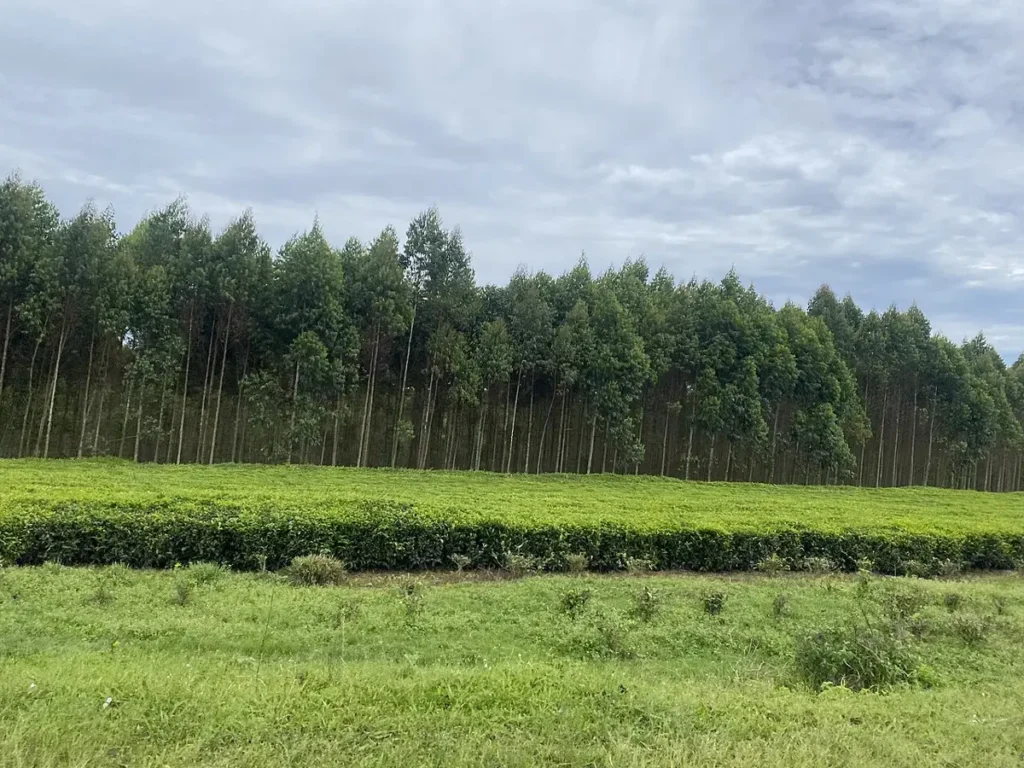
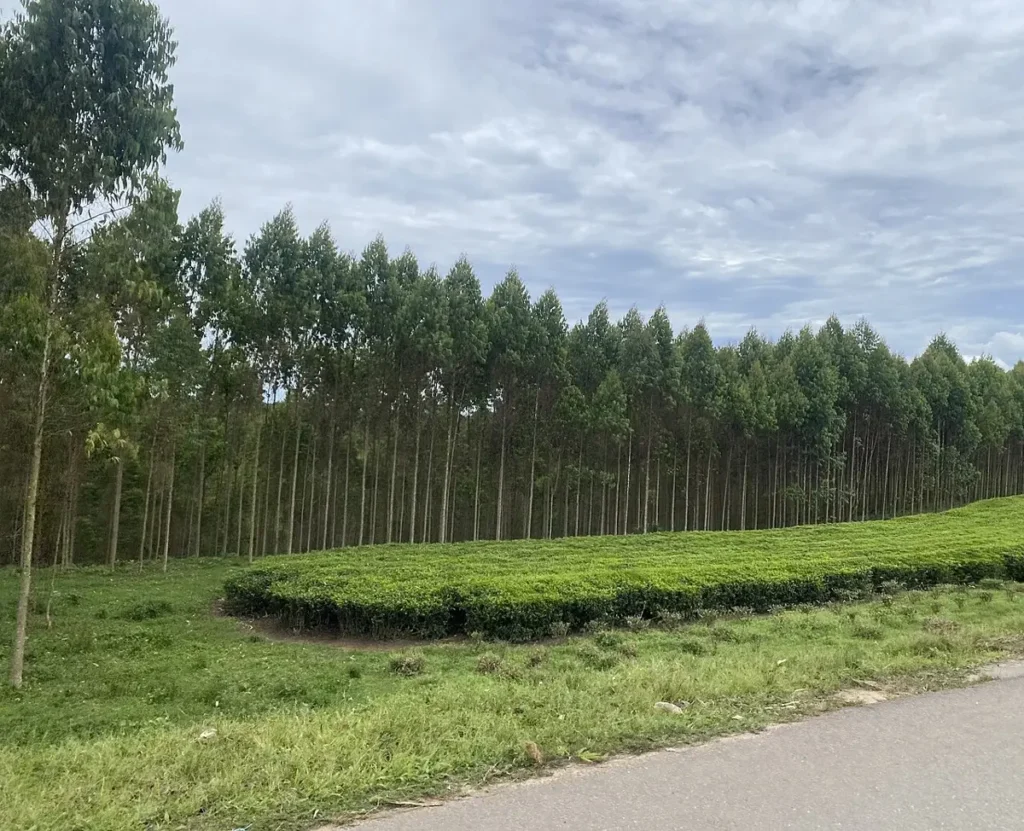
Bushenyi and Igara: smallholder tea around Bushenyi and Kyamuhunga, on the escarpment above Queen Elizabeth National Park, processed by growers’ cooperative factories. Kayonza, near Bwindi: tea gardens come right up to the edge of the forest in Kanungu district, close to Buhoma, and the Kayonza growers’ factory buys leaf from local farmers. The bright green tea against the dark forest edge is one of the classic sights on the way to the gorillas. Smaller areas of tea are also grown in central Uganda.
Tea and the forest edge
Around Bwindi, tea has also been used as a buffer crop. Gorillas and other animals do not eat it, so planting tea along the park boundary reduces crop raiding while giving farmers an income. This kind of project is part of how communities around the park are encouraged to live with the forest rather than clear it. See our guide to communities near Bwindi.
How Ugandans drink tea
The standard cup is chai: tea leaves boiled together with milk and water and sweetened generously. Some households add ginger, lemongrass or a spice mix called tea masala. It is drunk at breakfast with chapati, mandazi or bread, mid-morning, and in the afternoon, and offering tea is a basic gesture of welcome. Black tea, called “black” or “dry tea”, is common where milk is scarce. Lodges serve both, and a hot cup after a gorilla trek is very welcome.
Visiting a tea estate
Some estates and factories around Fort Portal and near Bwindi accept visitors by arrangement, usually through a lodge or tour operator. A visit typically includes walking through the bushes, trying to pick “two leaves and a bud”, and seeing withering, CTC processing, fermenting and drying in the factory. Factories run when there is leaf to process, so check timing. Tea plantations are also great for photos in early morning light. See our guides to Ugandan coffee and a 12-day safari through tea country.
Frequently asked questions
Mainly around Fort Portal and Kyenjojo, in Bushenyi, and at Kayonza near Bwindi.
Usually as chai: boiled with milk and sugar, sometimes with ginger or spices.
Yes, some estates and factories near Fort Portal and Bwindi take visitors by arrangement.
Yes, most is sold through the Mombasa auction and blended into tea brands abroad.










