This is not a story I tell as a recommendation. Most people who go gorilla trekking in Uganda do not leave their jobs and move to East Africa. Most people should not. But some people, in some circumstances, at some point in their careers, look at what they have built and decide that the distance between what they are doing and what they want to do has become too large to bridge by adjustment alone. This is a story about one of those people, which is me, and what gorilla trekking in Uganda had to do with it.
The Career That Was Not Wrong But Was Not Right
I was a management consultant for twelve years. The work was intellectually engaging and financially rewarding and I was good at it. What it lacked, from approximately year eight onwards, was any connection to outcomes I actually cared about. I was helping organisations become more efficient. Efficiency is valuable. I did not, at 34, feel that helping organisations become more efficient was sufficient reason to spend most of my waking hours doing it.
I knew this for several years before I did anything about it. The combination of financial security and professional identity that a good corporate career provides is genuinely difficult to step away from, not because you are a coward but because the costs of leaving are real and immediate and the benefits of leaving are uncertain and deferred.
The First Trip to Uganda
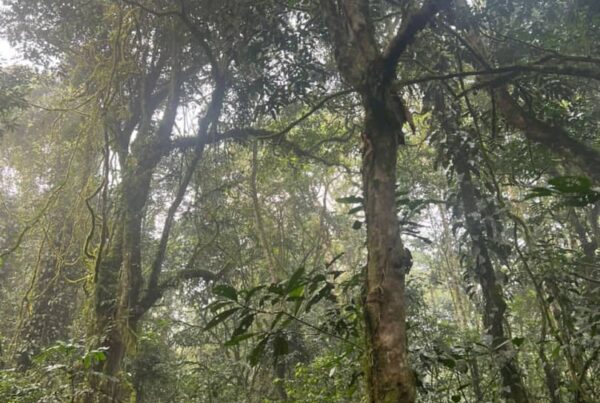
I went on what I described to colleagues as a holiday. Gorilla trekking in Uganda, Bwindi Impenetrable National Park, $800 permit, one week. I had developed an interest in conservation biology in the margins of my corporate life — reading, attending lectures, donating to organisations — but had never been to a place where the issues I read about were the daily operational reality.
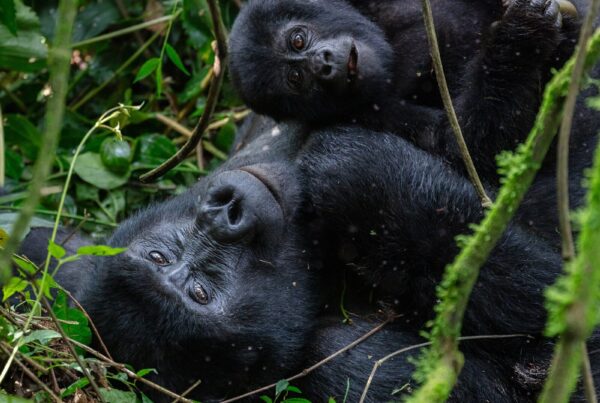
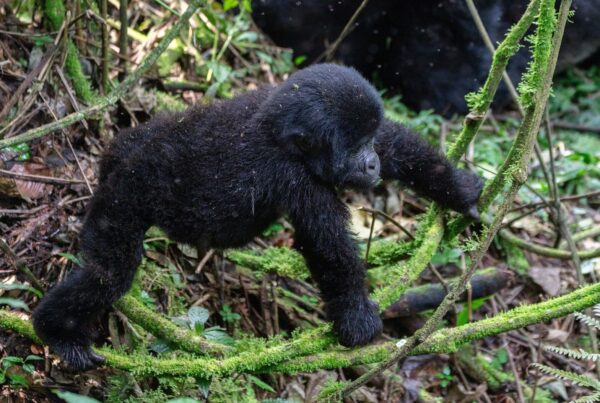
The week changed me in the specific way that encounters with something you have only known theoretically change you when they become concrete. I met rangers whose job was to keep gorillas alive. I met researchers whose careers were built around understanding gorilla population dynamics. I met lodge staff whose livelihoods depended on the continued health of the gorilla population. I met the gorillas themselves. Everything I had been reading about in the margins of my professional life was alive and present and happening in front of me.
The Decision
I did not decide anything during the trip. I returned to my job and spent six months in a state of productive dissatisfaction, which is the state that actually produces decisions rather than the state that merely contemplates them. I researched what was available at the intersection of conservation and the management skills I actually had. I found that conservation organisations, including those working in Uganda, had a genuine need for the kinds of operational, strategic, and financial management capacity that I had spent twelve years developing. This was not obvious to me before I looked, but it became clear quite quickly.
I took a significant pay cut. I took a job with a conservation organisation working on protected area management in East Africa. I moved to Kampala eighteen months after my first gorilla trek. I have been here for three years.
What I Actually Do
I work on the operational and financial aspects of protected area management — the planning, budgeting, and organisational systems that enable the conservation work to happen. It is not glamorous work. Most of it looks very similar to the work I did in consulting, just applied to different problems for different purposes. The difference is that the outcomes are connected to things I care about in a way that the outcomes of my consulting work were not. When the systems work, the parks are better managed. When the parks are better managed, the gorillas are more secure. The chain of consequence is visible from where I sit in a way that twelve years of corporate work never was.
What I Would Tell Someone Considering a Similar Change
Do the trip first. Not as a research exercise but as a genuine experience. The gorilla trek costs $800. The permit takes you into the presence of something that makes the question of what your working life is for suddenly very difficult to avoid. What you do with that question afterwards is your own decision. Most people go back to their existing careers and find them slightly more tolerable, or slightly more intolerable, with the clarity the experience provides. A small number make changes. A smaller number make large changes. I am in the small number. I do not regret it.
The gorillas in Bwindi are there in 2027 because specific people decided their work should be oriented toward keeping them there. That is an option that is available to more people than typically act on it.
Frequently Asked Questions
The global mountain gorilla population is approximately 1,100 individuals — one of the smallest populations of any great ape. They exist in two separate populations: one in the Virunga Massif spanning Uganda, Rwanda, and DRC; and one in Bwindi Impenetrable Forest (Uganda only). The population has grown from approximately 620 in the 1980s, largely due to tourism-funded conservation.
Uganda Wildlife Authority directs 20% of every gorilla permit fee to communities adjacent to Bwindi and Mgahinga. These funds pay for school construction, healthcare programmes, borehole maintenance, and community microfinance. Permit revenue also funds ranger salaries, anti-poaching patrols, and the research teams that monitor gorilla health daily.
The Batwa (also called Twa) are an indigenous forest people who lived inside Bwindi for thousands of years until it was gazetted as a national park in 1991. Conservation displaced them from their ancestral forest. Gorilla tourism revenue now funds Batwa cultural programmes and livelihoods. The Batwa Cultural Trail at Buhoma sector is run by the Batwa community and is one of the most authentic cultural experiences near Bwindi.
Mountain gorillas are classified as Endangered on the IUCN Red List — one step down from Critically Endangered, which they held until 2018. Their population has grown consistently since the 1980s, making them one of the few great ape populations increasing in number. This recovery is directly attributed to the conservation funding generated by gorilla tourism.
Uganda is home to the mountain gorilla (Gorilla beringei beringei), one of two subspecies of eastern gorilla. They live exclusively in the Virunga volcanic highlands (Uganda/Rwanda/DRC) and Bwindi Impenetrable Forest (Uganda only). Mountain gorillas are the only gorilla subspecies that cannot survive in captivity — every individual you can trek is a wild animal.