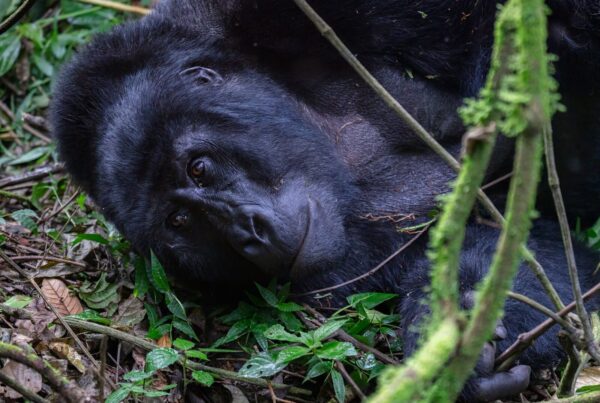
The case for wildlife tourism in Africa has always rested on economics: when wild spaces generate income, they are protected; when they do not, they are converted to agriculture, logged, or degraded. This argument has been made for decades, and the evidence for it is strong. But 2027 brings a particular urgency to the case for gorilla tourism specifically, because the pressures that gorilla conservation faces have intensified while the conservation infrastructure that addresses those pressures has become more dependent on tourism revenue than ever before.
The Gorilla Population in 2027
The mountain gorilla is one of the few critically endangered species whose wild population is growing. From a nadir of approximately 620 individuals in 1989, the total population has recovered to over 1,100 across the Bwindi-Sarambwe ecosystem and the Virunga Massif. This recovery is one of the most significant conservation achievements of the last forty years, and it is not an accident. It is the product of sustained investment in ranger patrols, habitat protection, health monitoring, and community support — investment that is funded primarily by gorilla trekking permit revenue.
In Uganda, the gorilla trekking permit costs $800 USD for international visitors in 2027. This is the Foreign Non-Resident rate set by the Uganda Wildlife Authority. It is the primary single income source for the conservation infrastructure around Bwindi Impenetrable National Park — ranger salaries, patrol vehicles, veterinary monitoring, and the community revenue-sharing programmes that give the 30,000-plus residents of the buffer zone parishes a financial stake in the park’s continued existence.
The Pressures Have Not Eased
The mountain gorilla’s population growth is real, but it should not be misread as evidence that the pressures on gorilla habitat have diminished. Uganda’s human population continues to grow at one of the fastest rates in the world. The land pressure on Bwindi’s borders is constant and intense. Every metre of forest on the park boundary is a potential agricultural encroachment. The ranger teams that prevent that encroachment need fuel, equipment, and salaries every month. The community programmes that make boundary communities allies rather than adversaries need ongoing funding.
Climate change is altering rainfall patterns in the Bwindi ecosystem, affecting the gorillas’ food plants and water availability in ways that researchers are only beginning to document. Disease risk — always present given the gorillas’ susceptibility to human pathogens — continues to require active veterinary monitoring and the capability to intervene when illness is detected in a habituated family.
The DRC Dimension
The mountain gorilla’s range spans three countries. In Uganda and Rwanda, the conservation infrastructure is reasonably well-funded and functioning. In the DRC, where a significant portion of the Virunga Massif gorilla population lives, the situation is more complex. Armed conflict in eastern DRC has hampered conservation operations in Virunga National Park, and the gorilla population in the DRC sector faces threats that tourism revenue can only partially address. The stability of the broader gorilla population depends partly on conservation success in the DRC, which in turn depends on the resources and international attention that gorilla tourism generates.
What the Permit Revenue Enables
The $800 permit fee represents a real contribution to a specific, accountable conservation system. The Uganda Wildlife Authority publishes annual reports on how revenue is allocated. A percentage goes directly to community development in the parishes surrounding Bwindi. A percentage funds the ranger force that maintains continuous patrol coverage of the park boundary. A percentage funds the veterinary programme that monitors gorilla health and responds to illness within habituated families — a programme that has treated injuries, intervened in life-threatening snare entanglements, and monitored respiratory disease outbreaks in a population that cannot be vaccinated without individual handling.
The Alternative Is Worse
The most powerful argument for gorilla tourism is not that it is good but that the alternatives are worse. International conservation grants, government allocations, and emergency funding programmes all exist and all contribute to gorilla conservation, but none of them replicate the scale or reliability of permit revenue. The pandemic demonstrated this clearly: when permit revenue stopped, conservation capacity declined within weeks, and it was only the emergency response from international conservation organisations — a response that is neither guaranteed nor sustainable — that prevented more serious consequences.
In 2027, with gorilla numbers growing but habitat pressure intensifying and climate impacts beginning to register, the case for gorilla tourism is not “visit because it’s a nice experience.” It is “visit because the economic signal your visit sends is one of the primary mechanisms by which mountain gorillas survive.” The experience itself is extraordinary. The conservation consequence is real. Both are reasons to go.