Updated
Uganda vs Rwanda gorilla trekking 2026 — why Uganda is pulling ahead
The question of Uganda vs Rwanda for gorilla trekking has been one of the most discussed topics in the East Africa travel industry for over a decade. Both countries offer access to mountain gorillas, and both have developed tourism infrastructures of high quality around the experience. For most of the 2010s, Rwanda held a reputational advantage — better roads, closer airport connections, and a premium brand built around the ultra-high-end tourist experience — while Uganda offered the counter-argument of lower permit prices, a larger gorilla population, and a broader wildlife offering. In 2026, a new set of travel industry rankings has placed Uganda ahead of Rwanda as the preferred gorilla trekking destination for the first time, and the reasons behind this shift are worth examining in detail.
The population advantage
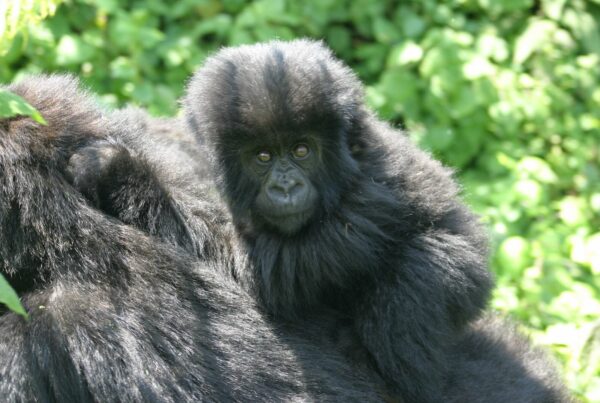
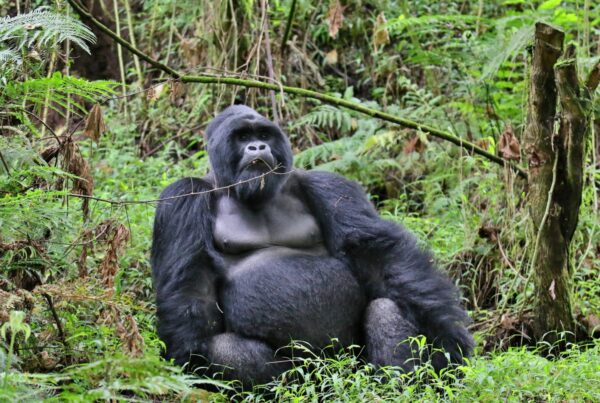
Uganda holds approximately 55 to 60 percent of the world’s mountain gorilla population — over 550 individuals in Bwindi alone, compared to roughly 450 in the Virunga population that straddles the borders of Rwanda, the DRC, and Uganda. More gorillas means more habituated families, more available permits, and a broader range of encounter types across Bwindi’s four sectors and Mgahinga. For visitors who are choosing between the two countries primarily on the basis of gorilla encounter quality and availability, Uganda’s larger population is a compelling argument.
The permit price differential
At $800 per permit in Uganda vs $1,500 in Rwanda, the gorilla trekking permit price differential between the two countries has widened in recent years as Rwanda’s permit prices have continued to rise while Uganda’s have remained more stable. For visitors travelling as couples or families, the saving is substantial — a party of two saves $1,400 in permit costs alone by choosing Uganda over Rwanda. For mid-range travellers who cannot absorb the Rwanda premium without compromising other aspects of their trip, Uganda’s pricing makes a higher-quality overall itinerary possible at the same total budget.
The broader wildlife offering
Uganda’s competitive advantage over Rwanda in the 2026 rankings partly reflects the growing recognition of Uganda’s extraordinary breadth of wildlife experiences beyond gorilla trekking. Chimpanzee tracking at Kibale, game drives and boat safaris at Murchison Falls and Queen Elizabeth, shoebill birding on Lake Victoria, and the spectacular landscapes of the Rwenzori Mountains and crater lake district give Uganda a wildlife offering that Rwanda — which focuses primarily on its primate experiences — cannot match. For travellers seeking a comprehensive East Africa wildlife experience within a single destination, Uganda’s diversity is a decisive advantage.
Value beyond the permit
The broader value-for-money proposition in Uganda — accommodation, food, internal transport, and guiding services at lower price points than Rwanda for comparable quality — has become a more important factor in destination choice as the global travel market has become more price-conscious. Mid-range travellers who want the mountain gorilla experience without the ultra-premium price structure that Rwanda increasingly represents find Uganda more accommodating of their budget constraints. And even for high-end travellers who can absorb the Rwanda premium, the comparable quality of Uganda’s luxury lodges at lower prices means that more budget is available for additional experiences within the itinerary.
Access improvements
Rwanda’s Kigali airport has historically been a more convenient international gateway than Entebbe for many European and Middle Eastern visitors — better connected, with shorter layover times and a more modern terminal. Improvements in Entebbe’s connectivity in 2025 and 2026 have narrowed this gap, and for travellers arriving from specific source markets — the UK, Germany, the Netherlands — Uganda’s direct flight options are now competitive with or better than Rwanda’s. The access advantage that underpinned Rwanda’s premium positioning has diminished, making the other elements of the Uganda-versus-Rwanda comparison more decisive.
For any traveller deciding between Uganda and Rwanda for their gorilla trekking safari, we can provide a detailed, honest comparison of the two experiences — the encounter quality, the logistics, the pricing, and the additional wildlife experiences available. Contact our team to discuss your options and plan the trip that best matches your priorities and budget.
Uganda’s rise in travel rankings reflects a structural shift in how the international travel market values wildlife experiences. The metrics that place Uganda ahead of Rwanda in specific ranking frameworks typically weigh species diversity, conservation ROI per dollar spent, and the non-gorilla wildlife breadth of the country’s national parks — areas where Uganda’s size and ecosystem variety give it a comparative advantage. Rwanda’s advantage lies in infrastructure quality and the efficiency of its short-form gorilla trekking market. Visitors who choose based purely on the gorilla encounter experience a similar quality at both destinations; visitors who choose based on total trip value per dollar spent find Uganda’s wider wildlife offering harder to match.